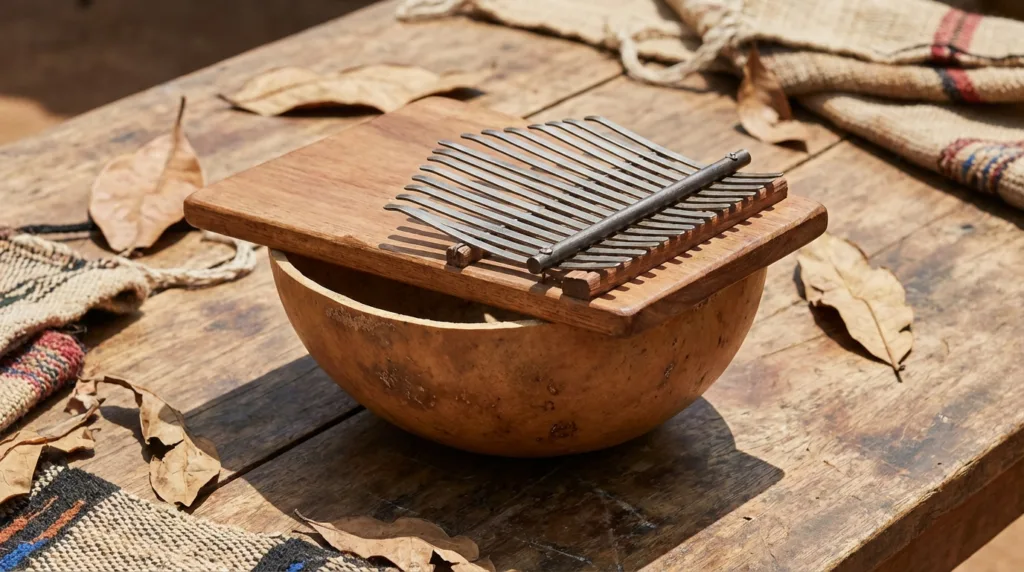
🪘 Ilimba is a large, characterful member of the lamellophone family—often grouped under the friendly nickname thumb piano, yet it has its own scale logic, build choices, and playing feel.
- 🌍 Often associated with central Tanzania and Wagogo (Gogo) traditions.
- 🔩 Built from a wooden resonator box plus flexible metal tongues (also called tines).
- 🎶 Known for a bright core tone with a gentle buzz or shimmer when sound-shaping parts are present.
- 🧭 Surviving examples show wide variety: some are modest in size, others are built with many keys for deep, layered patterns.
| Detail | What You’ll Notice | Why It Matters |
|---|---|---|
| Instrument Family | A plucked idiophone with metal tongues | Explains the quick attack and long, bell-like ring |
| Typical Body | Rectangular box resonator | Box depth shapes volume and low-end warmth |
| Key Count | From dozens to very many on large builds | More keys = more interlocking lines, richer polyphony |
| Layout | Often V-shaped or wave-like ordering of key sizes | Guides your thumbs into natural patterns |
| Sound Texture | Clean chime plus optional buzz/rattle | That subtle buzz adds presence and character |
🎛️ What Changes The Sound Fast (a tiny “graphic” you can feel)
If an ilimba has buzzing elements (tiny strips, rings, or membranes), the tone feels more alive. If it’s clean and dry, the notes sound glassier and very direct.
What An Ilimba Is
- 🧰 A lamellophone: thin, springy tongues fixed to a wooden body, plucked with thumbs for a ringing idiophone sound.
- 🪵 Often larger than many modern “thumb pianos,” with more space for overlapping lines and deep resonance.
- 🎼 Closely related to instruments commonly called mbira, kalimba, and sanza, yet the ilimba’s build and tuning ideas can feel distinct.
Think of the ilimba as a musical “comb” that sings. Each metal tongue is tuned by length and tension, and the wooden box amplifies the vibration into a warm, carrying chime. With many keys, your thumbs can weave patterns that sound like two or three parts at once—simple motions, surprisingly rich results.
Names, Spellings, And Close Cousins
- 📝 You may see ilimba, illimba, or llimba. Spelling shifts happen when local pronunciation meets different writing systems.
- 🔎 Some references use malimba as a related term or local naming variant for ilimba-type instruments.
- 🎶 “Thumb piano” is a helpful umbrella phrase, yet it can blur important details like layout and tuning logic.
One more thing: in parts of Africa, the word “ilimba” can also be used for a different instrument family in local contexts. If you’re shopping or cataloging, check for the lamellophone traits—metal tongues on a wooden resonator—so you get the exact ilimba you mean.
Where It Comes From, And Why It Sounds Like That
- 🌍 Strongly linked with Wagogo (Gogo) musical life in central Tanzania.
- 🗣️ Often used to support singing and storytelling-like song repertories, giving words a steady pulse and a shimmering bed of sound.
- 👣 Described in ethnographic collections as a companion instrument during long walks, turning time into rhythm and keeping mood light.
The ilimba’s voice comes from an elegant tension: the tongues are bright and focused, while the box adds a soft, woody bloom. Many instruments include sound modifiers—small buzzers or thin membranes—so the tone carries with a textured halo. That gentle shimmer is part of the instrument’s identity, not a flaw to “fix.”
Anatomy Of An Ilimba
Resonator Body
- 🪵 Usually a rectangular wooden box with enough internal space to add depth to the tone.
- 🧴 Often polished by years of handling, leaving a natural patina that collectors value as honest wear.
A slightly deeper box tends to feel more room-filling. A thinner body can sound quick and crisp. Neither is “better”—it depends on whether you want an airy sparkle or a grounded hum.
Keys, Tongues, And The “Spring” Feel
- 🔩 Metal tongues are cut and shaped to create different pitches.
- 🧰 In documented builds, makers may use recycled metal such as straightened rods; what matters is the tongue’s elasticity and stable return.
When you pluck, the tongue snaps back and vibrates. A good ilimba tongue feels alive under the thumb—responsive, not floppy, not stiff. That tactile feedback is a huge part of why ilimba playing feels so addictive.
Bridge And Pressure Bar
The tongues are held in place by a bridge and a pressure bar. This is the instrument’s engine room. Small changes in pressure can affect stability, so well-made hardware equals more reliable tuning and less buzzing where you don’t want it.
Buzzers And Sound “Spice”
- ✨ Some ilimbas use tiny strips, rattles, or thin add-ons near tongues to create a controlled buzz.
- 🎧 The effect adds presence, helping the sound carry and blend with voices.
If you’re used to clean Western sustain, the buzz can surprise you. Give it a minute. On an ilimba, that texture is often the difference between “pretty notes” and a truly traditional sound world.
Sound Holes And Thin Membranes
Some instruments have small openings on the front or sides, sometimes covered by a very fine natural membrane that subtly reshapes airflow. The result is a soft, controlled fizz around the note—more atmosphere, less sterile brightness.
🧭 Collector’s Note: Signs That Feel Like Real Age
- 🪵 Smooth edge wear where thumbs naturally rest (consistent, not random).
- 🔩 Tongues with tiny polish lines from repeated plucks, while still sitting firmly under the pressure bar.
- 📦 A resonator box that feels stable—no fresh glue smell, no new screws that don’t match the rest of the build.
- 🎶 A tone that stays steady for a full session; stability is a quiet quality marker.
How The Notes Are Arranged
- 🧩 Keys may form a V-shape or a wave of lengths that helps your hands find repeating shapes.
- 🎯 Some documented instruments include a small reference area of keys that function as a tuning guide and are not meant to be played like the main set.
- 🎼 Many ilimba traditions lean toward pentatonic organization, which makes looping patterns feel natural and open.
🪘 A Simple Layout Idea (not a strict blueprint)

Left thumb side                Center                   Right thumb side
[ long ] [ mid ] [ short ]   [ reference? ]         [ short ] [ mid ] [ long ]
        ↘   ↘   ↘                                   ↙   ↙   ↙
      repeating shapes                     repeating shapes
This kind of symmetry makes it easy to play call-and-response between thumbs. You can lock into a pulse, then add tiny variations so the line keeps breathing. It’s minimal motion with a very big payoff.
Playing Technique That Feels Natural
- 👐 Hold the box with both hands. Let your palms support the weight while thumbs stay loose and springy.
- 👍 Pluck with the pad-edge of the thumb, not the nail. You’ll get a rounder attack and fewer accidental clicks.
- 🤫 Use gentle damping: touch a tongue right after a note to shorten it. This creates a clean rhythmic line and keeps the texture clear.
- 🧠 Build patterns in layers: start with a two-note pulse, then add one extra note every few cycles. The music stays steady, your hands stay relaxed.
- 🎶 Explore interlocking: one thumb plays a repeating “anchor,” the other thumb answers with a small phrase. This is where ilimba turns into a conversation.
🗝️ Micro-Skill: Make One Note Sing
- Pluck the same tongue three times: soft, medium, bold.
- Now add a tiny finger mute after the second hit.
- Listen for the shift in tone and sustain. That control is the heart of expressive ilimba playing.
Tuning Without Stress
- 🎼 Some ilimba approaches are described as using intervals inspired by the overtone series, which can feel slightly different from rigid modern equal-temperament tuning.
- 🧩 Many sets revolve around pentatonic ideas, which naturally reduce harsh note clashes and make looping patterns easy.
- 🔧 Contemporary builds may be tuned to familiar Western scales for collaboration, while still keeping the ilimba’s physical feel and tone.
If you own an antique or collectible ilimba, treat tuning like you’d treat an old watch: gentle, patient, and not rushed. Metal tongues can be adjusted, yet sudden force risks shifting hardware or stressing aged wood. For valuable pieces, it’s smart to consult a specialist who understands lamellophones.
🧰 Simple Tuning Mindset (safe for most modern instruments)
- Tune in tiny steps. A small change can move pitch more than you expect.
- After any change, play a short pattern to check how the note blends with neighbors.
- Aim for a sound that feels stable and pleasing, not mathematically “perfect.”
Listening For An Ilimba’s Signature Voice
- 🎧 A clear bell-tone core, plus optional buzz shimmer that adds life.
- 🪵 A boxy warmth that makes repeated patterns feel grounded.
- 🧩 The ability to sound “busy” while the hands are doing simple repeating motions.
The most captivating ilimba performances often feel like a calm engine: steady pulse, tiny variations, and a texture that keeps changing even when the pattern stays the same. If you want to test whether an ilimba has that magic, listen for how long the tone stays interesting after the first ten seconds. A good one keeps your ear curious without needing flashy tricks.
Buying And Collecting: Antique-Safe Checklist
| Check | Good Sign | Worth A Closer Look |
|---|---|---|
| Key Stability | Tongues sit firm under the bar, no sliding | Loose tongues, uneven pressure, unexpected rattles |
| Box Health | No active cracks, corners feel tight | Soft wood, fresh splits, warping that changes tongue alignment |
| Sound | Even volume across keys, warm ring | Dead zones, overly harsh peaks, sudden drop-offs |
| Buzz Elements | Intentional, consistent shimmer | Random buzzing from loose hardware (not musical) |
Collectors often focus on key count, yet the real value is balance: stable hardware, healthy wood, and a tone that stays sweet across the range. An ilimba with fewer keys can be more playable than a crowded one if the response is even and the resonance feels open.
🧽 Care That Respects Old Wood
- Keep it dry and stable: moderate humidity helps prevent cracks.
- Avoid heavy oils and strong cleaners. If you must clean, use a barely damp cloth, then dry immediately.
- Store so tongues aren’t pressed or bent; bent tongues can lose their spring and change pitch.
Pairing Ilimba With Other Instruments
- 🪘 With hand percussion: keep the drum soft, let the ilimba’s attack stay audible.
- 🎻 With bowed strings: choose a narrow pitch center so the ilimba’s natural tuning character feels intentional.
- 🎤 With voice: match the singer’s comfort range; the ilimba supports storytelling-like phrasing beautifully.
The ilimba shines when it isn’t crowded. Leave space. A simple beat and a repeating figure can sound fuller than three busy parts fighting for the same frequencies. When the texture is right, the ilimba turns into a warm, sparkling foundation.
Starter Practice Path In Ten Minutes
- ⏱️ 2 minutes: play a slow two-note pulse. Keep thumbs relaxed, tone even.
- 🧩 3 minutes: add one “answer” note every second cycle. Let the pattern loop until it feels automatic.
- 🎶 3 minutes: try call-and-response between thumbs—left anchors, right answers.
- 🤫 2 minutes: experiment with damping to create short notes and long notes in the same loop; that contrast adds drama without complexity.
Mini FAQ
Is An Ilimba The Same As A Kalimba?
They’re relatives. “Kalimba” is often used for modern, compact lamellophones, while ilimba commonly points to a specific East African tradition and a larger, more layered approach. The feel can be noticeably different, especially in key count and layout.
Why Do Some Ilimbas Have A Buzzing Sound?
On many traditional builds, the buzz is a feature. Small add-ons (like strips or membranes) create a gentle texture that makes the tone feel alive and helps it carry alongside voices.
How Many Keys Should I Look For?
Start with what you’ll actually play. Fewer keys can be more inviting and easier to memorize. Many-key instruments open up dense patterns, yet they also demand stronger control and better listening. Choose the range that feels fun in your hands.
Can An Antique Ilimba Be Tuned To Western Notes?
Sometimes, yet it depends on the build and condition. Some instruments are designed for flexible adjustment. Valuable antiques deserve a gentle approach—small changes only, and ideally with help from someone experienced in lamellophones.
What Makes An Ilimba Feel “Authentic” In Sound?
Authenticity lives in behavior, not perfection: steady pulse, repeating figures with tiny variation, and a tone that balances chime with texture. If the instrument invites that playing style, you’re already close to the real spirit.