One small word—Phorminx—and you’re suddenly standing in the sound-world of early Greek storytelling, where a plucked string didn’t just carry melody, it carried memory.
Not a “quiet background” instrument. Not even close.
What The Name “Phorminx” Usually Signals 🏺
- Family: A lyre-family instrument (a yoke-lute type), sitting conceptually between simpler lyres and the more formal kithara.
- Where It Lives In Text: The term phorminx appears in early Greek poetic language as a bard’s string instrument (sometimes used as an intentionally archaic word later on).
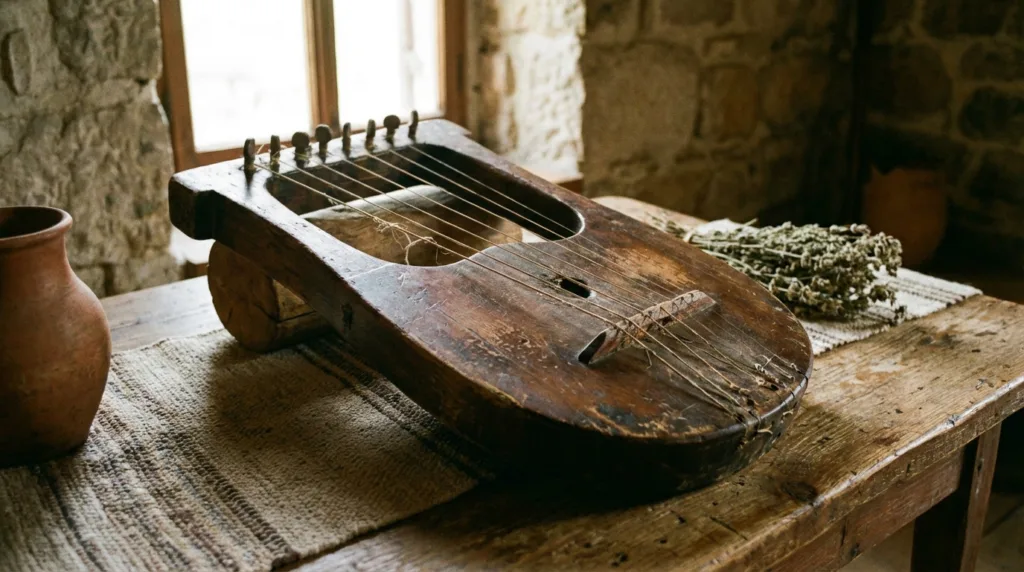
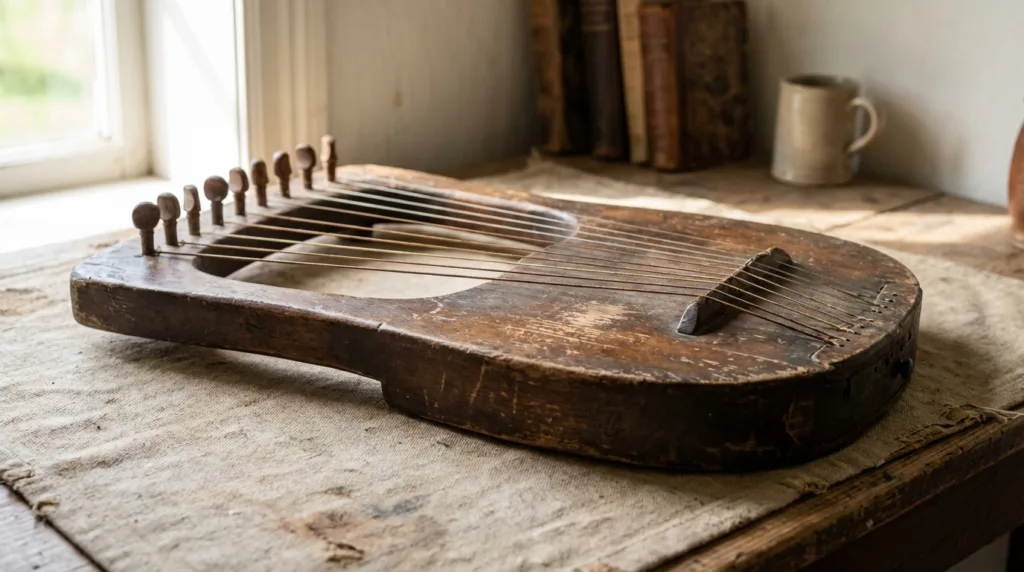
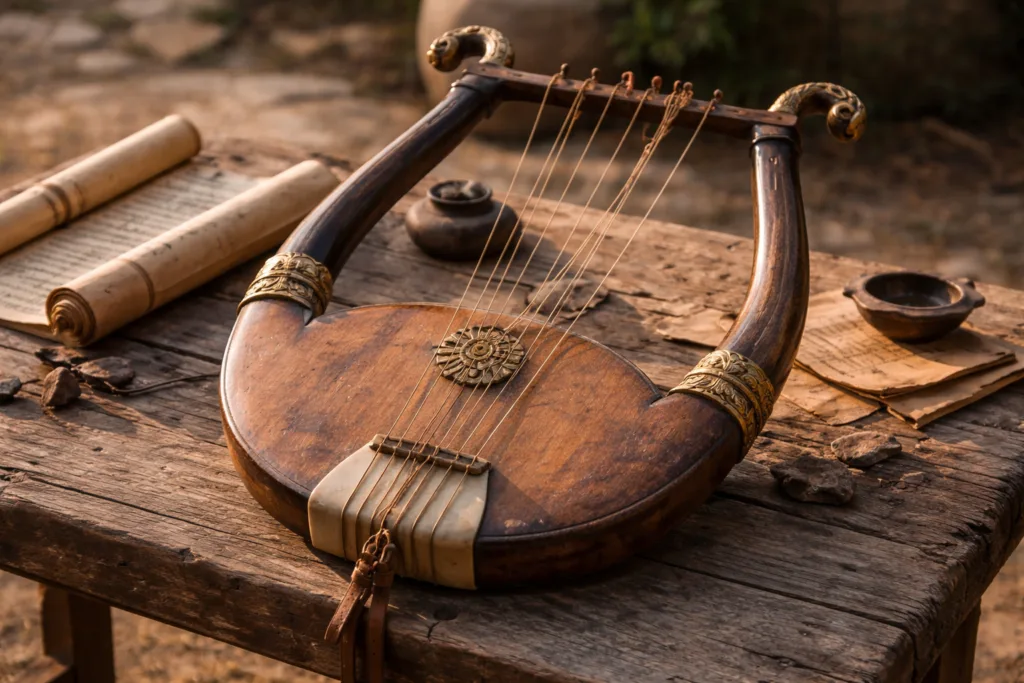
- What Art Tends To Show: A crescent-shaped soundbox with arms that can look richly finished (decor matters here; it’s part of the instrument’s “voice” on stage).
- String Count (As Described In Sources And Depictions): Accounts commonly place it in the two-to-seven-string range, with seven becoming a familiar “musical norm” in related Greek concert instruments.
- What We Rarely Get: Precise measurements, consistent build recipes, or a single “official” blueprint. That uncertainty is part of the instrument’s allure—and the reason modern builds vary.
So, when someone says Phorminx, they often mean a specific look and cultural role as much as a fixed spec sheet. And yes—annoyingly—different writers can use the word more broadly. (Welcome to ancient terminology.)
A Practical Profile (Without Pretending We Know Everything)
| Feature | What Can Be Said Responsibly | Why It Changes Sound And Feel |
|---|---|---|
| Body Shape | Often described and depicted with a crescent-like soundbox. | A curved cavity tends to emphasize focus in the midrange; you feel it as a direct, “pointed” note core. |
| Strings | Commonly given as 2–7; seven is strongly associated with Greek concert lyres (especially the kithara). | More strings expand modal options, but also demand cleaner damping; the left hand must work. |
| String Material | For Greek lyres broadly, gut/sinew strings are well attested; modern builds may use synthetics for stability. | Gut gives a rounder attack with complex overtones; synthetics keep pitch steadier in changing humidity. |
| Playing Tool | Greek concert practice strongly features a plektron (pick), with the left hand damping unwanted strings. | Pick-driven tone is crisp and immediate; damping creates that “clean corridor” where melody reads clearly. |
How The Build Steers The Timbre 🪵🧵
- Soundbox Stiffness: Stiffer plates tend to produce a snappier start to the note; more flexible plates often lean warmer, with softer edges.
- String Gauge And Tension: Thicker strings can feel forgiving under a pick, but they ask for more energy; thinner strings speak fast, yet punish sloppy touch.
- Bridge Contact: A firm, stable bridge contact usually yields clearer articulation; micro-slippage or soft seating can smear the attack (sometimes beautiful, sometimes just messy).
- Yoke And Arms: In yoke-lute designs, the yoke/arm rigidity affects how much energy stays in the string versus bleeding into the frame—tiny differences, but your ear catches them.
Here’s the part most “spec” lists miss: the Phorminx is as much about tactile resistance as it is about pitch. The pick hits, the string pushes back, the body answers—fast. When the build is right, the note feels like it locks into place.
When it’s not right? The instrument feels oddly polite. And a phorminx shouldn’t feel polite.
Pro Tip 🔧
If a phorminx-style build sounds “clicky” or thin, adjust your pick angle before you blame the instrument. A slightly flatter stroke can soften the transient without losing clarity. Small move, big change.
A Tiny Bit Of Physics (Useful, Not Showy)
- Pitch Basics: A string’s pitch depends mainly on length, tension, and mass per length (thickness/material). Raise tension, pitch rises. Shorten the speaking length, pitch rises. Simple.
- Why Equal-Length Strings Matter: Greek concert instruments are often described with equal-length strings (notably on the kithara). You vary pitch by tuning each string’s tension (and sometimes string thickness), not by fretting a fingerboard.
That design choice is why the timbre can feel so even string-to-string when tuned well. It’s also why setup matters more than people expect.
What The Ear Hears First 🎼
- Attack: A clear “start” to the note, especially with a pick. You want definition, not harshness.
- Midrange Core: The tone’s identity usually sits here; a good Phorminx voice can feel vocal without sounding nasal.
- Decay Shape: Many lyre-family instruments don’t “hang” like a modern steel-string guitar. Notes bloom and step back quickly. That’s not weakness; that’s articulation.
- Overtone Texture: Gut-type strings can add a gentle, complex shimmer. Synthetics can be cleaner, sometimes almost too clean.
Listen for the moment right after the attack—the half-second where the instrument decides what it is. That’s where timbre lives.
Collector’s Note 🏺
Authentic “antique” phorminx instruments are not a typical market category because most knowledge comes from texts and images rather than a wide body of surviving originals. In practice, collectors often evaluate replicas and historically inspired builds—so the maker’s documentation, design rationale, and materials list matter a lot.
Playing Feel: Resistance, Damping, And Control 🎻
- The Pick Hand: You feel resistance mostly through the pick. A stiffer pick increases projection, but it also magnifies every tiny timing flaw.
- The Left Hand: In Greek concert technique (especially described for the kithara), the left hand often damps strings you don’t want. This creates clarity—like muting sympathetic noise on a harp.
- Posture And Support: Descriptions of kithara practice include the instrument resting against the shoulder and being supported by a sling at the wrist. Many modern phorminx-style performers borrow similar support ideas for stability.
You can’t “hide” on this instrument. The Phorminx rewards clean choices: which strings ring, which ones do not, and when. Decisive playing. That’s the whole vibe.
And sometimes—oddly comforting—it forces simplicity.
Vs. Chelys Lyre: Intimate Shell Voice vs Projecting Stage Voice 🐢
| Focus | Phorminx (As Commonly Understood) | Chelys (Tortoiseshell Lyre) |
|---|---|---|
| Social Role | Linked in early literature to bardic performance; often framed as “older/archaic” in later poetic use. | Associated with personal music-making and education in many Greek contexts (a more domestic presence). |
| Typical Strings | Commonly described as 2–7 depending on account/depiction. | Frequently built with seven strings in reconstructions; gut strings are well supported for Greek lyres broadly. |
| Tone Feel | Often imagined as a more “public” voice: clearer attack, more direct projection (especially in modern stage builds). | A softer bloom with a naturally rounded edge; intimate, close-mic friendly, less “shouty.” |
- If you love clear articulation and strong rhythmic storytelling, a phorminx-style build will feel natural.
- If you want a gentle, personal instrument that forgives small noise and rewards soft touch, the chelys tradition usually fits better.
Vs. Kithara: “Earlier Name” vs “Professional Standard” 🏛️
- Kithara: A solidly built, wooden-bodied lyre-family instrument with seven strings commonly described as equal length, played with a plektron, and used by professional performers in public settings and competitions. By the end of the seventh century BCE, it had a major place in Greek public performance.
- Phorminx: Often presented as an older or earlier-type concert lyre conceptually near the kithara, prominent in early epic/poetic framing, and later kept alive as a deliberately archaic word in poetry.
The difference is not only structure. It’s intent. The kithara says “trained professional.” The Phorminx, in many tellings, says “story carrier”—a performer anchored in memory, not virtuoso flash.
Pro Tip 🔧
If you’re commissioning a build and you want “kithara authority” without losing the phorminx character, ask for a slightly larger resonant cavity but keep a quick decay setup (string choice and bridge seating often matter more than sheer size).
Vs. Modern Lyres, Harps, And Guitars: What Changes Immediately
- No Fingerboard: Pitch is mainly from open strings and tuning strategy, not fretted notes. That pushes you toward modes and drones.
- Less Sustain By Nature: Many lyre-family instruments speak fast and step back fast. The phrasing becomes more spoken than “sung forever.”
- Damping Is A Skill: Guitarists often learn muting; harpists learn damping; the phorminx expects it early.
- Pick Culture: A pick can be central, and it shapes identity. Fingernails can work, sure, but the tone story changes.
Modern ears sometimes want “more.” More volume, more sustain, more chromatic freedom. The Phorminx doesn’t chase that. It offers something else: clarity, pulse, and a timbre that feels handmade even when the build is pristine.
Commissioning Or Choosing A Phorminx-Style Instrument Today 🔧
A Buyer’s Checklist That Actually Helps
- Decide Your String Count: If you want a widely familiar Greek concert reference point, seven strings is a practical baseline. If you want a more “early/variable” concept, discuss fewer strings with the maker.
- Ask About String Material: Gut/sinew-style strings can deliver a historically grounded texture. Synthetics give tuning stability and easier maintenance. Neither choice is “wrong,” but the feel changes.
- Confirm The Damping Plan: Ask how the maker expects you to manage unwanted resonance. Some setups encourage clean damping; others ring wildly and demand constant control.
- Talk About the Pick: Get a recommended plektron thickness and material. This is part of the instrument, not an accessory.
- Request Build Notes: Wood species, joining method, bridge design, tuning hardware choice. If the maker can’t explain choices, that’s information.
One modern reality: a lot of interest in ancient instruments now spreads through workshops, museum programs, and online performance clips. That’s a gift—people can hear and compare—but it can also push builders toward “camera-friendly” brightness. If you want a balanced sound, say so up front.
Care, Storage, And Setup Without Drama 🧰
- Humidity Awareness: Gut-type strings react more to humidity swings. Tune slowly. Let the instrument settle (yes, it’s boring).
- Bridge Stability: If the bridge creeps, the attack and intonation suffer. Check it gently; don’t force it.
- String Changes: Replace one string at a time to keep tension patterns familiar. Sudden full restringing can shift how the body responds.
- Pick Wear: A worn pick can make the instrument feel dull. Keep a second pick with a slightly different stiffness for tone control.
- Transport: Support the arms/yoke area; don’t let the instrument rattle in a bag where the frame takes impacts.
Collector’s Note 🧾
For phorminx-style pieces, value often sits in craft clarity: clean joinery, stable geometry, and a maker who can explain why the instrument speaks the way it does. “Fancy” decoration is nice, but a shaky frame is forever.
FAQ
Is it hard to learn the phorminx if I already play guitar or harp?
Read the answer
If you play guitar, your right hand already understands timing and muting, which helps. If you play harp, you already think in open-string shapes and damping. The main shift is mental: a Phorminx asks you to plan tuning and modes rather than chase every chromatic note. Once that clicks, it feels surprisingly natural.
How many strings should I start with on a phorminx-style instrument?
Read the answer
For most players, seven strings is the sweet spot: enough musical range to feel complete, not so many that damping becomes exhausting. It also aligns with the best-known Greek concert reference points (especially the kithara) without forcing a single “one true” ancient design.
How do I know if a modern phorminx replica is historically respectful?
Read the answer
Ask for clear documentation: design references, material choices, and why certain modern parts were included. A respectful build usually avoids “mystery upgrades” and explains compromises openly. Look for stable geometry, a coherent tuning approach, and a tone goal that fits lyre-family behavior (clean attack, controlled resonance, workable damping).
What strings should I use: gut, nylon, or something else?
Read the answer
Gut-style strings can offer a warm, complex timbre that many people associate with ancient lyres. Nylon and other synthetics usually give more tuning stability and fewer humidity surprises. If you perform often or travel, synthetics may help. If you prioritize texture and nuance, gut can be worth the extra care. Either way, match string gauge to the maker’s tension targets—don’t guess.
Do I need a pick, or can I play with my fingers?
Read the answer
You can use fingers, but a plektron strongly shapes the classic Greek concert articulation. Finger playing tends to soften the attack and can blur rhythmic edges (sometimes lovely, sometimes muddy). Many players keep both options: pick for definition, fingers for gentler passages.
How do I store it safely through seasonal changes?
Read the answer
Keep it away from heaters, direct sun, and sudden humidity swings. If you use gut-type strings, expect small pitch drift and tune gradually. A stable room is better than a perfect case in a chaotic space. And yes—check the bridge position once in a while. Quiet problems stay quiet until they don’t.