
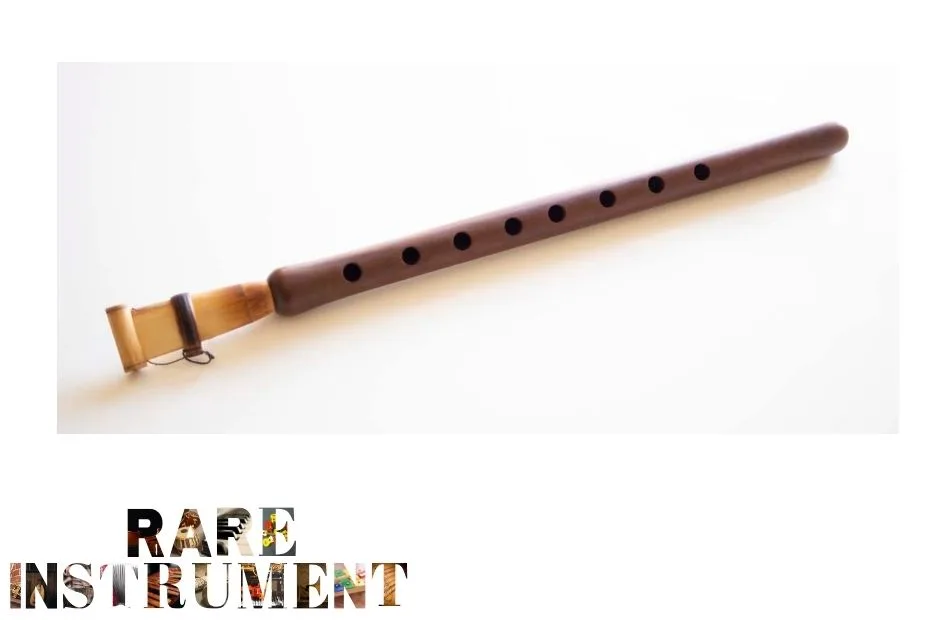
Apricot Wood, Human Breath: The Armenian Duduk’s Intimate Voice
The duduk is an Armenian double-reed aerophone built around a cylindrical wooden bore and an unusually broad cane reed. Traditional instruments are closely associated with apricot wood, while performance often pairs a melody player with a second duduk sustaining the dam drone through circular breathing. The combination produces the warm, soft, slightly nasal timbre identified with Armenian duduk music.
| Feature | Description |
|---|---|
| Instrument family | Double-reed aerophone with a cylindrical bore |
| Traditional body material | Apricot wood |
| Reed | Broad double reed known as ghamish or yegheg, traditionally made from cane |
| Typical ensemble practice | Lead duduk with a second player sustaining the dam drone; dhol may accompany dance repertory |
| Traditional types | UNESCO describes four major types ranging from about 28 to 40 cm |
| Sound character | Warm, soft, reedy, slightly nasal, with a rounded attack and strong capacity for pitch shading |
| Heritage status | Originally proclaimed by UNESCO in 2005 and inscribed on the Representative List of the Intangible Cultural Heritage of Humanity in 2008 |
Apricot Wood, Cylindrical Bore, and the Wide Reed
The duduk body is a relatively simple-looking tube, but its proportions work closely with the reed. Unlike the conical bore of many orchestral double-reed instruments, the Armenian duduk uses a cylindrical bore. Traditional bodies are turned from apricot wood, which UNESCO identifies as the preferred material in Armenian practice.
The reed is unusually broad compared with an oboe reed. Called ghamish or yegheg, it is formed from cane and flattened to create two vibrating blades. The broad vibrating surface and cylindrical air column help produce a low-pressure, rounded response rather than the penetrating projection associated with many narrower double reeds.
Modern instruments normally have a row of front finger holes with one or more holes on the rear or lower body depending on the design. Exact dimensions, hole placement, tuning, and reed proportions change with instrument pitch and maker, so one fixed measurement does not describe every duduk.
What We Know: UNESCO documents four major traditional types between approximately 28 and 40 cm. Contemporary makers have extended the family further, and museum collections now include piccolo, lower-pitched, and bass duduks outside that simple length range.
Why the Duduk Sounds Different from a Conventional Oboe
The sound begins with the large double reed. Air pressure causes its two cane blades to vibrate, and those vibrations excite the air column inside the cylindrical body. Finger holes change the effective length of that air column and therefore the sounding pitch.
The wide reed gives the player considerable control over attack, pitch shading, vibrato, and tone color. Lip pressure can damp or release the reed, while breath pressure changes the way a note speaks. This flexibility is one reason duduk melodies can move between a focused reedy core and a softer, breathier edge without changing instruments.
Traditional playing also makes use of slides, grace notes, controlled vibrato, and fine adjustments of pitch. These movements are part of phrasing rather than decorative additions placed on every note.
Melody Duduk and the Dam Drone
A characteristic Armenian performance format uses two duduks. The lead player carries the melody and improvisatory detail, while the second performer sustains a continuous note called the dam. The drone player is sometimes described as the damkash.
The dam is maintained through circular breathing: air stored in the cheeks continues through the reed while the player briefly inhales through the nose. This keeps the tonal foundation from breaking between breaths.
Circular breathing should therefore not be treated as merely an optional effect in the traditional drone role. The melody player may phrase with ordinary breaths or employ circular breathing according to repertory and technique, but the sustained dam specifically depends on an uninterrupted air stream.
Smithsonian Folkways documents this texture in performances by Gevorg Dabaghian, where a second duduk holds the drone and a dhol supplies percussion. The arrangement can support dance music as well as slower repertory.
Length, Pitch, and the Duduk Family
Duduks are made in several pitches rather than as one universal instrument. UNESCO’s heritage description identifies four major types from approximately 28 to 40 cm and notes that different sizes have traditionally been associated with different musical settings. Longer instruments provide lower registers, while shorter bodies support higher pitches and more agile dance repertory.
Twentieth-century makers also expanded and regularized the pitch family. Armenian documentation describes work by Vardan Buni during the 1920s and 1930s to develop additional registers while retaining the central structure of the folk instrument. Modern workshops now produce sets in several keys, allowing duduk players to match singers, ensembles, and different tonal centers more easily.
| Instrument | Documented Detail | Collection |
|---|---|---|
| Piccolo duduk | F instrument, 34 cm object length, eight front tone holes, apricot-wood body | Ethnologisches Museum, Staatliche Museen zu Berlin |
| C duduk | 39 cm instrument with eight front tone holes; documented with the paired melody-and-dam performance practice | Ethnologisches Museum, Staatliche Museen zu Berlin |
| G duduk | 47.8 cm total length; apricot wood; melody and drone pairing documented in the museum record | Ethnologisches Museum, Staatliche Museen zu Berlin |
| Bass duduk | A instrument measuring 70 cm, with seven front tone holes and a key for the seventh hole | Ethnologisches Museum, Staatliche Museen zu Berlin |
| Presentation duduk | Apricot-wood instrument associated with Djivan Gasparian and presented to the United States in 2007 | U.S. Senate Collection |
These museum-held instruments should not be read as evidence that every historical duduk had the same modern pitch layout. They document the breadth of the contemporary instrument family and preserve measurable examples of current Armenian construction.
Historical Evidence and the Modern Form
UNESCO’s heritage account traces Armenian duduk music to the period of Tigran the Great, 95–55 BC. That statement belongs to the documented cultural history of the tradition, but it should not be mistaken for a surviving, securely dated ancient duduk identical to today’s instrument.
The present form reflects a long process of transmission and later refinement. Instrument makers have adjusted dimensions, registers, hole placement, and reed construction over time. Armenian documentation describes further standardization and the development of additional duduk registers during the first half of the twentieth century.
This distinction matters when reconstructing older practice. An ancient or medieval reference to a wind instrument does not provide the same organological evidence as a preserved modern duduk with measurable bore, tone holes, reed, and tuning. Modern reconstruction therefore draws on living craftsmanship, repertory, historical descriptions, and the physical structure of surviving instruments rather than on a single unchanged archaeological prototype.
Regional Repertory and Performance Contexts
Duduk music has accompanied Armenian songs and dances from different regions and has long been heard at weddings, funerals, and other communal occasions. The instrument’s musical role changes with the setting. Dance pieces may use shorter rhythmic phrases and percussion, while slow songs allow the melody player to stretch notes against the dam and shape fine changes in intonation.
Smithsonian documentation of Gevorg Dabaghian’s performance of Dance of Tamir Agha preserves another regional connection. The piece is identified with a male ritual dance from the Moks area near Lake Van and is performed with lead duduk, dham duduk, and dhol.
The Armenian diaspora and professional concert tradition have carried the duduk far beyond these original social settings. Chamber music, orchestral writing, theater, and film have introduced the instrument to new audiences, but staged performance does not replace the community repertories and maker-player relationships covered by its UNESCO heritage status.
Duduk, Balaban, Mey, and Duduki
The Armenian duduk belongs to a wider family of cylindrical-bore double-reed traditions found across the Caucasus and neighboring regions. Similarity in basic acoustics does not make the instruments interchangeable. Body dimensions, reeds, tuning systems, fingering, repertory, terminology, and playing style differ by tradition.
Traditionally associated with an apricot-wood body and broad cane reed. Paired melody-and-dam performance is one of its characteristic ensemble practices.
A related double-reed instrument played in Azerbaijan and neighboring areas. It shares a cylindrical-bore principle and broad reed but belongs to its own musical and craft tradition.
A close regional relative using a broad flattened double reed and cylindrical wooden body. Its sizes, repertory, terminology, and playing practice belong to the Turkish tradition.
A Georgian double-reed relative whose name reflects the close historical relationship among regional cylindrical-bore reed instruments.
Common Confusion: The Turkish word düdük can also refer to duct flutes. The Metropolitan Museum of Art holds late nineteenth-century Turkish instruments catalogued as düdük that are flutes, not Armenian-style double-reed duduks. A shared or similar name does not always indicate the same instrument type.
Breath, Embouchure, and Ornament
The lips control how freely the broad reed vibrates. Excessive pressure can choke its response, while insufficient control can make attacks unstable. Small changes in contact can alter pitch and timbre.
Steady support keeps the reed speaking consistently. Players then vary pressure within a controlled range to shape attacks, sustain long notes, and color individual phrases.
Jaw, lip, breath, and finger movements can all contribute to subtle pitch movement. The effect is normally integrated into a melodic phrase rather than applied at a fixed rate to every sustained note.
Brief finger ornaments and controlled slides connect notes, articulate repeated pitches, and shape modal phrases without requiring the hard attacks typical of a more projecting reed instrument.
Reed Care and Setup
The reed is the most sensitive part of the duduk. Cane responds to moisture, temperature, storage conditions, and repeated playing. A reed that has changed shape can alter resistance, response, intonation, and the balance between registers even when the wooden body has not changed.
- Allow a dry reed to become playable gradually rather than forcing the blades open.
- Keep the reed ventilated after playing so retained moisture does not encourage deformation or deterioration.
- Protect the reed from crushing and sudden temperature changes during transport.
- Match reeds to individual instruments rather than assuming that any reed will respond correctly on every duduk of the same nominal pitch.
- Check the reed before altering finger holes or the wooden body when an instrument develops tuning or response problems.
Reed Care: Heavy scraping can permanently change pitch, resistance, and tone. Fine reed adjustment is best treated as part of duduk making and setup rather than routine cleaning.
Craft Transmission and UNESCO Safeguarding
Duduk and its music was proclaimed by UNESCO in 2005 and inscribed in 2008 on the Representative List of the Intangible Cultural Heritage of Humanity for Armenia. The listing concerns more than the wooden instrument. Performance practice, repertory, instrument making, reed preparation, and transmission between musicians and craftspeople form part of the living tradition.
UNESCO also records concern about the movement of duduk music away from some rural community settings toward professional staged performance. Safeguarding therefore involves maintaining the social practice as well as preserving recordings or producing instruments.
Craft work remains active rather than frozen to one historical specification. Makers continue to produce traditional-sized duduks while also experimenting with other registers and forms. That process explains why the modern duduk family includes instruments larger or smaller than the four traditional types described in the UNESCO record.
Terminology
Duduk: Armenian cylindrical-bore double-reed instrument, traditionally made from apricot wood.
Ghamish / Yegheg: Names used for the broad cane reed and, in traditional descriptions, the reed material from which it is prepared.
Dam: Continuous drone sounded by a second duduk beneath the lead melody.
Damkash: Term used for the performer sustaining the dam, normally with circular breathing.
Dhol: Double-headed drum that can accompany duduk in Armenian dance and ensemble repertory.
Tsiranapogh: Armenian term associated with an apricot-wood wind instrument and used in reference to the duduk tradition.
Circular breathing: Technique in which air stored in the cheeks continues through the instrument while the performer inhales through the nose, allowing the dam to remain uninterrupted.
High-Quality Sources
- UNESCO Intangible Cultural Heritage — Duduk and Its Music
- Smithsonian Folkways — Gevorg Dabaghian, Dance of Tamir Agha
- Smithsonian Folkways — Armenian Folk Songs and Dances
- Staatliche Museen zu Berlin, Ethnologisches Museum — Armenian Piccolo Duduk
- Staatliche Museen zu Berlin, Ethnologisches Museum — Armenian C Duduk
- Staatliche Museen zu Berlin, Ethnologisches Museum — Armenian G Duduk
- Staatliche Museen zu Berlin, Ethnologisches Museum — Armenian Bass Duduk
- United States Senate Collection — Duduk, circa 2007
- MIMO Musical Instrument Museums Online — Duduk / Tsiranapogh Classification