
Instrument Snapshot
The zurna is a loud Anatolian double-reed shawm built for outdoor sound, dance rhythm, ceremony, and public celebration. Its bright, nasal, penetrating voice is closely tied to the davul-zurna tradition, where the zurna carries the melody and the davul drum drives the rhythm.
What It Is
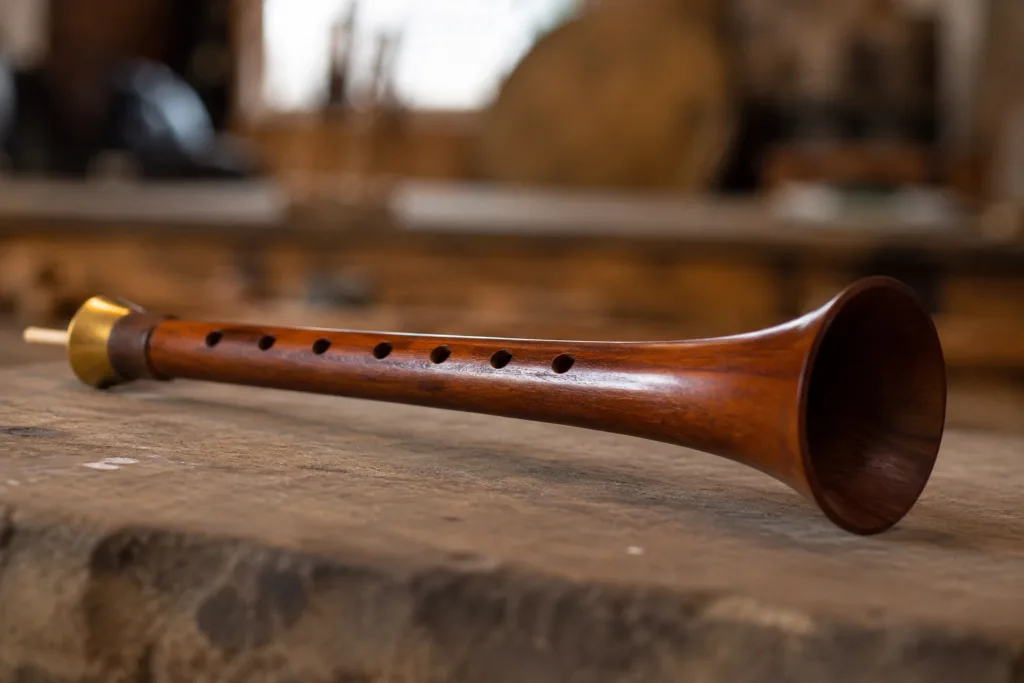
The zurna is a traditional shawm: a woodwind instrument sounded by a double reed rather than a single reed or a flute edge. The player blows into a small reed mounted at the narrow end of the instrument. The wooden body widens toward a flared bell, helping the sound travel with a sharp, carrying tone.
In Anatolian music, the zurna is rarely treated as a quiet chamber instrument. It belongs to streets, village squares, wedding yards, dance grounds, and ceremonial gatherings. Its tone is meant to lead, announce, and cut through noise.
The instrument is closely associated with the davul, a large double-headed drum. In this pairing, the davul supplies pulse, accent, and movement, while the zurna shapes the melodic line with ornaments, slides, bends, and breath-driven intensity.
Anatomy and Build
A zurna looks simple from a distance, but its response depends on small construction details: bore shape, wall thickness, reed cut, hole placement, bell width, and the fit between reed and body. Two instruments of the same length can feel very different under the fingers and lips.
| Part | Function | Effect on Sound |
|---|---|---|
| Double reed | Creates vibration when air pressure passes through it. | Controls attack, brightness, pitch response, and playing resistance. |
| Staple or reed seat | Connects the reed to the wooden body. | Affects reed stability, airflow, and tuning feel. |
| Lip-rest disc | Helps the player support the mouth position and manage pressure. | Supports long phrases and circular breathing in traditional playing. |
| Conical wooden body | Guides the vibrating air column from narrow top to wider bell. | Gives the zurna its forceful projection and reedy edge. |
| Finger holes | Change pitch by shortening or lengthening the active air column. | Allow scales, ornaments, bends, and regional melodic shapes. |
| Flared bell | Opens the lower end of the bore. | Adds volume, directness, and a more open final resonance. |
Player Tip: The reed is not a minor accessory. On a zurna, reed strength, opening, moisture, and cut can change the instrument from flexible and responsive to stiff, sharp, or unstable.
How the Zurna Produces Sound
The zurna speaks when the two blades of the reed vibrate against each other. This vibration enters the conical bore, where the wooden body shapes and amplifies the tone. Because the bore widens toward the bell, the sound becomes direct and strong rather than soft and round.
Traditional players often use circular breathing. Air stored in the cheeks is pushed into the reed while the player inhales through the nose. This allows long, unbroken melodic lines during dances and ceremonies.
The playing style is not built only on clean note changes. Zurna performance often uses pressure changes, fast ornaments, short slides, pitch bends, vibrato, and accented attacks. These details give the instrument its speaking, almost vocal quality.
Materials and Sound Character
Many zurnas are made from dense fruitwoods or hard local woods. Wood choice matters, but it is not the only reason one instrument sounds better than another. Bore accuracy, reed quality, drying, hole placement, and player control all shape the final voice.
| Material or Feature | Common Use | Tonal Tendency |
|---|---|---|
| Plum wood | Often used in Anatolian woodwinds. | Can give a focused tone with a firm, woody center. |
| Apricot wood | Common in several regional wind instruments. | Often valued for a lively response and warm grain. |
| Boxwood or other dense woods | Used where strength and stable carving are desired. | Can support brightness, clean projection, and fast attack. |
| Cane reed | The vibrating sound generator of the instrument. | Shapes resistance, pitch, brightness, and expressive flexibility. |
| Wide bell | Lower end of the body. | Adds carrying strength and a more open, public-facing tone. |
Sound Profile
The zurna is not designed for blended background texture. Its voice is bright, cutting, and assertive. In outdoor tradition, this is a strength: the melody remains audible above drums, dancers, voices, and crowd movement.
These bars describe general listening impressions, not laboratory measurements. Reed setup, regional style, player technique, and instrument size can change the result.
History and Cultural Role in Anatolia
The zurna has long been part of Anatolian public music. It appears in village celebrations, folk dances, processions, wrestling culture, and older military music settings. Its function is practical as much as musical: it can gather attention, carry a tune outdoors, and support movement.
In Turkish tradition, the davul-zurna pairing is especially strong. The duo is heard at weddings, circumcision celebrations, regional festivals, dance events, and ceremonial gatherings. The drum marks the social rhythm of the event; the zurna gives it a melodic call.
The instrument also has a place in the memory of Ottoman mehter music, where loud outdoor instruments had ceremonial and military value. In folk settings, however, the zurna is not only a historical object. It remains a working instrument for living performance traditions.
Double-reed shawms developed across many regions, with related instruments found from Europe and the Mediterranean to West and Central Asia.
The zurna became strongly associated with outdoor ceremonial sound, mehter music, local dance, and public gatherings.
The davul-zurna duo became a familiar sound for weddings, festivals, processions, and dance music in many Anatolian communities.
Zurna continues in folk ensembles, stage performances, cultural festivals, studio recordings, and regional celebration music.
Playing Tradition and Technique
Zurna playing requires more than strong breath. The player must balance air pressure, reed control, finger movement, ornamentation, and endurance. A stiff reed may sound loud but resist expression. A reed that is too soft may speak easily but lose pitch center.
Reed Control
The reed must vibrate freely while staying stable enough for pitch control. Small changes in lip pressure can change brightness and intonation.
Breath Pressure
The zurna needs a firm air stream. Breath pressure shapes volume, attack, vibrato, and the force of ornaments.
Finger Ornamentation
Fast grace notes, trills, turns, and slides give the instrument much of its regional character.
Circular Breathing
Experienced players can maintain long phrases without obvious breaks, which is useful for dance and procession music.
Types and Regional Size Names
Zurna names are not fully standardized across all makers and regions. In Turkish usage, three common size ideas are often discussed: kaba zurna, orta zurna, and cura zurna or zil zurna. The exact length, bore, pitch, and naming can vary.
| Type | General Character | Typical Use |
|---|---|---|
| Kaba zurna | Larger and lower in character, with a broad outdoor tone. | Regional dance, open-air ceremony, and strong davul pairing. |
| Orta zurna | Middle-sized form with a balance of reach and agility. | General folk performance and local celebration music. |
| Cura zurna / zil zurna | Smaller and higher, often brighter and sharper in effect. | Fast dance tunes, lively outdoor playing, and piercing melodic lead. |
What We Know: Regional terminology can shift. A name used by one maker may not match another maker’s exact length or pitch. For buyers and players, measured length, reed type, tuning behavior, and intended tradition matter more than the name alone.
How It Differs from Similar Instruments
The zurna belongs to the wider shawm family, but it should not be confused with every double-reed instrument. Its outdoor role, high volume, conical body, and piercing tone separate it from softer reed instruments used for indoor or lyrical playing.
Zurna, Mey, Duduk, and Oboe
A loud conical-bore shawm with a bright, nasal tone. Best suited to outdoor dance, ceremony, and davul pairing.
A softer Anatolian double-reed instrument with a warmer, more restrained voice. Better suited to lyrical and indoor settings.
A mellow double-reed instrument associated strongly with Armenian music. Its tone is breathy and rounded rather than piercing.
A Western orchestral double-reed instrument with a refined bore and reed system. It is built for controlled ensemble tuning rather than open-air folk projection.
Buying and Collector Notes
A zurna should be judged as a playable instrument, not only as a carved wooden object. Decorative carving, age, or a darkened body does not automatically mean better tone. Reed fit, bore health, hole accuracy, and tuning response matter more.
Look for cracks, swelling, rough internal carving, or repaired splits. Bore damage can make tuning unstable and response uneven.
The reed and staple should fit securely. A loose or poorly aligned reed setup can make the instrument hard to control.
Do not judge only the loudest note. Check low response, upper reach, finger-hole balance, and how easily ornaments speak.
A zurna for Anatolian davul-zurna playing may not feel right for a player seeking a softer reed sound or indoor practice instrument.
Collector’s Note: A vintage zurna can have cultural and display value even if it is not stage-ready. Playability and collectability should be evaluated separately.
Care and Storage
The zurna’s wooden body and reed both react to moisture, heat, and rough handling. The body should be kept dry after use, while the reed needs careful moistening before playing. Sudden temperature changes can stress older wood.
- Wipe moisture from the exterior after playing.
- Let the instrument air out before storing it in a closed case.
- Keep reeds protected from crushing and extreme dryness.
- Avoid leaving the instrument in direct sun, near heaters, or in a hot car.
- Do not force a swollen reed or tight staple into the body.
- Use a padded case if the instrument travels to outdoor events.
Care Warning: Oil, water, or cleaning chemicals should not be applied casually to the bore. Older wooden zurnas can crack or swell if treated without maker guidance.
Mini FAQ
Is the zurna the same as a shawm?
The zurna is a type of shawm. More specifically, it is a double-reed folk shawm with a conical body and strong outdoor projection.
Why is the zurna so loud?
Its double reed, conical bore, flared bell, and playing style all favor a focused, high-energy sound. It was shaped for outdoor use rather than quiet indoor blending.
What is the usual partner instrument for zurna?
The zurna is most strongly linked with the davul drum. Together they form a melody-and-rhythm duo used in weddings, dances, processions, and ceremonies.
Is zurna hard to learn?
It can be demanding for beginners because reed control, breath pressure, tuning, and circular breathing require patience. A playable reed and guidance from an experienced player make learning much easier.
Can zurna be played indoors?
It can be played indoors, but the sound is very strong in small rooms. Many players practice with care, use suitable spaces, or choose softer related instruments such as the mey for quieter settings.
What should a beginner look for in a first zurna?
A beginner should look for stable tuning, a comfortable reed setup, clean finger-hole response, and a size suited to the musical tradition they want to study.