
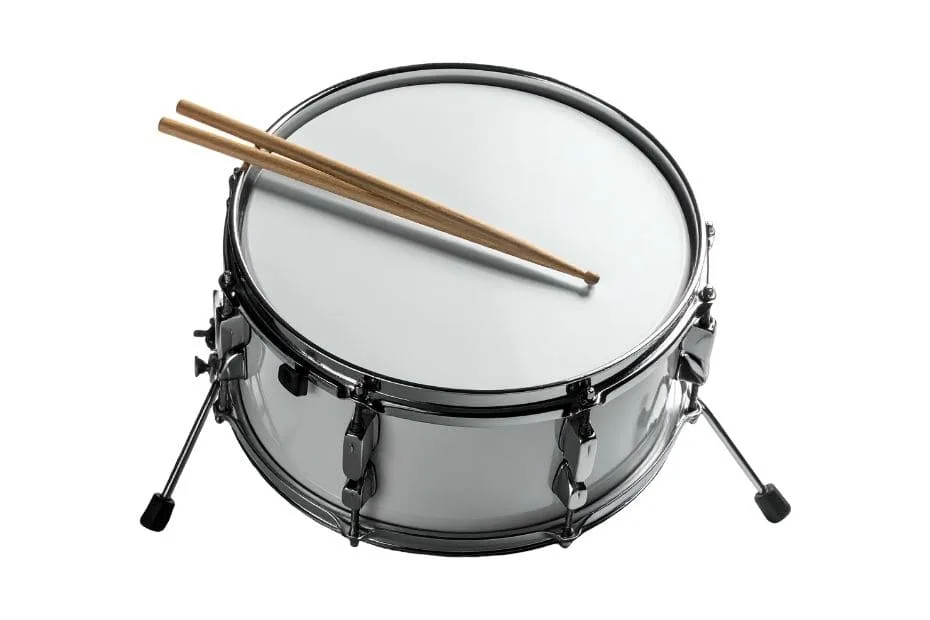
Snare Drum: Construction, Tuning, Materials, and Musical Roles
The snare drum is a double-headed drum whose defining sound comes from a set of snare wires resting against the thin bottom head. Its response depends on the relationship between shell dimensions, bearing edges, hoops, heads, snare beds, wire tension, and overall tuning. Standard kit snares are commonly built around 14-inch diameters with depths near 5–6.5 inches, although the instrument family includes shallower, deeper, smaller, orchestral, and marching forms.
| Part | Function |
|---|---|
| Shell | Supports the heads and hardware while contributing resonance, projection, and decay |
| Batter head | Top membrane struck with sticks, brushes, or mallets |
| Snare-side head | Thin bottom membrane that transfers vibration efficiently to the snare wires |
| Snare wires | Metal strands that vibrate against the bottom head and create the characteristic snare response |
| Throw-off | Mechanism used to engage, disengage, and usually adjust snare-wire tension |
| Hoops and lugs | Hold the heads under tension and determine how finely the drum can be tuned |
What Makes a Snare Drum a Snare Drum
The top head produces most of the stick attack and primary membrane tone. The bottom head is much thinner and moves easily when energy passes through the shell and enclosed air. That motion drives the snare wires against the lower membrane, adding the dry buzz and snap that separate a snare from a tom.
The throw-off changes the instrument immediately. With the wires engaged, strokes produce the familiar snare response. With the wires disengaged, the drum behaves more like a short double-headed tom, revealing more of the shell and head tone.
Snare response is therefore not produced by the wires alone. A fresh resonant head, correctly shaped snare beds, centered wires, even tuning, and sensible wire tension all contribute to clean articulation.
Diameter and Depth Shape Different Parts of the Sound
Diameter strongly affects the available pitch range and playing area. A 14-inch drum has a broader membrane than a 12- or 13-inch drum and normally supports a lower fundamental range at comparable tension.
Depth influences how much air and shell volume participate in the note. A 5- or 5.5-inch-deep snare tends to balance attack and body, while a 6.5-inch or deeper shell can add more low-mid weight and a longer resonant component.
| Size | Typical Character |
|---|---|
| 14 × 5–5.5 | Balanced response with enough body for broad studio and live use |
| 14 × 6.5 | More low-mid weight, stronger shell contribution, and broader backbeat body |
| 13-inch diameter | Smaller playing area and naturally higher tuning range than a comparable 14-inch drum |
| 14 × 8 and deeper | Large shell volume, strong body, and a more pronounced low-mid component |
Very shallow snares are a separate specialization. For shallow-shell geometry, side-snare use, sensitivity, and tuning constraints, see Piccolo Snare.
Shell Materials and Their Practical Differences
Snare shells are built from wood, metal, acrylic, and composite materials. Material changes stiffness, mass, resonance, overtone behavior, and projection, but construction quality and dimensions remain equally important.
Often chosen for a balanced mix of attack, warmth, and sustain. It appears across studio, live, and orchestral-style instruments.
Usually produces a firm attack and controlled low end, making note definition easy to retain in dense arrangements.
Common in metal-shell snares that favor a dry, clear response with strong sensitivity and restrained sustain.
Both can project strongly. Brass often carries a broader overtone profile, while steel can sound more direct and aggressive.
Hoops, Bearing Edges, and Lug Count
The hoop controls part of the feel at the rim and affects how freely the head can move. Triple-flanged hoops usually leave more overtone activity, while die-cast hoops add mass and can make rimshots and tuning feel more focused.
The bearing edge is the line where the drumhead meets the shell. Edge angle, roundness, consistency, and snare-bed shaping all influence response. Damage or unevenness can create difficult tuning zones and irregular head seating.
Lug count determines how many tension points are available around the head. More lugs allow finer adjustment, though a drum with fewer lugs can still tune evenly when the shell, hoops, and edges are well made.
Snare Wires and the Bottom Head
The snare-side head is normally much thinner than the batter head so it can react to very small changes in pressure. Its condition has a large effect on sensitivity. An old, stretched, or damaged bottom head can make the drum feel slow even when the wires are new.
Wire assemblies vary in strand count and material. A conventional 20- or 24-strand set provides a useful balance of shell tone and wire response. Wider wire sets increase contact area and may increase quiet-stroke sensitivity, but they can also add more buzz and reduce the amount of audible drum tone.
Wire tension should be high enough for clean articulation but not so tight that the wires choke the bottom head. Excessive tension can shorten the note and reduce response to soft strokes.
A Practical Snare Tuning Sequence
Seat the Heads Evenly
Bring each lug to finger-tight tension, then increase tension gradually in opposing pairs. Remove visible wrinkles before making tonal judgments.
Establish the Snare-Side Head
Tune the bottom head evenly and keep the snare beds in mind. Extreme tension is not required for every drum; the goal is stable wire response.
Set the Batter Range
Choose the pitch and feel appropriate to the drum. Medium tuning retains body, while higher tension shortens the note and increases stick definition.
Add Snare-Wire Tension
Engage the wires and tighten only until strokes speak clearly. Stop before the drum loses body or quiet notes become less responsive.
Use Dampening Sparingly
Correct uneven tuning before adding gels, rings, or internal muffling. Dampening should control excess sustain rather than hide a setup problem.
Different Snare Roles Need Different Setups
Medium or deeper 14-inch snares can provide a broad backbeat with enough shell body to remain full at high volume.
Responsive heads, moderate wire tension, and a controlled shell allow brushes, cross-sticks, and quiet comping to remain clear.
Very even response across a large dynamic range matters more than sheer volume. Cable or specialty snare systems may be used according to the instrument and repertory.
High-tension heads, reinforced shells, and dedicated hardware create a playing system distinct from ordinary drum-kit snares.
Common Setup Problems
| Symptom | Check |
|---|---|
| Uneven pitch around the head | Lug tension, hoop seating, bearing edge, or head condition |
| Excessive buzz | Wire tension, wire centering, resonant-head tuning, or sympathetic vibration from nearby drums |
| Weak ghost-note response | Bottom-head condition, snare beds, wire contact, or excessive wire tension |
| Dead or choked tone | Over-tight wires, heavy dampening, uneven tuning, or unsuitable head tension |
| Unstable rimshots | Hoop seating, lug balance, playing position, or damaged bearing edges |
Care and Maintenance
- Replace dented or stretched batter heads when tuning stability deteriorates.
- Inspect the snare-side head for wrinkles, tears, and permanent stretching.
- Replace bent or uneven snare wires rather than compensating with excessive tension.
- Keep tension rods clean and lightly lubricated when required by the hardware.
- Check throw-off screws and moving parts for rattles before assuming the shell is causing unwanted noise.
- Protect wood shells from large humidity changes and avoid storing any snare under unnecessary head tension for long periods.
Terminology
Batter head: Upper head struck by the player.
Snare-side head: Thin lower head that transfers vibration to the snare wires.
Snare wires: Metal strands stretched across the lower head to create the characteristic buzzing response.
Throw-off: Lever mechanism used to engage or disengage the snare wires.
Snare bed: Shallow shaping in the lower bearing edge that helps the wire assembly contact the resonant head correctly.
Bearing edge: Surface where the drumhead meets the shell.
Rimshot: Stroke that contacts the head and rim nearly simultaneously.
Cross-stick: Technique in which the stick rests across the head and is struck against the rim.