
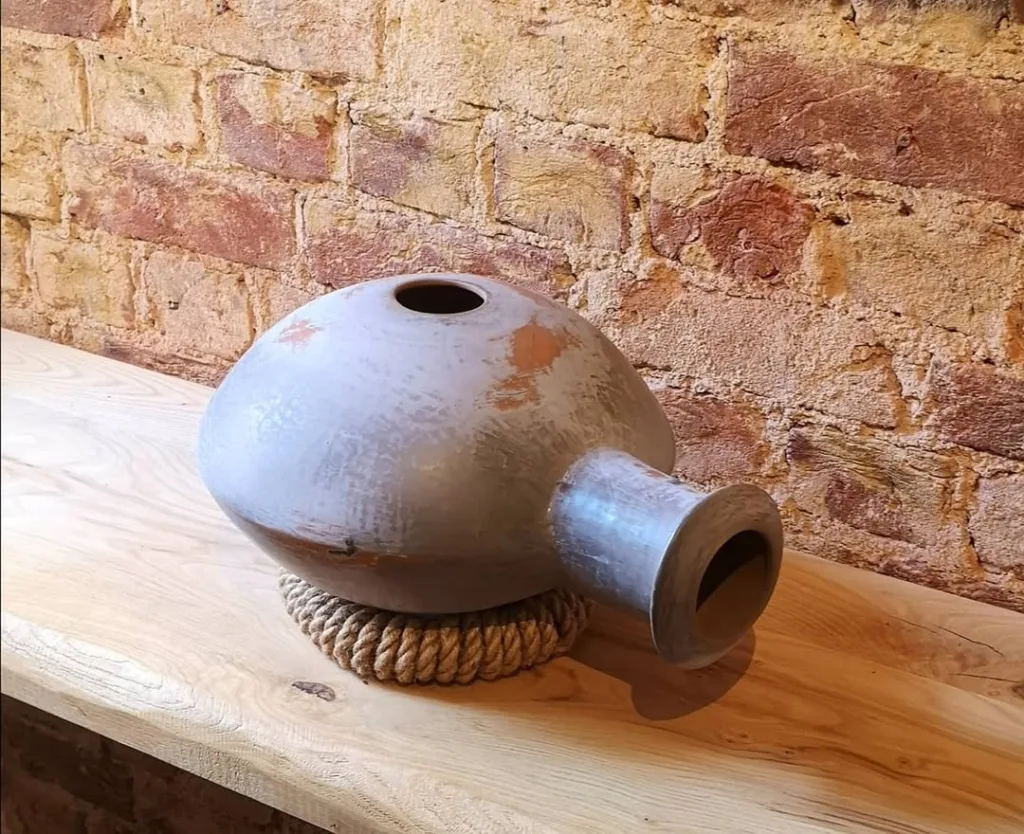
The Udu Drum is a percussion instrument rooted in Igbo communities of southeastern Nigeria. Closely associated with women’s pottery and performance traditions, this clay vessel drum produces a distinctive mix of low air tones and sharper percussive sounds. Today, the Udu is used in world music, jazz, fusion, studio recording, and experimental compositions. Its sound comes from both hand strikes on the vessel and changes in air pressure around its openings, giving players several contrasting tones from a single instrument.
Udu Drum: Origin, Construction and Use
| Aspect | Description |
|---|---|
| Origin | Southeastern Nigeria, particularly Igbo communities; traditionally associated with women’s pottery and performance practices |
| Name Meaning | “Udu” refers to a pot or vessel in the Igbo language |
| Traditional Construction | Hand-built clay pottery with a rounded body and an additional opening used for sound production |
| Modern Variations | Ceramic, fiberglass, and other durable versions are available, including designs with additional chambers or sound ports |
| Playing Technique | Played with fingers and palms; sounds are produced by striking the openings and different parts of the body |
| Sound Characteristics | Deep, resonant bass tones combined with dry taps, slaps, and ceramic accents |
| How Sound is Produced | Air moving through the enclosed chamber and openings creates low resonant tones, while direct strikes excite the vessel body |
| Traditional Use | Used in ceremonial, social, and musical settings within Igbo communities, including documented performance traditions involving women and girls |
| Modern Usage | World music, percussion ensembles, studio recording, sound design, and solo performance |
| Notable Features | Combines low air-driven bass sounds with direct hand percussion from the clay body |
| Playing Position | Typically held in the lap or between the knees; some players use a stand |
| Types of Udu Drums | Traditional single-chamber Udu, double-chamber designs, and hybrid vessel drums |
| Modern Development | Contemporary makers have introduced new shapes, chamber layouts, and materials while retaining the instrument’s basic acoustic principle |
| Maintenance | Clay models are fragile and require careful handling, transport, and storage |
| Cultural Role | Closely connected with Igbo pottery traditions and women’s musical practices in southeastern Nigeria |
| Recording Applications | Used in studios for low resonant tones, hand-percussion textures, and acoustic sound effects |
History and Cultural Roots
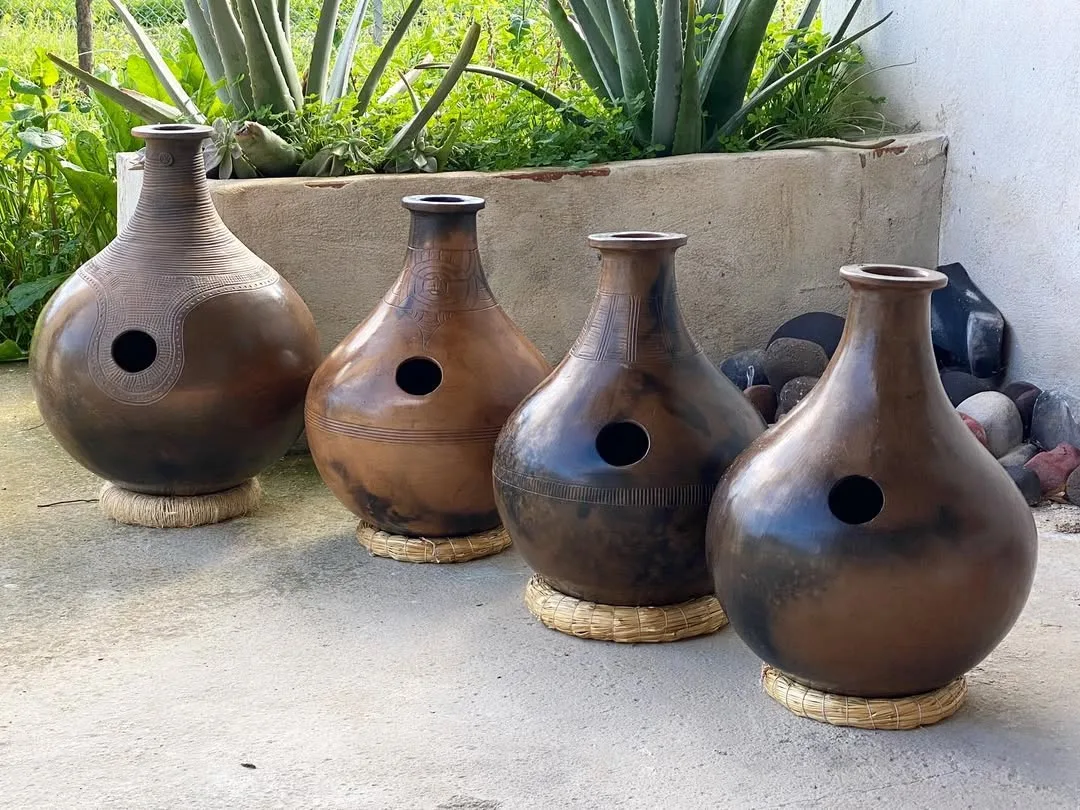
The word “Udu” refers to a pot or vessel in the Igbo language. The instrument is rooted in the pottery traditions of Igbo communities in southeastern Nigeria, where its making and performance have been closely associated with women. Spencer Museum of Art records identify Igbo women from eastern Nigeria as the originators of the pottery drum, while The Metropolitan Museum of Art describes the related kimkim, also known as an Udu drum, as a pottery instrument played by Igbo women.
The Udu developed from pottery vessels, including water jugs, with an additional opening that allows the enclosed air chamber to produce a deep bass tone when struck or rapidly covered with the hand. Its role is also documented in living performance traditions. The Avu Udu pot-drum dance of southeastern Nigeria, for example, is practiced among Igbo girls and combines Udu playing with song, dance, clapping, and other rhythmic elements.
Construction and Design
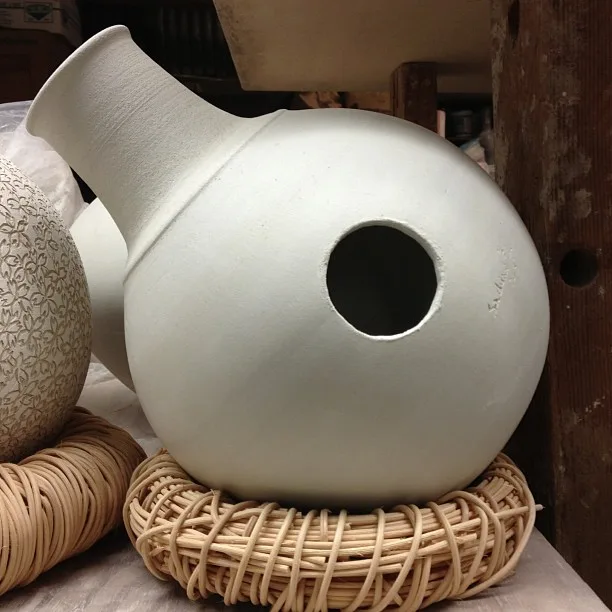
The Udu drum is typically made from clay or ceramic, which contributes to its rounded resonance and dry surface attack. Many traditional instruments are hand-built, while some modern versions use fiberglass or other reinforced materials. The body usually resembles a rounded pot with a neck or upper opening and a separate side port. Striking the body produces sharper ceramic tones, while quickly covering or striking an opening moves the air inside the chamber and creates the instrument’s low bass sound.
How to Play the Udu Drum
Unlike many drums, the Udu does not require sticks or a membrane. Players use their hands and fingers to strike, tap, mute, and rub different areas of the vessel. Two common sound groups are:
- Bass tones – produced by striking or rapidly covering an opening, causing the air inside the vessel to resonate.
- Slaps and taps – produced by striking the clay body with the palm or fingers for shorter, sharper percussive accents.
Players combine these techniques to create layered rhythmic patterns. Changing hand position, strike strength, and the amount of an opening that is covered can alter the attack, resonance, and length of each sound.
Care and Maintenance
Since many Udu drums are made from fired clay, they require careful handling. A few basic precautions can reduce the risk of damage:
- Avoid dropping the instrument or exposing it to sudden temperature changes.
- Clean it with a dry or slightly damp cloth and avoid soaking a clay Udu in water.
- Store it in a padded bag or secure case when it is not being used.
- Small cracks may sometimes be repaired with a suitable ceramic adhesive, while larger structural damage is better handled by an experienced ceramic repairer.
Modern Applications
While the Udu remains closely associated with Igbo musical traditions, it is also used in jazz, ambient music, fusion, world music, film scoring, and experimental percussion. Players can alternate between low resonant air tones and short hand strikes without changing instruments, which makes the Udu useful for both sparse accompaniment and more active rhythmic passages. In recording sessions, its low tones can also provide an acoustic bass-percussion layer beneath lighter hand percussion.
Accessories and Amplification
Musicians may use several accessories when performing or recording with an Udu:
- Microphones or pickups – used to capture and amplify quiet bass tones and surface details.
- Stands – useful when a player prefers not to support the instrument in the lap or between the knees.
- Padded cases – help protect clay instruments during storage and transport.
FAQ – Udu Drum
Is the Udu Drum difficult to learn?
Basic taps and bass strokes can be learned fairly quickly, but controlling the openings and combining different tones smoothly requires practice.
Can the Udu Drum be tuned?
A traditional Udu does not have a tunable drumhead. Its basic resonance is determined largely by the size and shape of the vessel and its openings, although players can alter the sound while playing through hand position, muting, and partial covering of the ports.
Is the Udu only used in African music?
No. Its roots are in Igbo communities of southeastern Nigeria, but the instrument is also used in jazz, world music, fusion, studio percussion, sound design, and experimental music.