

The Doumbek, also known as the Goblet Drum, is a hand-played percussion instrument associated with musical traditions across the Middle East, North Africa, and neighboring regions. Known for its crisp high tones and rounded bass sound, the doumbek is used in traditional music as well as contemporary and fusion settings. Learning its basic strokes, tuning methods, and maintenance needs helps players get a clear and consistent sound from the instrument.
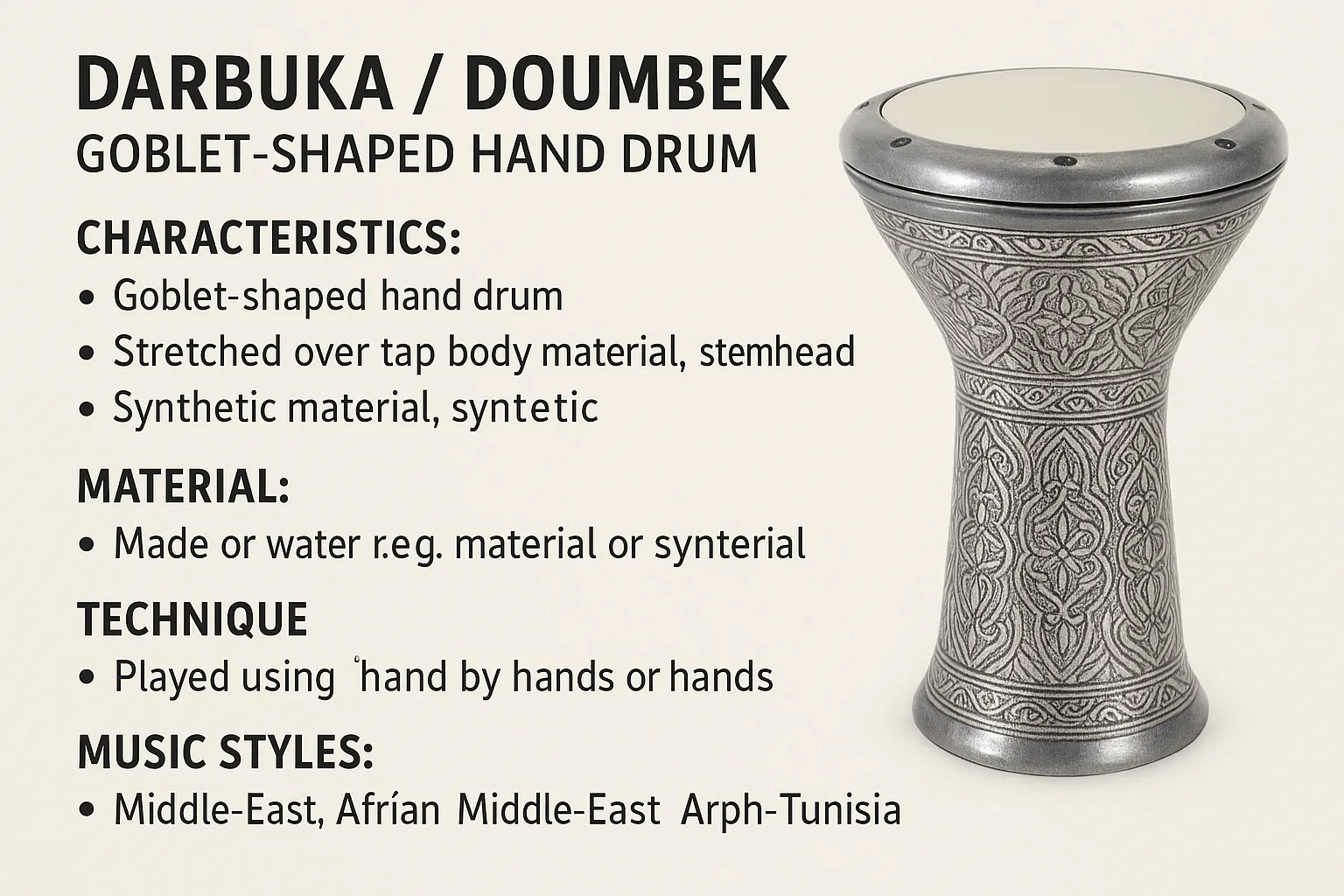
1. Doumbek Overview
The doumbek is a goblet-shaped drum typically played with the hands. Its shape and drumhead allow players to produce several contrasting sounds, commonly described as Dum for a low bass stroke, Tek for a sharp edge tone, and Ka for an additional high-pitched stroke often played with the non-dominant hand. Doumbeks may have clay, ceramic, or metal bodies and can use natural-skin or synthetic drumheads depending on the design.
2. Doumbek Types and Materials
| Feature | Traditional Clay / Ceramic Doumbek | Modern Metal Doumbek | Hybrid / Electronic Doumbek |
|---|---|---|---|
| Material | Clay or ceramic body, often with a natural-skin head | Aluminum or other metal body, usually with a synthetic head | Acoustic or purpose-built body with electronic triggering or amplification features |
| Diameter | Varies by regional style and maker | Commonly around 8–10 inches at the playing head | Varies by design |
| Height | Often around 15–18 inches | Often around 16–18 inches | Varies by design |
| Weight | Usually heavier because of the clay or ceramic shell | Often lighter than comparable ceramic models | Depends on body material and electronic hardware |
| Tone Characteristics | Rounded Dum with dry, articulate edge tones | Strong projection with bright Tek and Ka sounds | Acoustic or sampled sounds depending on the setup |
| Tuning System | Natural-skin models may rely on head tension affected by temperature and humidity | Mechanical tuning bolts are common | Mechanical tuning, electronic settings, or both |
| Regional Association | Middle Eastern, North African, and neighboring musical traditions | Widely used in modern Arabic, Turkish, Balkan, and fusion performance | Contemporary studio and live performance |
| Price | Varies by maker, size, decoration, and construction | Ranges from student models to professional instruments | Usually depends on the included electronic features |
| Typical Use | Traditional performance, ensemble playing, and studio recording | Live performance, practice, recording, and touring | Electronic fusion, amplified performance, and recording |
| Common Music Settings | Middle Eastern, North African, folk, and dance music | Traditional music, pop, fusion, and contemporary percussion | Electronic, fusion, experimental, and pop |
| Durability | Clay and ceramic shells require careful handling; natural heads react to humidity | Metal shells and synthetic heads generally tolerate transport and climate changes well | Body durability varies; electronic components need additional protection |
| Pitch and Response | Pitch depends on head size, tension, shell shape, and playing technique | Mechanical tuning allows players to adjust head tension and response | Electronic sounds may be adjusted independently of the acoustic pitch |
| Accessories | Padded bag, protective ring, cloth, and carrying support | Bag, tuning key, stand or support, and cleaning cloth | Cables, interface or module, bag, and mounting accessories |
| Construction Notes | Closely related to long-established pottery and drum-making traditions | Designed for consistent tuning and easier head replacement | Adapted for amplified or electronically processed performance |
3. Basic Playing Techniques
Clear doumbek playing depends on controlling a small group of basic strokes and keeping the hands relaxed:
- Dum: A bass stroke played near the center of the drumhead, allowing the head to resonate after contact.
- Tek: A crisp edge stroke produced with the fingers near the rim.
- Ka: A high edge stroke commonly played with the opposite hand from the Tek in many playing systems.
- Rolls & Combinations: Finger rolls and sequences of Dum, Tek, Ka, and muted strokes can be combined to form longer rhythmic patterns.
4. Tuning Your Doumbek
Many modern metal doumbeks use mechanical tuning bolts around the rim. Clay drums with natural-skin heads may use different mounting systems and can respond more noticeably to changes in temperature and humidity.
- Locate the tuning bolts: On mechanically tuned models, the bolts are positioned evenly around the rim.
- Adjust gradually: Make small changes and move around the head rather than fully tightening one bolt at a time.
- Test frequently: Tap near different sections of the rim and listen for uneven tension.
- Avoid excessive tension: Over-tightening can damage the head, rim, or tuning hardware.

5. Maintenance and Care
Care requirements depend partly on the shell and drumhead materials. Ceramic instruments need protection from impact, while natural-skin heads require more attention to humidity than synthetic heads.
- Keep it dry: Avoid prolonged exposure to moisture and high humidity, especially with natural-skin heads.
- Avoid excessive heat: Do not leave the drum for long periods in direct sunlight, near heaters, or inside a hot vehicle.
- Clean gently: Wipe the shell, rim, and head with a soft cloth. Use only cleaners suitable for the specific shell finish.
- Store securely: A padded bag or case protects the shell, rim, and tuning hardware during transport.
6. Accessories for Your Doumbek
- Doumbek Bag: Padded protection for transport and storage.
- Drum Stand: Useful when the instrument needs to remain stable during seated or standing performance.
- Tuning Tools: The correct tuning key or wrench is needed for mechanically tuned models.
- Protective Rim or Cover: Helps protect the drumhead and edge during transport when compatible with the instrument.
7. Common Mistakes to Avoid
- Over-tightening the drumhead or tuning bolts.
- Using harsh chemicals on the shell, finish, or drumhead.
- Leaving clay or ceramic instruments where they can easily fall or be struck.
- Ignoring loose tuning hardware, damaged rims, or developing cracks.
- Playing with excessive hand tension, which can reduce control and contribute to strain.
8. Advanced Techniques
- Combine Dum, Tek, Ka, muted strokes, and pauses to develop more varied rhythmic phrases.
- Use finger rolls and controlled slap variations to change articulation without increasing overall volume.
- Practice alternating hands evenly before increasing speed.
- Listen to other percussion parts in ensemble settings so the doumbek rhythm fits the surrounding pattern.
- Electronic or amplified setups can be used when additional sound processing is needed for studio or live performance.

9. When to Consult a Professional
If your doumbek develops persistent buzzing, cracks, damaged tuning hardware, an uneven rim, or tuning problems that do not respond to normal adjustment, a drum technician or experienced instrument repairer can inspect it. Ceramic shell damage and rim problems should be handled carefully because an unsuitable repair may affect both durability and tone.
10. Playing and Caring for a Doumbek
Consistent practice helps develop cleaner doumbek strokes and smoother transitions between Dum, Tek, Ka, rolls, and muted sounds. Matching maintenance to the drum’s shell and head materials also helps preserve reliable tuning and playing response in traditional, contemporary, and fusion settings.
FAQ
Q: What is a doumbek?
A: A doumbek, also called a goblet drum, is a hand-played percussion instrument used across the Middle East, North Africa, and neighboring regions. Its goblet-shaped body supports contrasting bass and edge tones commonly described as Dum, Tek, and Ka.
Q: How do I tune my doumbek?
A: Modern mechanically tuned doumbeks usually have bolts around the rim. Adjust them in small increments and keep the tension reasonably even around the drumhead. Natural-skin models may use different systems and are more affected by humidity and temperature.
Q: How should I maintain my doumbek?
A: Keep the instrument away from excessive moisture and heat, clean it gently with materials suitable for its finish, inspect the rim and hardware periodically, and use a padded bag or case during transport.
Q: What accessories are recommended?
A: Useful accessories include a padded bag, a compatible stand, the correct tuning key for mechanically tuned models, and protective covers or rim protection when suitable for the instrument.
Q: When should I consult a professional?
A: Professional inspection is appropriate if the instrument has shell cracks, damaged tuning hardware, persistent buzzing, an uneven rim, or tuning problems that cannot be corrected through normal adjustment.