
The Bendir: A Resonant Voice of North African and Middle Eastern Music
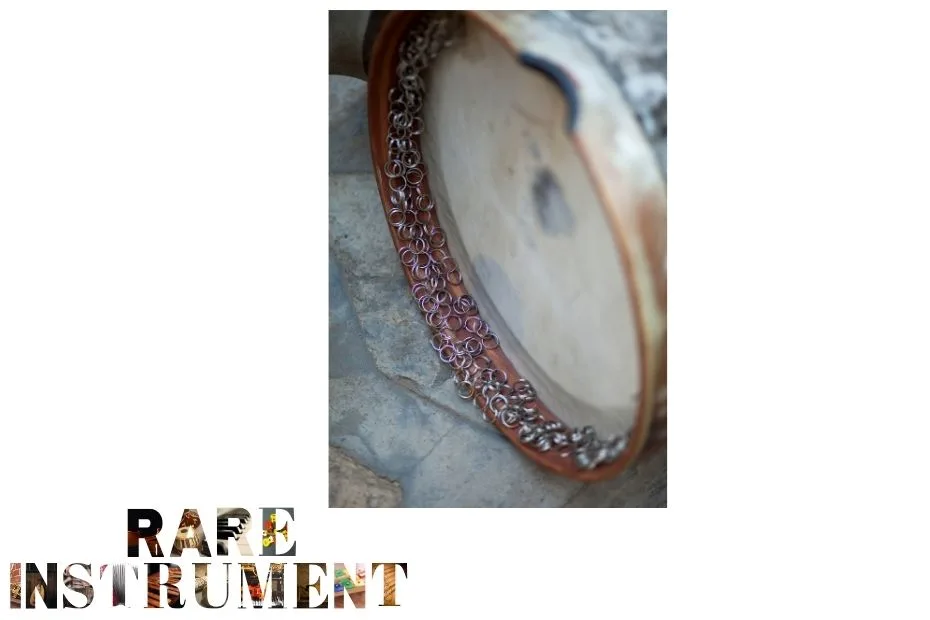
The bendir is a large frame drum associated especially with North African musical traditions. Many examples use one or more snare strings stretched against the inside of the membrane, adding a dry buzzing layer to the drum’s low, rounded tone.
Key Features of the Bendir
| Feature | Details |
|---|---|
| Regional Association | North Africa, especially Morocco, Algeria, and Tunisia, with related frame-drum traditions elsewhere in the region |
| Type | Large frame drum, often fitted with internal snare strings |
| Size | Common examples are roughly 30–50 cm in diameter, though dimensions vary by maker and tradition |
| Materials | Wooden frame, natural or synthetic membrane, and gut, nylon, or similar snare material |
| Distinctive Feature | Buzzing timbre produced by snares vibrating against the membrane |
Historical Roots and Cultural Identity
The bendir belongs to the broad family of frame drums long used across North Africa and neighboring regions. It is especially associated with Morocco, Algeria, and Tunisia, where frame drums accompany dance, communal music, devotional repertories, and regional folk traditions.
One of the bendir’s defining construction features is the use, on many instruments, of gut, nylon, or similar snare strings stretched against the inner surface of the head. When the membrane vibrates, the strings respond with a dry buzz that blends with the main drum tone.
The bendir also appears in some Sufi, Amazigh, folk, and ceremonial settings, although instrumentation differs considerably between communities and repertories. It should not be treated as a universal ritual drum for every North African tradition.
Gnawa instrumentation varies by setting and local practice. Urban Gnawa ensembles are strongly associated with a string instrument such as the guembri and metal castanets known as qraqeb, while rural practices can include large drums and castanets. Frame drums may appear in some related performance contexts, but the bendir is not a defining instrument of all Gnawa ceremonies.
Construction and Acoustic Design
The Frame and Head
The bendir typically has a broad, shallow wooden frame that can be supported with one hand while the other hand performs most of the striking. Traditional heads are commonly made from animal skin, while many modern instruments use synthetic membranes for greater stability in changing weather.
Membrane thickness and tension affect attack, bass response, sustain, and sensitivity to finger strokes. A tighter head usually responds more quickly and produces a more focused tone, while a looser natural head can produce a deeper and softer response.
The Snare System
Many bendirs have snare strings running across the inside of the membrane. These vibrate sympathetically when the head is struck and create the characteristic grainy buzz associated with the instrument.
The amount of buzz depends on snare tension, membrane tension, humidity, and the force of each stroke. Some bendirs produce only a light rasp around the note, while others have a much more obvious buzzing layer.
Core Techniques and Performance Practice
The bendir is commonly held vertically or at a slight angle. One hand supports the frame while the fingers, palm, and thumb produce contrasting bass and edge articulations.
- Dum: A lower-pitched stroke played toward the center of the membrane.
- Tak: A sharper articulation played closer to the edge.
- Buzzing strokes: Strokes that allow the snare response to remain especially audible.
- Finger rolls: Rapid alternating or repeated finger movements used to create sustained rhythmic texture.
- Muted strokes: Shortened sounds produced by controlling membrane vibration with the supporting or striking hand.
Stroke terminology is not identical across every region or teaching tradition. Arabic rhythmic terminology may be used in some settings, while Amazigh, Maghrebi, and local traditions can organize and name rhythmic patterns differently.
The Bendir in Musical Contexts
North African Ensembles
In Morocco, Algeria, and Tunisia, the bendir can accompany folk songs, regional dances, devotional music, and ensemble performance. Its combination of low membrane tone and snare buzz allows a single drum to provide both a strong pulse and a textured rhythmic surface.
In Gnawa-related contexts, the exact percussion setup depends on the ensemble and local practice. The bendir may appear alongside or near related frame-drum traditions, but it should not be described as the standard percussion instrument of the Gnawa lila. Instruments such as the guembri, qraqeb, and, in some rural settings, larger drums have more specifically documented roles.
Modern Adaptations
Contemporary percussionists use bendirs in fusion, jazz, orchestral, experimental, and world-music settings. Modern instruments may add synthetic heads, mechanical tuning systems, deeper frames, or adjustable snares while retaining the basic frame-drum playing position.
Microphones also make subtle snare response easier to capture in quiet ensembles. Positioning the microphone too close to the membrane can exaggerate individual finger impacts, so performers often balance the low drum tone with the higher-frequency buzz.
Learning and Practical Guidance
Beginners usually benefit from separating the main sound types before working on fast rhythmic cycles. A clear bass stroke, controlled edge articulation, and even pulse provide a better foundation than attempting rolls immediately.
Support the frame without squeezing it tightly. Excess tension in the thumb or wrist makes longer playing sessions tiring and can restrict movement.
Let the membrane vibrate after a center stroke. Resting the supporting hand too heavily against the head can shorten the low-frequency response.
Listen to how different striking positions change the ratio between membrane tone and buzz. The snares should add texture without masking every articulation.
Practice slowly enough to keep bass and edge strokes distinct. Speed becomes more useful once each sound remains consistent within a repeating pattern.
Performers and Modern Transmission
The bendir remains closely connected with community musicians, regional ensembles, frame-drum teachers, and percussion specialists rather than with a single standardized performance school. Playing methods can therefore differ noticeably between Moroccan, Algerian, Tunisian, and contemporary international settings.
Modern frame-drum performers have also brought bendir techniques into workshops and cross-cultural percussion projects. These settings often combine traditional hand positions with techniques developed for other frame drums, making it useful to distinguish modern concert practice from region-specific repertories.
Maintenance and Care
Natural-skin bendirs respond strongly to humidity and temperature. Dry conditions can increase membrane tension, while humid conditions can soften the head and lower its response. Store the instrument in a stable indoor environment and avoid prolonged exposure to direct sunlight, heaters, or damp storage areas.
If a natural head becomes slack, allow the instrument to acclimate gradually before making major adjustments. Strong direct heat from lamps, heaters, or intense sunlight can dry the membrane unevenly and may damage both the skin and the wooden frame.
Synthetic-headed instruments are generally less sensitive to climate, although their snares and tuning hardware still need inspection. A sudden uncontrolled rattle may indicate loose snare material, hardware, or another mechanical problem rather than the normal bendir buzz.
Buying Tips
- Inspect the membrane: look for stable tension, an even surface, and no active tears or weakened areas.
- Test the snare response: the buzz should react consistently rather than producing random loose rattles.
- Check the frame: examine the wood for cracks, separation, severe warping, or damaged edges.
- Consider diameter and weight: a larger bendir can produce a fuller low response but may be more tiring to support for long sessions.
- Compare head materials: natural skin offers greater climate sensitivity and tonal variation, while synthetic heads generally remain more stable.