
Ilimba: The Wagogo Lamellophone of Tanzania
Tanzanian Lamellophone
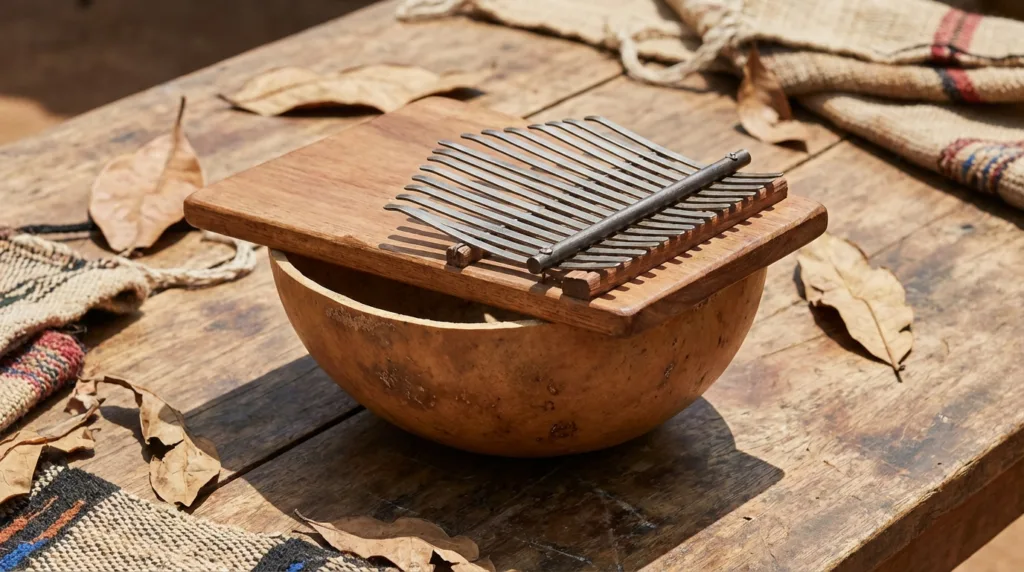
Ilimba is a plucked lamellophone associated especially with the Wagogo (Gogo) of central Tanzania. A wooden resonator supports flexible metal tongues that are plucked with the thumbs, producing a clear attack, sustained metallic resonance, and, on many traditional examples, a deliberately buzzing or grainy edge.
Plucked idiophone / lamellophone
Central Tanzania, especially Wagogo musical traditions
Flexible metal tongues fixed over a wooden resonator
Bright attack, woody resonance, and optional controlled buzz
| Detail | Typical Form | Effect |
|---|---|---|
| Instrument Family | Plucked idiophone with metal tongues | Produces a quick attack followed by metallic resonance |
| Resonator | Usually a rectangular wooden box | Adds body, warmth, and acoustic projection |
| Key Count | Documented collection examples range from roughly 16 to 49 keys | A larger set allows denser interlocking patterns and a wider pitch range |
| Layout | Key lengths may form waves or grouped zones | The arrangement supports repeated thumb patterns and, on some instruments, central reference or sympathetic keys |
| Sound Texture | Clear metallic tone with optional buzzing devices or membranes | Adds grain, shimmer, and a rougher overtone-rich edge |
What Makes an Ilimba an Ilimba
The ilimba belongs to the broad lamellophone family, alongside instruments commonly called mbira, kalimba, and sanza. Those names should not be treated as exact substitutes. The ilimba has its own regional history, layouts, tuning practices, and sound treatments.
The basic mechanism is simple. Each metal tongue acts as a spring. Plucking bends it away from its resting position; when released, it vibrates above the bridge and pressure bar while the wooden box reinforces the sound. Tongue length, thickness, material, mounting pressure, and the resonator all affect pitch and response.
Many documented Wagogo instruments are larger and more densely keyed than compact commercial thumb pianos. That extra range supports repeated bass notes, interlocking upper parts, and layered rhythmic figures without requiring large hand movements.
Names, Spellings, and Related Terms
Ilimba is the most common spelling in English-language descriptions of the Wagogo instrument. Variants such as illimba and malimba also appear in instrument descriptions and collection records. Spelling alone is not enough to identify an instrument.
For cataloging or buying, the construction is more useful than the label: look for a lamellophone with metal tongues mounted over a wooden resonator. The broad nickname “thumb piano” describes the playing action, but it can hide real differences in tuning, layout, scale, and cultural use.
Wagogo Context in Central Tanzania
The ilimba is strongly associated with Wagogo musical life in Tanzania’s Dodoma region. It has been used for solo playing, singing accompaniment, ensemble music, and repertories connected with local news, stories, and social commentary.
Ethnographic descriptions also record the instrument being played while people traveled on foot. Its repeating patterns made long journeys more pleasant and gave the player a portable accompaniment for song.
The instrument’s tone is closely tied to that setting. A clean metallic note is only part of the sound. Buzzing attachments and very thin membranes over sound holes can add a rough, vibrating layer that blends with voices and strengthens the rhythmic character.
Construction and Sound-Producing Parts
Wooden Resonator
Many ilimbas use a rectangular wooden box rather than a flat board. The enclosed air space reinforces the vibration of the tongues and gives the instrument more acoustic body. Box depth, wall thickness, openings, and overall stiffness can change how quickly the sound speaks and how much low-frequency resonance remains after the attack.
Metal Tongues
The tongues are cut or formed in different lengths to create different pitches. Documented Wagogo examples include tongues made from repurposed metal such as flattened bicycle spokes or umbrella rods. The important properties are springiness, stable mounting, and enough stiffness to return cleanly after each pluck.
Pitch is affected strongly by the vibrating length of each tongue. Moving a tongue under its retaining system changes the free length, while thickness and material also influence pitch and response.
Bridge and Pressure Bar
The bridge supports the tongues and defines where their free vibrating length begins. A pressure bar or related retaining system keeps them firmly seated. Uneven pressure can create unstable pitch, unwanted rattles, or a dead response, so this area matters both for playability and for condition assessment.
Buzzing Devices and Membranes
Some traditional ilimbas deliberately add vibration beyond the clean tongue tone. Small metal pieces may be fitted around keys, while some documented Wagogo instruments use extremely thin membranes over sound holes. Descriptions of traditional construction include spider-web material used in this role.
When air moves through or against these thin materials, the note gains a controlled buzz or growl. That texture is intentional when the parts are stable and the effect responds consistently across the instrument.
Collector’s Note: Age should be judged from several clues together. Natural wear near hand-contact areas, stable old hardware, compatible construction methods, and a coherent surface patina are more useful than one dark stain or one worn edge. Fresh screws, recent glue, replacement tongues, or newly distressed surfaces deserve closer inspection rather than an automatic rejection.
How the Keys Are Arranged
Ilimba layouts are not standardized across all makers and periods. Documented instruments include wave-like sequences of tongue lengths, broad single-row layouts, and central groups that serve a different purpose from the main playing keys.
On some historical Wagogo examples, a central group of keys functions as a tuning reference and is not intended to be played like the principal set. Other descriptions note central sympathetic keys that contribute additional resonance. These functions should not be assumed for every ilimba.
Longer, medium, and shorter tongues can be arranged in a sequence that supports repeating thumb figures.
On some documented instruments, the center contains tuning-reference or sympathetic keys rather than another ordinary playing group.
A corresponding group gives the opposite thumb access to related pitches and interlocking patterns.
Layout varies: this left-center-right model explains one documented arrangement principle. It is not a universal blueprint for every ilimba.
Pitch Organization and Tuning
Traditional ilimba tuning should not automatically be forced into modern equal temperament. Some documented Wagogo practice uses pitch relationships connected with overtone-based tuning, and pentatonic organization appears in parts of the repertory. Individual instruments can differ in scale, interval size, and reference pitch.
Contemporary instruments may be adjusted toward familiar Western pitches when they are built for mixed ensembles. That does not make the historical systems interchangeable with a standard commercial kalimba tuning.
Check the Existing Relationships
Before moving any tongue, play neighboring notes and repeated patterns. The relationships between pitches may matter more than matching a tuner display exactly.
Move in Small Increments
A small change in vibrating length can move the pitch enough to affect the surrounding pattern. Recheck the note after each adjustment.
Protect Old Hardware
On antique or collectible instruments, avoid forcing tongues or pressure bars. Corroded metal, dry wood, or old fasteners can fail before the pitch reaches the intended point.
Thumb Technique and Interlocking Patterns
The ilimba is normally played with the thumbs while the hands support or steady the resonator. A relaxed pluck lets the tongue spring freely. Excess force can produce mechanical noise without adding useful volume.
Start With an Even Pulse
Repeat two comfortable notes until the attack and volume remain consistent.
Add an Answering Note
Keep one thumb on the repeating pulse while the other inserts a short response every second or fourth cycle.
Use Damping Deliberately
Touching a tongue after the attack shortens its decay. Mixing open ringing notes with damped notes creates clearer rhythmic separation.
Build Interlocking Parts
Let each thumb maintain a simple figure. The combined result can sound denser than either hand’s part on its own.
Listening for the Ilimba’s Sound Character
- Quick metallic attack: the note starts clearly as the tongue releases.
- Woody resonance: the box adds body beneath the metal tongue.
- Controlled buzz: on instruments fitted with buzzing elements or membranes, the note carries a grainy edge rather than a purely clean ring.
- Layered decay: different tongues can overlap, creating a shifting field of resonance around repeated patterns.
- Rhythmic density: two simple thumb figures can combine into a more complex surface.
A healthy instrument should respond consistently enough that these textures feel intentional. A loose pressure bar, damaged membrane, unstable tongue, or cracked resonator can produce irregular noises that behave differently from a designed buzz.
Buying and Collecting an Ilimba
| Area | Good Sign | Inspect More Closely |
|---|---|---|
| Tongue Stability | Keys remain seated under the retaining system and return cleanly after plucking | Sliding tongues, uneven pressure, or sudden pitch movement |
| Resonator | Box joints feel stable and the wood is not actively separating | Fresh splits, loose corners, severe warping, or soft damaged wood |
| Sound | Useful response across the main playing range | Dead tongues, abrupt volume loss, or mechanical noises unrelated to intentional buzz |
| Buzz Elements | Texture appears deliberate and responds predictably | Loose hardware rattling randomly or membranes hanging detached |
| Repairs | Older repairs are stable and compatible with the original structure | Heavy glue, mismatched fasteners, bent replacement keys, or repairs that restrict vibration |
Key count alone does not determine musical or collector value. A smaller instrument with stable hardware, coherent construction, and an even response can be more useful than a larger example with crowded, poorly seated tongues.
Care Warning: avoid soaking the wood, polishing the tongues aggressively, or applying heavy oils around the bridge and retaining hardware. Store the instrument so nothing presses on the tongues, and keep humidity reasonably stable to reduce movement in old wood.
Playing With Voice and Other Instruments
The ilimba can work as a solo instrument, but Wagogo practice also places it with singing and other instruments. Its clear attack makes repeated figures audible beneath a voice, while the resonator and buzzing texture fill space without requiring sustained chords.
With Voice
Choose a pitch area that sits comfortably under the singer. Repeated figures can support narrative or song-based phrasing without crowding the text.
With Hand Percussion
Leave enough space around the ilimba’s attack. Dense drumming in the same rhythmic register can mask the tongue articulation.
With Bowed or Plucked Strings
Check pitch relationships by ear before assuming equal-tempered intervals. Traditional and modern ilimbas may not match a fixed Western tuning system exactly.
A Short Practice Sequence
Two Minutes: Even Notes
Alternate two comfortable keys and listen for equal attack without forcing the thumbs.
Three Minutes: Add a Response
Keep the first figure steady while the opposite thumb adds one note every second cycle.
Three Minutes: Interlock
Give each thumb a short repeating part and listen to the composite rhythm rather than either hand alone.
Two Minutes: Shape the Decay
Alternate open notes with lightly damped notes to hear how sustain changes the groove.
Mini FAQ
Is an ilimba the same as a kalimba?
No. They belong to the same broad lamellophone family, but ilimba refers to a Tanzanian tradition with its own regional construction, layouts, tuning practices, and repertories. “Kalimba” is now widely used for many compact commercial thumb pianos.
Why do some ilimbas buzz?
The buzz can be intentional. Traditional examples may use small metal attachments or very thin membranes over sound holes to add a rough, overtone-rich vibration around the main tongue tone.
How many keys does an ilimba have?
There is no single fixed count. Documented collection examples include instruments with roughly 16 to 49 keys, showing how much the layout can vary between makers and instruments.
What are the center keys for?
It depends on the instrument. On some documented examples, a central group serves as a tuning reference and is not played as part of the main set. Other descriptions identify sympathetic central keys that reinforce resonance.
Can an antique ilimba be retuned?
Sometimes, but condition comes first. Moving old tongues or retaining hardware can stress aged wood and metal. Small adjustments are safer, and valuable instruments are best examined before any major retuning.