
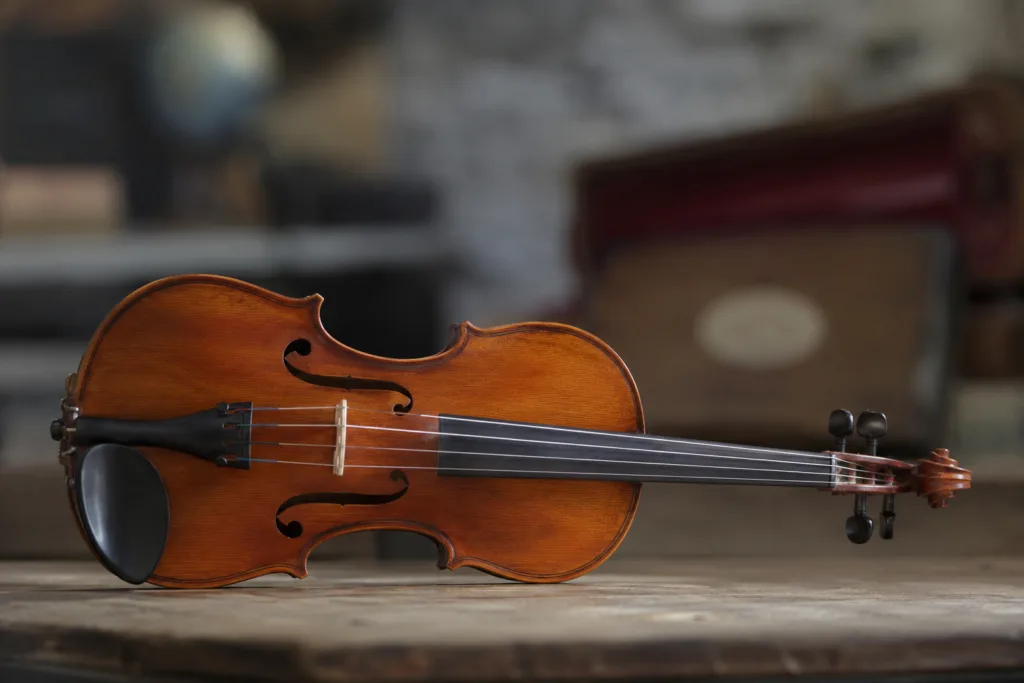
International Instrument Travel Profile
A vintage musical instrument can cross an international border without difficulty only when its materials, ownership, travel purpose, and route match the applicable wildlife-trade rules. Rosewood, pernambuco, elephant ivory, tortoiseshell, reptile skin, coral, shell, baleen, and protected feathers can turn a familiar instrument into a controlled specimen even when the owner has no intention of selling it.
International travel with a vintage instrument is not decided by age, value, or the owner’s good faith. The controlling questions are more exact: which species are present, when the material was taken from the wild, whether the object is a finished musical instrument or an unfinished component, why it is crossing the border, whether ownership will change, and which countries will inspect it on departure, transit, arrival, and return.
CITES regulates international trade in listed wildlife and plant specimens. In this setting, “trade” means cross-border movement and is not limited to a commercial sale. A musician carrying a violin bow for a concert, a collector sending a guitar for restoration, and an auction house shipping an instrument to a buyer may all enter the CITES system, but their document paths can be different.
The safest starting point is a component-by-component material inventory. “Rosewood,” “ivory-colored,” “shell,” and “exotic leather” are not precise enough. A scientific species name, a dated maker record, photographs, serial numbers, repair history, and a clear ownership trail are far more useful at a permit office or inspection point.
Why a Personal Instrument Can Become a Border-Controlled Object
An instrument may be lawful to own at home yet require a permit or certificate when it leaves the country. Domestic possession, international movement, commercial export, temporary admission, and return after repair are separate events. A document that proves ownership does not automatically authorize export, and a customs document does not replace a wildlife certificate.
The same instrument can also contain several regulated materials. A nineteenth-century violin bow may combine a pernambuco stick, an ivory tip, a tortoiseshell frog, and a mother-of-pearl slide. Each component must be considered on its own. An exemption covering one material does not clear the others.
Common Confusion: CITES does not classify an entire object by its dominant material. A tiny protected component can affect the document route even when most of the instrument is maple, spruce, brass, or another unrestricted material.
Start with the Materials, Not the Instrument’s Age
Old instruments often have incomplete invoices, replaced fittings, undocumented repairs, and trade names that changed over time. A label inside the body may help date the instrument, but it may say nothing about a later fingerboard, bow tip, decorative mount, or replacement case.
| Instrument or Component | Material to Check | Why the Description May Be Unclear | Useful Evidence |
|---|---|---|---|
| Guitar fingerboard, bridge, headplate, back, or sides | Rosewood, ebony, mahogany, or a look-alike timber | “Rosewood” can refer to several species and unrelated woods | Maker specification, serial number, period catalogue, wood identification |
| Violin, viola, cello, or bass bow | Pernambuco, brazilwood, ivory, tortoiseshell, lizard skin, shell | The stick and fittings may fall under different listings | Bow maker certificate, appraisal, detailed photographs, repair record |
| Piano, accordion, or harmonium keys | Elephant ivory, bone, celluloid, or polymer | Age and color alone do not identify the material | Qualified examination, manufacturing record, close photographs |
| Bagpipe mounts, ferrules, or decorative caps | Ivory, horn, bone, marine mammal material, or synthetic substitute | Small turned fittings are often replaced during repairs | Restoration invoice, maker statement, measurements, component images |
| Drumhead, banjo head, bellows, strap, or case | Reptile skin or other protected animal material | The accessory may be regulated even if the instrument body is not | Material invoice, tannery or maker record, species statement |
| Inlay, pickguard, frog slide, or ornamental eye | Shell, tortoiseshell, coral, ivory, or imitation material | Decorative pieces can be too small for casual visual identification | Macro photographs, expert description, conservation report |
Record Original and Replacement Parts Separately
A pre-Convention instrument may contain a much newer regulated component. A bow made before a species was listed can later receive a replacement ivory tip or tortoiseshell frog. The date of the instrument does not automatically establish the date or legality of the replacement material.
Document the location, size, appearance, and repair history of every suspect component. Do not remove, sand, recolor, or replace a part merely to make travel easier without first consulting a qualified restorer and the relevant authority. Alteration can reduce historical value, erase identifying features, and create a mismatch with earlier photographs or certificates.
Rosewood Rules Depend on the Exact Species
Rosewood is a trade name, not a single botanical category. It may refer to several species of Dalbergia, to woods from other genera, or to terms used differently by dealers in different countries. Border documents work best with a scientific name rather than a broad commercial label.
Brazilian Rosewood: Dalbergia nigra
Brazilian rosewood is listed in CITES Appendix I and must be treated separately from the finished-instrument exemption that applies to many Appendix II rosewoods. It appears in vintage classical and steel-string guitars, veneers, bridges, headplates, woodwind parts, and decorative components. A claim that an instrument is “old” or “pre-ban” is not enough on its own.
Useful evidence can include a dated manufacturer specification, a serial number tied to a production period, an original invoice, a previous permit, an insurance schedule, period catalogues, repair records, and a qualified material opinion. Pre-Convention status concerns when the protected specimen was acquired from the wild under CITES rules, not merely when the current owner bought the instrument.
Other Dalbergia Species and Annotation #15
Annotation #15 excludes finished musical instruments, finished musical instrument parts, and finished musical instrument accessories from CITES controls for the Appendix II listings to which that annotation applies. This is why many completed instruments made with Indian rosewood, African blackwood, cocobolo, or another covered Dalbergia can travel without a CITES permit based solely on that wood.
The exemption does not turn “rosewood” into a universal safe label. It does not remove controls from Brazilian rosewood, unfinished timber, loosely defined components, or another listed material fitted to the same instrument. National law can also be stricter than the Convention.
Names That Need Verification
Confirm whether the wood is Dalbergia nigra. This name carries a different permit risk from most finished Appendix II rosewood instruments.
The term may refer to Brazilian rosewood in some markets and to unrelated woods elsewhere. The commercial name alone is not dependable.
This broad European trade term can cover several rosewoods. Maker records or a species-level opinion may be needed.
In bow making, this can refer broadly to several reddish tropical woods. Pernambuco is Paubrasilia echinata, also called brazilwood or pau-brasil in CITES material, but a bow-market use of “brazilwood” should not be assumed to identify the species without supporting evidence.
2026 Pernambuco / Brazilwood CITES Rules
Pernambuco, Paubrasilia echinata, remains listed in CITES Appendix II. The revised Annotation #10 took effect on March 5, 2026. U.S. Fish & Wildlife Service guidance states that finished pernambuco musical instruments, finished musical instrument parts, and finished musical instrument accessories can travel internationally without a CITES document when the movement falls within the annotation’s specified non-commercial purposes and its conditions are met.
Non-Commercial Travel after March 5, 2026
The permitted purposes include paid and unpaid performance, personal use, display, loan, competition, teaching, appraisal, and repair. A professional musician does not lose this treatment merely because a concert or performance is paid. The payment is for the musician’s work; the instrument or bow itself must not be sold or transferred during the trip.
- The item must be a finished musical instrument, finished musical instrument part, or finished musical instrument accessory.
- The international movement must be for one of the non-commercial purposes covered by Annotation #10.
- Paid performance is included, as are unpaid performance, teaching, personal use, display, loan, competition, appraisal, and repair.
- Ownership must not change during the trip.
- The item must not be transported abroad for sale, transfer, or disposal outside the owner’s usual country of residence.
- For the U.S. Fish & Wildlife Service treatment of this exemption, the instrument or bow must return to the individual’s country of usual residence.
Performance booking confirmations, tour schedules, teaching arrangements, loan papers, appraisal appointments, or repair work orders can help show why the item is travelling. The U.S. Fish & Wildlife Service notes that border officers may consider relevant records when determining whether a musician’s movement fits the non-commercial treatment.
Ownership Transfer Changes the Situation
The exemption does not cover taking a pernambuco bow abroad to deliver it to a buyer, placing it on foreign consignment, donating it, exchanging it, gifting it, or otherwise transferring ownership while outside the owner’s usual country of residence. A trip that begins as a performance, appraisal, or repair trip can therefore require a different document path if the owner decides to leave or transfer the bow abroad.
Do Not Treat “Non-Commercial” as “Unpaid”: Under the revised Annotation #10, paid performance is expressly included among the permitted purposes. The dividing issue is what happens to the pernambuco item, including whether ownership changes or the item is taken abroad for sale, transfer, or disposal.
Commercial Sale and Export Are Different
International commercial trade follows different rules. The revised annotation sets a zero quota for wild-harvested specimens traded for commercial purposes. U.S. Fish & Wildlife Service guidance states that international commercial sale of a finished pernambuco bow may still be possible where the wood qualifies as pre-Convention material harvested before September 13, 2007, with the required CITES pre-Convention certificate, or where the wood comes from an accepted non-wild source and the appropriate CITES document can be issued.
Raw wood, bow blanks, unfinished sticks, and other items that are not finished musical instruments, finished parts, or finished accessories do not receive the finished-item non-commercial travel treatment. Their international movement may require a CITES permit or certificate even when no sale is planned.
European Union Rules from June 29, 2026
Commission Regulation (EU) 2026/1383 entered into force on June 29, 2026, updating the Annex to Council Regulation (EC) No 338/97 to reflect the CoP20 changes to Pernambuco Annotation #10. Paubrasilia echinata remains in EU Annex B, with the revised annotation distinguishing qualifying non-commercial movement of finished musical items from commercial trade.
For a commercial import of a finished pernambuco bow from a non-EU country into the European Union, the finished-item non-commercial exception does not apply. The EU Annex B import route therefore requires an import permit issued by the management authority of the destination Member State, together with the applicable CITES export permit or re-export certificate from the third country. These documents should be secured before the bow is shipped or carried across the border for the transaction.
Qualifying finished musical instruments, finished musical instrument parts, and finished musical instrument accessories remain outside Annotation #10 controls when they move only for paid or unpaid performance, personal use, display, loan, competition, teaching, appraisal, or repair, provided ownership does not change and the item is not transported for sale, transfer, or disposal outside the owner’s State of usual residence. Other listed materials fitted to the same bow or instrument can still trigger separate EU or national requirements.
EU Rule: A sale or other commercial import from a third country should not be treated like a performance or repair trip. For a finished pernambuco bow entering the EU commercially, check both the third-country CITES export or re-export document and the destination Member State’s EU import permit.
Keep Provenance and Purchase Records
Permit-free non-commercial travel does not make provenance records useless. Keeping an invoice, dated appraisal, maker or dealer statement, serial number, repair history, earlier CITES papers, photographs, and records of prior ownership can help identify the bow and support its history if its status is questioned later.
This matters even more if the bow might eventually be sold internationally. The U.S. Fish & Wildlife Service encourages owners and businesses to retain records showing purchase date, prior ownership, wood origin, and import or export history. For a pre-Convention certificate, several forms of evidence may be considered when original receipts are unavailable.
Mixed-Material Warning: The 2026 pernambuco treatment applies to the pernambuco element. An ivory tip, tortoiseshell frog, reptile-skin grip, or another listed component can still have separate CITES or national-law requirements.
Countries may apply stricter domestic measures than the minimum CITES rules. Travelers should therefore check the requirements of the departure, transit, destination, and return countries rather than assuming that the U.S. treatment will be applied identically everywhere.
Official rules: U.S. Fish & Wildlife Service — Pernambuco CITES Annotation #10 Implementation FAQs; EUR-Lex — Commission Regulation (EU) 2026/1383.
Ivory Requires Species, Date, and Country-Specific Checks
Ivory appears in bow tips and frogs, piano key coverings, bridge pins, bagpipe mounts, accordion fittings, buttons, ferrules, and decorative inlay. A pale component may instead be bone, antler, mammoth ivory, celluloid, casein, or modern polymer. Visual color is not enough to establish the material.
First Determine What the Material Is
A useful appraisal or specialist report should identify the exact component examined, state the likely material and species when possible, describe the method used, include clear photographs, record the date, and explain the examiner’s qualifications. A report can support a permit application, but it is not itself a CITES permit.
“Antique” Is Not a Universal Travel Exemption
An instrument being more than one hundred years old does not automatically authorize travel in every country. CITES rules interact with national wildlife law, customs procedures, antique definitions, port restrictions, and domestic ivory controls. Repairs can also matter. A century-old instrument fitted with newer ivory may not qualify under an antique provision that excludes later modifications.
For travel involving the United States, musicians making repeated border crossings with an ivory-bearing instrument are directed to the CITES Musical Instrument Certificate process. The owner must identify whether the component is African or Asian elephant ivory and establish the relevant age and lawful acquisition history. Wildlife items must also be declared through the required inspection procedure, and antique material may be limited to designated ports.
Mammoth Ivory and Bone Still Need Clear Identification
Mammoth ivory is not regulated by CITES in the same way as elephant ivory, but an unexplained ivory-like fitting can still be detained while officers determine what it is. Some jurisdictions also have domestic restrictions that extend beyond CITES. Carrying a qualified identification statement is safer than expecting an officer to distinguish mammoth ivory, elephant ivory, bone, and plastic at the counter.
Other Materials Hidden in Vintage Instruments and Accessories
May appear in bow frogs, pickguards, decorative plates, and inlay. Genuine shell should not be confused with patterned celluloid or modern resin.
May be used on bow grips, drumheads, bellows, straps, or cases. The species and whether the skin is part of the instrument or an accessory both matter.
Baleen, marine mammal ivory, coral, and some shells can appear in historic fittings or ornaments and may be governed by rules beyond CITES.
Feathers attached to ceremonial or regional instruments may be controlled by wildlife law even when the instrument itself is made from ordinary wood and hide.
Mother-of-pearl is not a single species description. Some shell materials are unrestricted, while certain giant clams and other molluscs are listed. “Shell inlay” therefore needs the same care as “rosewood”: identify the species when there is a realistic chance that the material is controlled.
The Purpose of the Trip Changes the Document Path
The travel purpose should be written in plain, consistent terms before any application is filed. A performance trip, temporary loan, repair shipment, permanent relocation, and international sale can involve the same object but different certificates, declarations, and return conditions.
| Movement | Questions to Resolve | Evidence to Prepare |
|---|---|---|
| Personal performance | Will the instrument return with the musician? Are any listed materials outside an exemption? | Itinerary, engagement details, ownership record, instrument identity file |
| Orchestra tour | Will the instruments remain together? Will any player travel separately? | Inventory, group travel plan, individual certificates where needed |
| Loan or competition | Who owns the instrument? Does the loan permit international travel? | Signed loan agreement, competition entry, insurance schedule |
| Repair or appraisal | Will a listed component be removed, replaced, retained, or sold? | Work order, component list, before-and-after photographs, return plan |
| Sale, consignment, or auction | Where and when will ownership change? Is pre-Convention status established? | Permit or certificate, sale agreement, provenance chain, lawful import record |
| Permanent relocation | Is the object part of a household move, or is it a separate export? | Residence documents, ownership evidence, export and import approvals |
| Unaccompanied cargo | Can the chosen certificate cover cargo movement? Who will present the item for inspection? | Air waybill, customs agent instructions, permit originals, inventory |
Musical Instrument Certificates, Single-Use Permits, and ATA Carnets
CITES Musical Instrument Certificate
A Musical Instrument Certificate is a passport-like document intended for repeated non-commercial cross-border movement of eligible instruments. It is commonly issued for up to three years and must stay with the instrument or authorized traveler. Each border validation must be completed as required, and the instrument must be returned to the country that issued the certificate.
The certificate is generally available for pre-Convention material or qualifying material from an accepted captive-bred or artificially propagated origin. It does not legalize an undocumented specimen, and not every CITES Party applies the certificate in exactly the same way. Every destination and transit country should be checked before travel.
Single-Use Export, Re-Export, or Pre-Convention Documents
One-time documents are more likely when the movement is a sale, permanent export, first shipment, or transaction that does not fit repeated non-commercial travel. A pre-Convention certificate depends on evidence that the specimen was acquired from the wild before the relevant CITES listing date. Current ownership date alone does not establish that status.
Travelling Exhibition Certificate
A museum, orchestra, or organized exhibition may use a travelling exhibition certificate when eligible items remain together and return home. If one performer takes an instrument away from the group route, an individual document may be needed.
ATA Carnet
An ATA Carnet deals with temporary customs admission and can help avoid import duty or tax on professional equipment that will be re-exported. It does not replace a CITES permit, Musical Instrument Certificate, wildlife declaration, or inspection requirement.
Map the Entire Route, Including Transit Airports
Checking only the destination leaves gaps. The route includes the country of export, every transit country where customs control may occur, the destination, any additional tour country, the final country of re-export, and the country of return.
Identify the Exporting Country
The permit is normally issued by the authority connected to the country of export or usual residence. Confirm which office has jurisdiction over the owner and the specimen.
Check Each Transit Point
An airside connection may be treated differently from a transfer that requires baggage collection, airport change, overnight storage, or entry through customs.
Confirm the Arrival Port
Some countries accept listed specimens only through designated ports or during wildlife inspection hours. A convenient airport may not be an authorized entry point.
Plan the Return Movement
Certificates and permits may need exit and re-entry validation. The return route should be checked with the same care as the outbound journey.
Hand baggage, checked baggage, and cargo are not interchangeable. A document issued for an accompanied instrument may not fit a shipment moving separately through a freight agent. The person responsible for presenting the instrument and original documents should be named before departure.
Build an Instrument Identity and Provenance File
A well-organized file helps an authority match the document to the physical instrument. It also reduces uncertainty when maker records are incomplete or several regulated materials appear in one object.
- Maker, brand, model, and serial number
- Dimensions, weight, labels, stamps, and inscriptions
- Full front, back, side, and interior photographs
- Close images of cracks, repairs, fittings, and unique marks
- Case, bow, and accessory identification where relevant
- Scientific species names when known
- Exact location of each listed material
- Maker specifications or restoration reports
- Qualified appraisal or material identification
- Original and replacement components separated clearly
- Invoice, inheritance record, or signed transfer document
- Insurance schedule and earlier appraisals
- Dated photographs, catalogues, or auction records
- Previous permits, certificates, and validated import papers
- Chain of custody when the current owner was not the importer
- Concert, teaching, competition, or exhibition details
- Loan agreement or repair work order
- Full itinerary, transit points, and return booking
- Cargo papers when the instrument travels separately
- Contact details for inspection offices and customs agents
Repairing a Vintage Instrument Abroad
Repair travel becomes more complicated when a protected part will be removed, replaced, retained by the workshop, or returned separately. The instrument that leaves may not be materially identical to the instrument that comes back.
Questions for the Restorer Before Shipment
- Will any listed wood, ivory, shell, skin, feather, or marine material be removed?
- Will the removed component return with the instrument?
- What species and origin will be used for a replacement?
- Will the old part be discarded, stored, sold, or transferred?
- Will the description, weight, markings, or photographs on a certificate become inaccurate?
- Could the repair be completed with a clearly identified non-listed substitute?
The work order should describe the instrument before repair, the proposed material changes, and the fate of removed components. After the work, obtain an invoice naming each replacement material and retain before-and-after photographs. A finished pernambuco bow travelling only for repair can fit the 2026 non-commercial treatment when the other Annotation #10 conditions are met, but a plan to sell the bow, transfer ownership, or leave it abroad changes the situation.
Borrowed Instruments, Foundation Loans, and Orchestra Property
The traveler and legal owner may be different people. A loaned violin, bow, guitar, or historical wind instrument should carry a signed agreement identifying both parties, the travel dates and countries, the authorized purpose, the obligation to return the object, and any restriction on repair, transfer, or sale.
Group certificates work best when the covered instruments remain together. A player who leaves the orchestra route, travels through a different country, or returns on another date may need an individual certificate. Insurance authority and CITES authority are also separate: permission from the owner or insurer does not replace a required wildlife document.
A useful loan agreement identifies the instrument by maker, serial number, measurements, photographs, and listed materials rather than by a short description such as “old violin and bow.”
Sales, Auctions, Consignment, and Gifts
The travel purpose changes when an instrument or component is offered for sale, delivered to a buyer, left on consignment, donated, exchanged, or gifted abroad. A trip that began as an appraisal or repair visit can become a commercial movement if ownership may change before the item returns home.
Do not rely on a personal-effects exemption for an item already committed to a foreign buyer. The exporting country may require a CITES export permit, re-export certificate, or pre-Convention certificate, while the importing country may require a separate approval. The documents normally need to be issued before the instrument leaves, not after it arrives at customs.
Pernambuco deserves particular care after March 5, 2026. Permit-free treatment under Annotation #10 is tied to finished musical items moving for the listed non-commercial purposes without a change of ownership and with return to the traveler’s country of usual residence. International commercial trade in wild-harvested material is subject to the zero-quota rule, while qualifying pre-Convention or non-wild material follows the applicable CITES document path.
What Happens at the Border
Before Check-In
Arrive while the wildlife or CITES inspection office is open. Keep the instrument accessible and do not surrender it as checked baggage before any required examination or endorsement.
At Export
Declare the instrument when required and present the original permit or certificate. Confirm that the officer validates the correct box and that the physical item matches the document description.
At Import
Use the declared-goods or wildlife channel when instructed. Do not assume that an airline cabin approval or customs carnet has cleared the CITES aspect of the movement.
On Return
Present the instrument and validated documents again when required. Be ready to show that ownership did not change and explain any repair, replaced fitting, or route change.
Original documents are often required when a permit or certificate applies. Digital scans are useful backups but may not replace the paper certificate. Names, passport details, species, quantities, serial numbers, validity dates, and travel purpose should be checked before departure. A small clerical mismatch can delay clearance.
Travel Myths That Create Delays
“The instrument is antique, so no wildlife documents can be required.”
Age may support a pre-Convention or national antique claim, but the traveler still has to prove the material, date, lawful acquisition, and applicable travel route.
“All finished rosewood instruments are exempt.”
Annotation #15 helps many finished Appendix II rosewood instruments, but Brazilian rosewood, unfinished material, and other listed components remain separate issues.
“A paid concert makes a pernambuco bow trip commercial.”
Annotation #10 expressly includes paid performance among the covered non-commercial purposes. The bow must not be sold or transferred during the trip and must return to the traveler’s country of usual residence.
“An ATA Carnet or appraisal clears the instrument.”
A carnet manages temporary customs admission, while an appraisal supports identity, age, or material claims. Neither replaces a required CITES permit or certificate.
Pre-Departure Instrument Travel Check
Identity
- The instrument, bow, case, and regulated accessories are individually identified.
- Serial numbers, maker marks, measurements, and unique damage are photographed.
- Original and replacement parts are recorded separately.
Materials
- Every suspect wood, ivory-like fitting, shell, skin, feather, and marine material has been reviewed.
- Scientific species names are recorded where identification is possible.
- Mixed-material components have not been cleared under a single-material exemption.
Movement
- The purpose is defined as performance, personal use, loan, display, competition, teaching, appraisal, repair, sale, or relocation.
- For pernambuco travel under the 2026 non-commercial treatment, any possible ownership transfer has been ruled out and the return to the traveler’s country of usual residence is planned.
- Hand baggage, checked baggage, and cargo arrangements match any document requirements that apply.
Route
- Departure, transit, destination, additional tour stops, and return countries have been checked.
- Designated ports, inspection offices, appointment rules, and opening hours are confirmed where relevant.
- The return validation process is understood before the outbound flight when a certificate requires validation.
Documents
- Required permits or certificates have been issued before movement.
- For a commercial import of a finished pernambuco bow from a non-EU country into the European Union, the destination Member State’s import permit and the applicable third-country CITES export or re-export document are in place.
- Species, quantities, owner details, serial numbers, and validity dates match the instrument.
- Original documents are packed with secure digital copies kept separately.
- Loan, performance, competition, appraisal, or repair records explain the stated purpose.
- Purchase, provenance, ownership, and earlier import or export records are retained even when the current trip qualifies for a CITES document exemption.
Postpone the movement when the species, ownership history, permit route, transit treatment, or inspection location remains unresolved. An explanation at the airport cannot replace a document that had to be issued before export.