The concert bass drum is the heartbeat of the orchestra and wind ensemble—an instrument that can whisper with velvet thunder or shake a hall with cinematic impact. Whether you’re equipping a school program, upgrading a professional pit, or choosing a dedicated studio drum, understanding sizes, shells, heads, stands, and mallets will help you unlock the drum’s vast expressive range.
| Feature | Typical Options | Why It Matters |
|---|---|---|
| Diameter | 32″, 36″, 40″+ | Controls fundamental pitch, projection, and “cinematic” depth. |
| Shell Material | Maple, Birch, Mahogany, Hybrid | Shapes warmth, attack, and sustain—from lush and round to tight and articulate. |
| Head Type | Calfskin, Synthetic (coated/clear, single/double-ply) | Determines response to humidity, clarity of attack, and roll blending. |
| Mounting | Suspended vs Cradle | Suspended systems increase resonance and ease of rotation; cradles add stability. |
| Mallets | General, Roller, Soft, Staccato | Mallet density and shape change articulation, warmth, and roll smoothness. |
What Is a Concert Bass Drum?
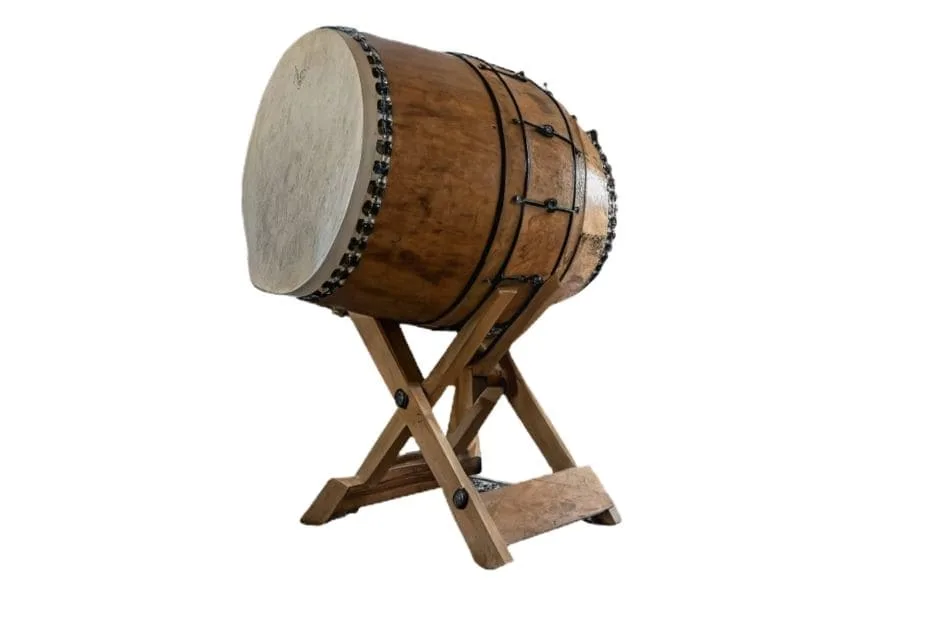
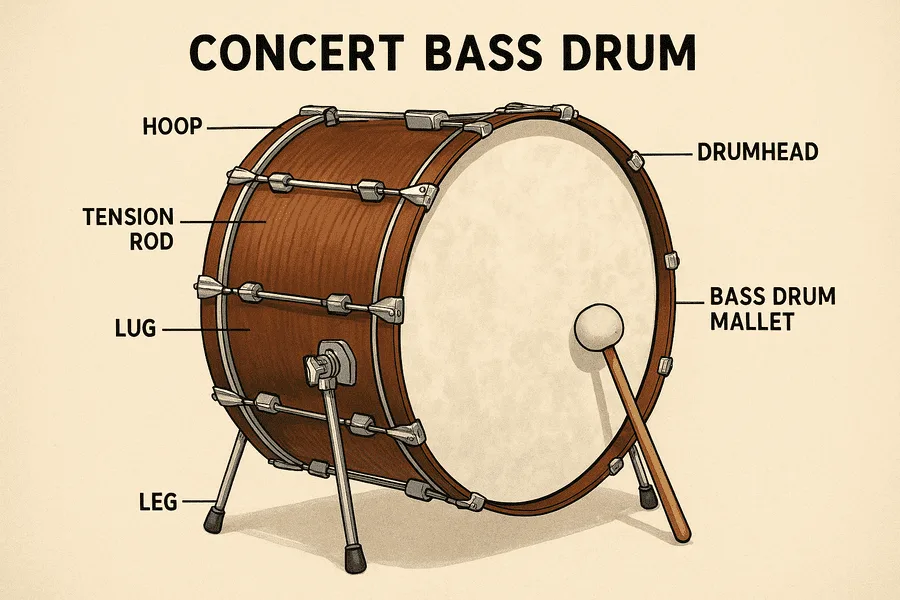
A concert bass drum is a large, double-headed drum designed for orchestral and concert band settings. Unlike marching bass drums, it prioritizes a broad, resonant tone with long sustain. Typical diameters range from 32″ to 40″ (81–102 cm), with depths often between 18–22 inches. The instrument is usually mounted on a rotating stand to facilitate quick angle changes for rolls, dampening, and crescendos.
Choosing the Right Size and Shell
Diameter and Use Cases
- 32″: Ideal for chamber ensembles, small halls, and detailed repertoire where clarity and agility are key.
- 36″: The most versatile “all-rounder” size for school programs and general orchestral literature.
- 40″+: Best for large symphonic works and film music where massive, low-end bloom is required.
Shell Materials and Tone
- Maple: Warm, full-bodied, smooth sustain—excellent for lush orchestral textures.
- Birch: Tighter low end with a focused attack—great for articulate passages and modern halls.
- Mahogany: Deep and vintage-leaning warmth—rich in fundamental.
- Hybrid: Layered plies (e.g., maple/birch) blend warmth and focus.
For most settings, a maple or hybrid shell in 36″ offers the best balance of projection and manageability.
Heads, Tuning, and Dampening
Head Choices
- Calfskin: The traditional sound—supple, complex, and wonderfully organic. Sensitive to humidity and requires more care.
- Synthetic (coated or clear): Stable tuning, consistent sound across climates. Coated heads warm the attack; clear heads yield brighter articulation.
Tuning Approach
Tune both heads evenly to avoid unwanted overtones, then fine-tune by a quarter turn on one head to shape sustain and articulation. Many pros tune slightly lower than you think—let the hall support the bloom. Aim for a comfortable roll pitch that blends with cellos and basses rather than a “note” that sticks out.
Dampening Methods
- Hand/knee damping: Your best “variable muffler.” Practice gentle contact near the head edge for subtle control.
- Felt strips: A thin strip under one head reduces ring without killing resonance.
- External pads/blankets: Use sparingly; better for amplified pit work than symphonic settings.
Stands, Suspension, and Ergonomics
A fully suspended frame minimizes shell contact, improving resonance and enabling smooth rotation. Look for:
- Height adjustability to align the beater strike point near center (slightly above center for warmth).
- Lockable casters for safe transport on stage.
- Balanced rotation so one hand can reposition the drum mid-piece.
Cradle designs are durable and budget-friendly but can restrict resonance and angle changes. For serious orchestral use, a suspended stand is worth the investment.
Mallets and Articulation
- General: Medium core with felt—default choice for most repertoire.
- Roller: Larger, softer heads for seamless rolls and swells.
- Soft: Big, fluffy tone for Mahler, Wagner, and cinematic scores.
- Staccato: Firmer core for sharp accents and rhythmic clarity.
Keep a matched pair and a single heavy mallet on hand. Single-mallet playing emphasizes clarity; two-mallet rolls create lush, even swells. Experiment with striking zones: center for body, off-center for definition.
Core Playing Techniques
Rolls and Swells
For smooth orchestral rolls, angle the drum slightly and alternate strokes with relaxed wrists, adjusting distance and mallet hardness to match dynamic requirements. Use your non-playing hand for micro-dampening to control bloom at the end of crescendos.
Accents, Punctuations, and Ghosts
Accents benefit from a firmer mallet and a slightly off-center strike. For soft “breathing” punctuations, play at the edge with a general or soft mallet and add gentle hand damping to contain decay.
Combining With Cymbals
The classic gran cassa e piatti combo demands coordination. Strike the bass drum a hair earlier than the cymbals to let its slow wave bloom, or use a shared swing for explosive tutti hits. Always rehearse release timing to avoid a messy tail.
Recording and Amplification Tips
- Close mic: Place a large-diaphragm condenser or dynamic 12–20 inches off the head, slightly off-center to reduce “air blast.”
- Ambient mic: Add a room mic 6–10 feet away to capture bloom; blend to taste.
- Stage reinforcement: For pits, a boundary mic near the shell can add presence without feedback. High-pass gently around 25–35 Hz and notch any 120–250 Hz muddiness as needed.
- Noise control: Quiet the frame and casters; any rattle will be magnified by microphones.
Care and Maintenance
- Climate: If using calfskin, store with controlled humidity. With synthetics, check tension seasonally.
- Head seating: Reseat and retune after major changes in weather or transport. Mark lug positions for quick resets.
- Hardware: Lubricate lugs lightly and inspect stands for wobble; replace worn rubber feet.
- Transport: Use padded covers and lock casters; never roll over cables or thresholds at speed.
Recommended Models and Budget Tiers
While availability varies by region, these makers are known for reliable concert bass drums: Adams, Yamaha, Pearl, Ludwig, and Majestic. As a rough guide:
- Education/Budget: 32″–36″ with synthetic heads, cradle or entry suspended stand—durable and cost-effective.
- Intermediate: 36″ suspended frame, maple or birch shell, quality casters and rotation—ideal for most halls.
- Professional: 36″–40″+ premium shells, performance suspension, calf or high-grade coated synthetics—maximum resonance and nuance.
Quick Buying Checklist
- Target size: 36″ for versatility; 40″ for symphonic power; 32″ for smaller venues.
- Shell voice: Maple or hybrid for warmth and balance.
- Stand: Suspended, rotating with reliable casters.
- Heads: Coated synthetic for stability; calfskin for traditional color if your climate allows.
- Mallet kit: General + Roller + Soft + Staccato to cover the literature.
- Accessories: Felt strips, protective cover, spare heads, and a small tool kit.
Final Thoughts
When carefully chosen and thoughtfully played, the concert bass drum becomes more than a low-frequency accent—it’s a color instrument capable of breath, depth, and narrative power. Start with the right size and stand, pair them with responsive heads and a small mallet arsenal, and practice nuanced dampening. Your orchestra, audience, and audio engineer will hear the difference.