
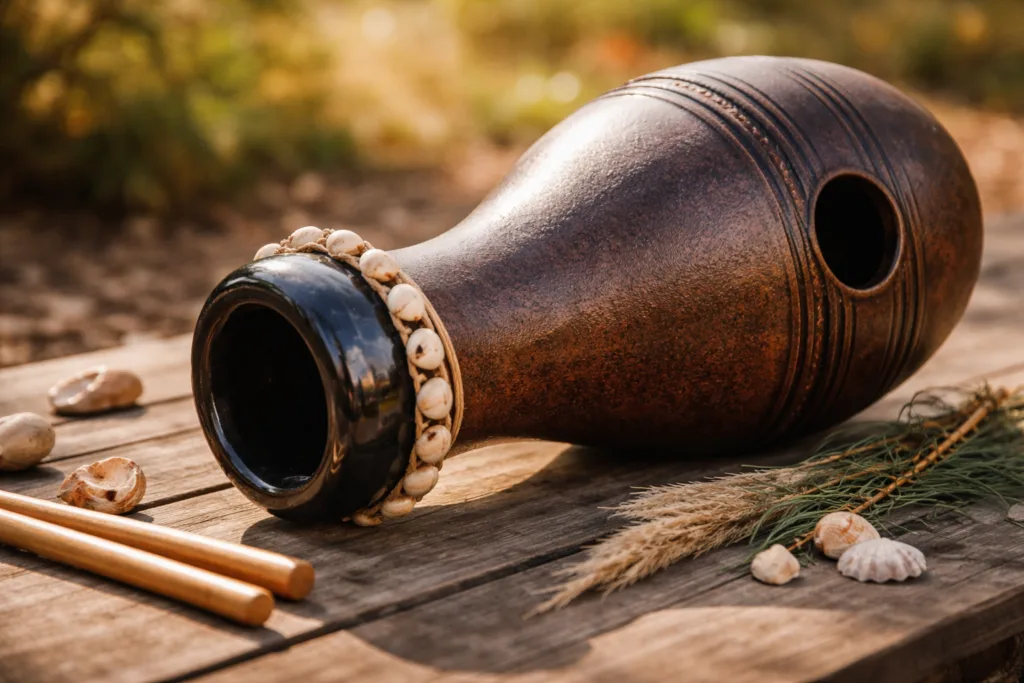
🥁 The Ibo Drum is most often used as a pot drum in modern percussion circles—closely tied to the Igbo (often spelled “Ibo” in older English) tradition of Nigeria. It’s loved for its deep “pop” bass, airy overtones, and the way it can sound rhythmic and melodic in the same breath.
- 🏺 What “Ibo Drum” usually means, and why it’s so often linked with the udu (clay vessel drum)
- 🧠 How the sound works: air + clay doing a clever little dance inside the chamber
- 👐 Practical playing moves you can try right away, plus a short practice flow
- 🧰 Care tips for collectors who want long-term preservation
🎛️ A small “tone palette” (not a measurement, just a feel). Many players reach for an Ibo Drum when they want low-end air without hauling a big drum.
● ● ● ● ○
round and warm
● ● ● ○ ○
clean, not harsh
● ● ● ○ ○
breathy shimmer
● ● ● ● ○
taps, rubs, knocks
What The Ibo Drum Really Is
- In many shops and player communities, Ibo Drum points to the udu-style pot drum—a vessel instrument tied to Igbo tradition.
- You’ll also see “Ibo Drum” used for modern hybrids (often fiberglass) that keep the pot resonance but add extra playing surfaces.
- Spelling note: Igbo is the common contemporary spelling; Ibo still appears in catalogs and older descriptions.
Here’s the helpful mental picture: an Ibo Drum is a sound vessel. Instead of relying on a stretched drumhead as its main voice, it uses a hollow chamber and an opening to create that signature popped bass. In organology terms, the classic udu-style instrument is often described as a plosive aerophone and an idiophone, because air movement and the vessel itself both shape what you hear.
That’s why it feels different under the hands. With a frame drum you “hit the head.” With an Ibo Drum, you play the opening, you play the air, and you also play the body with light taps. The payoff is a voice that can sit under a groove like a bass drum, then suddenly switch to crisp punctuation—all on one instrument.
Roots In Igbo Pottery and Sound Science
- 🏺 In Igbo, ùdù refers to a pot / clay pot and also names the musical instrument form.
- 🫁 The sound is driven by a quick air “pulse” when your palm meets the opening.
- 🧱 Clay matters: thickness, shape, and the size of the opening all change the voice.
A lot of people first fall for the Ibo Drum because it feels like it shouldn’t work. It’s basically a pot—yet it speaks with authority. That’s the trick of a well-shaped chamber: a short, clean strike at the opening pushes air inward, and the cavity answers back with a low note. In many references, early udu-style instruments are described as everyday water vessels that gained an extra opening and became ceremonial sound tools in community life.
Want a simple way to “hear” the physics? Try this: make one bass pop, then immediately cover part of the opening with your palm. You’ll notice the pitch and color bend a little. That tiny motion is huge on an Ibo Drum. It’s also why the instrument can feel almost vocal when the player is relaxed and precise—not louder, just more alive.
🧩 Sound Map for an Ibo Drum (a quick guide you can use while practicing):
- Bass Pop: relaxed palm strike across the opening, then lift.
- Pitch Bend: cover part of the opening right after the pop, then release.
- Clay Clicks: fingertip taps on the shoulder/neck area for crisp accents.
- Whisper Texture: gentle rubbing or brushing on textured areas (if your instrument has them).
Traditional Shapes, Modern Builds
- 🏺 Traditional builds lean on clay and a single resonant chamber.
- 🪘 Dual-chamber designs expand the palette without losing the pot feel.
- 🧱 Modern “Ibo Drum” variants often favor durability (fiberglass) and stage-friendly details.
Single-Chamber Pot Drum
The classic udu-style Ibo Drum is a rounded vessel with a main mouth and an additional sound opening. Clay is not just tradition here—it’s a tonal choice. A well-fired clay body can give the bass pop a soft edge while keeping finger taps clear. If you’re a collector, this is the style that most strongly carries the pottery lineage in its look and feel.
Dual-Chamber Variants
Some modern udu-family instruments use two chambers connected together. Players like them because you can get two different low voices and switch quickly between them—almost like having a bass drum and a second “answer” drum in one piece. Depending on the model, you might see vertical designs that sit on the lap or horizontal ones that rest on a ring base. The point stays the same: more contrast, still the same pot-drum soul.
Tri-Sound Ibo Drum Hybrids
In today’s percussion market, “Ibo Drum” can also mean a hybrid that blends pot resonance with an added playing surface—often a skin head—plus practical build choices like fiberglass shells and even microphone ports on some models. These versions aim for reliability: less worry about chips, more consistent volume, quicker setup on stage. For a player who wants that Ibo Drum character but also wants extra attack options, this category can be a sweet spot.
How To Play The Ibo Drum With Confidence
- 🪑 Start seated. Stability makes the tone cleaner.
- 👐 Use a relaxed palm for bass, fingertips for detail.
- 🎧 Cover and uncover the opening to shape pitch bends and expressive phrases.
Set the Ibo Drum on your lap or on a padded ring so it won’t slide. Let the opening face where your palm can land naturally. The first goal is not speed—it’s clean air movement. Strike the opening with a relaxed hand, then lift. If you keep your palm tense, the pop can choke. If you stay soft, the chamber answers with a rounder low note.
Once the bass is steady, add detail with the other hand. Tap the shoulder or neck area with fingertips for crisp clicks. Then try this tiny “magic move”: after a pop, place part of your palm near the opening to partially cover it. Release quickly. That’s your first expressive bend on the Ibo Drum, and it can make a simple rhythm feel musical instead of mechanical.
⏱️ A short, engaging practice flow (about 8 minutes) for Ibo Drum comfort:
- Minute 1–2: steady bass pops, one per beat, slow and even.
- Minute 3–4: add two fingertip taps after every second pop.
- Minute 5–6: add a quick cover-and-release after each pop (tiny motion).
- Minute 7–8: improvise softly; keep the bass consistent and let the hands explore.
Care, Storage, and Long-Term Preservation
- 🌡️ Avoid sudden temperature shifts; ceramic can crack with shock.
- 💧 Stable humidity helps mixed-material instruments (wood, skins, adhesives) age gracefully.
- 🧼 Clean gently; keep finishes and surfaces untreated unless the maker recommends otherwise.
If your Ibo Drum is clay, treat it like fine pottery that also happens to sing. The biggest enemy is sudden change: going from cold to warm quickly, or leaving it near direct heat sources. For collectors who keep multiple instruments, a steady room environment is a quiet win—think consistency over perfection.
Many instrument-care guides suggest a comfortable middle range for humidity (often around 40%–60% RH) when you’re storing musical instruments, especially if your collection includes wood and skin surfaces. If your “Ibo Drum” is a hybrid with a playing head, that stability can help the surface stay healthy over time. A small hygrometer in the room is a simple tool that can protect a valuable collection.
For day-to-day handling: support the base with two hands, and avoid lifting by narrow necks or decorative edges. If you display your Ibo Drum, use a padded ring stand so the weight sits evenly. That tiny decision reduces stress points and helps the piece stay clean, stable, and ready to play—not just ready to admire.
Choosing An Ibo Drum For Your Collection
- 🏺 If you want heritage feel, clay pot drums often deliver a more organic response.
- 🧱 If you want durability, fiberglass and modern builds can be easier to travel with.
- 🎙️ If you perform live, features like stable bases or mic ports may matter more than you expect.
Choosing an Ibo Drum is mostly about how you plan to live with it. Some instruments are “studio friends,” happy in calm spaces where you can chase subtle overtones. Others are “stage friends,” built to handle movement, volume, and quick setups. Neither is more “real.” They’re just different answers to different needs, and a good collection can include both personalities.
A Practical Buying List
- Comfort: can you hold it securely without strain for 10 minutes?
- Opening Access: can your palm land naturally for a clean pop?
- Detail Response: do fingertip taps speak clearly, not just the bass?
- Stability: does it wobble on your lap or on a stand/ring?
- Care Reality: will your space and routine support clay, or is a tougher build a better match?
If you’re shopping in person, listen for balance. A strong bass pop is great, but you also want usable mid and high detail so the Ibo Drum can do more than one job. And if the instrument has textured areas, test them gently—those surfaces can add a whole layer of quiet expression that keeps you practicing longer.
Pairing The Ibo Drum With Complementary Instruments
- 🔔 Metal bells and gongs can add clear timekeeping above the Ibo Drum bass.
- 🪵 Slit drums bring woody punch that contrasts beautifully with pot resonance.
- 🎶 Simple flutes can float on top while the pot drum anchors the groove.
The Ibo Drum shines when it isn’t forced to do everything alone. Pair it with a bright timekeeper—like a small bell or gong—and suddenly the bass pop feels deeper because the top end has a place to live. Add a slit drum (wooden “knock” tones) and you get a satisfying conversation between air and wood.
For a calm, intimate setup, try a flute line over a gentle pot rhythm. Keep the drum part spacious: one pop, then a few taps, then silence. That silence is not empty—it’s where the chamber’s air finishes speaking. This is one reason collectors often describe the Ibo Drum as addictive: the instrument rewards patience with tiny details.
Faq
Is The Ibo Drum The Same As The Udu Drum?
In many modern catalogs and player conversations, Ibo Drum refers to the udu-style pot drum tied to Igbo tradition. You may also see “Ibo Drum” used for modern hybrids that keep the pot resonance but add extra playing surfaces.
Why Does It Sound Like A Bass Drum Even Without A Drumhead?
The low note comes from a quick air pulse inside the chamber. When your palm strikes the opening and lifts, the cavity resonates and produces that deep pop. Small hand movements around the opening can bend the color and pitch.
What Does “Udu” Mean?
Ùdù is an Igbo word connected to a pot / clay pot, and it also names the instrument form—a clay vessel used as a musical instrument for low-end resonance.
Is A Fiberglass Ibo Drum “Less Authentic” For Learning?
It can still be a great learning instrument. Many fiberglass models keep the core pot-drum behavior while offering durability and consistent volume. If it inspires practice and feels good under the hands, it’s doing its job.
How Do I Store A Clay Ibo Drum Safely?
Keep it away from sudden temperature changes, support it on a padded ring, and aim for a stable environment. If your collection includes wood or skin surfaces, many instrument-care guides recommend a steady humidity range (often around 40%–60% RH) to support long-term health—stability matters more than chasing a perfect number.