A practice pad drum is the drummer’s best friend: quiet enough for apartments, portable enough for backpacks, and responsive enough to sharpen your chops anywhere. Whether you’re a beginner building fundamentals or a pro maintaining precision, the right pad helps you master rudiments, rebound, and time—without disturbing the neighborhood. This guide covers types, sizes, features, technique tips, and a quick daily routine to get more out of every minute behind the sticks.
Quick Comparison: Popular Practice Pad Types and Features
| Pad Type | Typical Size | Surface | Rebound Feel | Noise Level | Best For | Notes |
|---|---|---|---|---|---|---|
| Compact Travel | 6″–8″ | Silicone | Medium–fast | Very quiet | On‑the‑go practice | Fits in stick bag; great for warmups |
| Standard Snare‑Size | 10″–12″ | Gum Rubber / Silicone | Balanced | Quiet | Beginner–intermediate technique | Sits in a snare stand for realistic height |
| Dual‑Sided | 12″ | Soft (foam) + Hard (rubber) | Fast / Dead | Variable | Dynamic control & endurance | Flip sides for workout vs. finesse |
| Rim‑Equipped | 12″–13″ | Rubber + Plastic/Metal Rim | Medium–fast | Quiet | Drumset accuracy | Practice rimshots & stick heights |
| Mesh‑Head (Tunable) | 10″–14″ | Tunable Mesh | Snare‑like & fast | Quiet–Moderate | Realistic feel | Adjust tension to taste; great for ghost notes |
| Marching‑Feel | 13″–14″ | Hard Rubber / Kevlar‑like | Very tight & articulate | Moderate | Corps chops & endurance | Designed for heavy sticks and speed |
Why Every Drummer Needs a Practice Pad
Practice pads deliver three things every drummer craves: consistency, clarity, and convenience. A good pad isolates the essence of drumming—control and time—without the volume of acoustic drums. That means more stick time and fewer obstacles.
- Silent focus: Build technique without sound bleed. Great for apartments and late nights.
- Portability: Toss a 6″ or 8″ pad in your bag for backstage or travel practice.
- Rebound training: Calibrate your touch, double strokes, buzz rolls, and ghost notes with a consistent surface.
- Pre‑gig warmups: Arrive on stage with hands already loose and time centered.
- Injury prevention: Controlled resistance helps you develop relaxed, efficient movement.
How to Choose the Right Practice Pad
1) Size Guide: Finding the Sweet Spot
– 6″: Ultra‑portable. Best for warming up and basic rudiments.
– 8″: Still compact with a bit more real estate. Good all‑round travel size.
– 10″: More room for patterns; fits most backpacks.
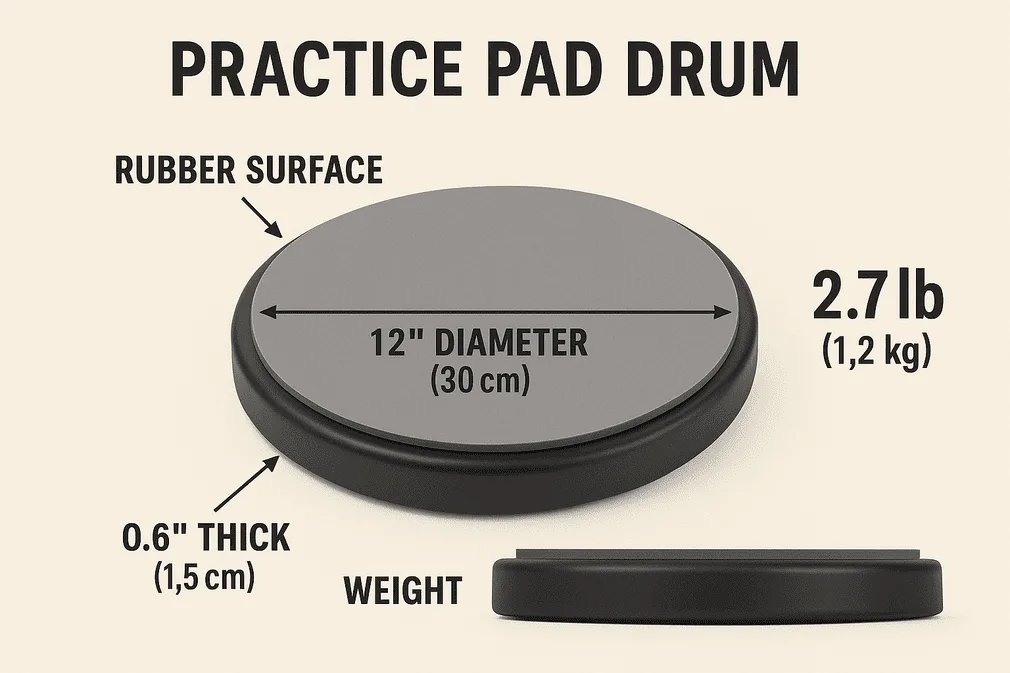
– 12″: The gold standard. Sits perfectly in a snare stand and mirrors drum feel.
– 13″–14″: Ideal for marching snare or for a wide playing zone.
2) Surface & Feel: Silicone, Gum Rubber, Mesh
Silicone pads are typically quiet with a smooth rebound, great for precision work. Gum rubber offers a slightly tackier feel with firm response—excellent for stick control. Dual‑sided pads pair a fast side with a soft, deadened side to challenge your hands. If you want a near‑snare experience, a tunable mesh head lets you set tension and practice nuanced dynamics and ghost notes.
3) Volume & Vibe
All pads are quieter than drums, but noise varies. Soft foam sides are the quietest; hard marching surfaces are the loudest. For shared spaces, choose quiet silicone or foam and place the pad on a cushion or folded towel to reduce transmitted vibrations. Avoid placing pads directly on resonant surfaces like wooden desks.
4) Mounting & Stability
Look for a pad that fits a snare stand or includes a non‑slip base. Many 12″ pads drop right into a standard snare basket for realistic height and angle. Some compact pads feature an 8mm insert to mount on a cymbal stand—great for standing warmups side‑stage.
Technique: Get More From Every Minute
- Matched vs. Traditional Grip: Whichever you use, keep wrists relaxed and fingers engaged for controlled rebound.
- Stick Heights: Alternate low (3″), medium (6″), and full (12″) to build dynamic control.
- Accents & Taps: Practice accent-to-tap contrast with single strokes, double strokes, and paradiddles.
- Moeller & Whip: Use the rebound to sequence downstroke, tap, and upstroke for efficient motion.
- Time Mastery: Use a metronome, subdivide, and alternate between straight and swung feel.
- Buzz & Multiple Bounces: Dial in pressure for even buzz rolls; mesh pads are especially revealing.
A 10‑Minute Daily Pad Routine
Short on time? Try this focused routine to build speed, cleanliness, and control:
- 1:00 — Full‑body looseners, slow quarter notes, alternate hands.
- 2:00 — Single strokes: 60–120 BPM, increase 5 BPM each day. Focus on even rebound.
- 2:00 — Double strokes: Aim for open, relaxed doubles. Stay clean at low volumes.
- 2:00 — Paradiddles (RLRR LRLL): Add low taps, medium accents.
- 1:00 — Flam family (flam taps, flam accents): Keep grace notes tight and low.
- 2:00 — Dynamic pyramid: pp → p → mp → mf → f → ff, then back down; focus on tone consistency.
Care, Maintenance, and Longevity
Practice pads are tough, but a little care keeps them responsive:
- Clean the surface lightly with a damp cloth and mild soap; avoid solvents that can degrade rubber or silicone.
- Avoid extreme heat in cars or direct sun—warping can affect rebound and stability.
- Rotate the pad periodically to distribute wear, especially on single‑surface pads.
- Stick choice matters: Standard 5A/5B works for most; use marching sticks only on pads rated for hard surfaces.
Recommendations by Use Case
- Best for Beginners: A 12″ gum rubber/silicone pad that fits a snare stand. Balanced feel, quiet, budget‑friendly.
- Apartment‑Quiet: Dual‑sided with a soft foam side, or silicone with a dense base for vibration control.
- Snare‑Like Feel: Tunable mesh‑head pad; add a rim if you practice rimshots and cross‑stick.
- Marching & Chops: 13″–14″ hard‑top pad designed for high tension and rebound clarity.
- Travel & Warmups: 6″–8″ compact pad that drops in a stick bag.
If you’re comparing brands, popular lines include Evans RealFeel, Vic Firth, ProLogix, Ahead, Zildjian Reflexx, and OffWorld—each with distinct surfaces and resistance profiles. Try a few if possible; the “right” pad is the one that makes you want to practice.
Frequently Asked Questions
Do practice pads feel like real drums?
They emulate aspects of a drum—especially rebound—but each surface is different. For the closest experience, choose a tunable mesh or a 12″ pad that fits in a snare stand at your usual height.
Which size should I buy first?
A 12″ pad is the most versatile and realistic. If you travel constantly, add a 6″–8″ pad for warmups.
How quiet are they?
Most are apartment‑friendly. For maximum silence, use silicone or soft foam on a cushion, and avoid placing the pad on resonant furniture.
Can I improve speed on a pad?
Absolutely. Pads reveal inconsistencies, making them perfect for systematic tempo increases. Train relaxation first, then speed; use a metronome and track BPM.
Final Thoughts: Build Hands You Can Trust
A well‑chosen practice pad drum turns lost minutes into meaningful progress. Start with a 12″ balanced pad for daily work, add a compact pad for travel, and consider a mesh or marching pad if your style demands it. Focus on rebound, time, and dynamics, and you’ll hear the difference the next time you sit behind a kit—quiet practice, loud results.