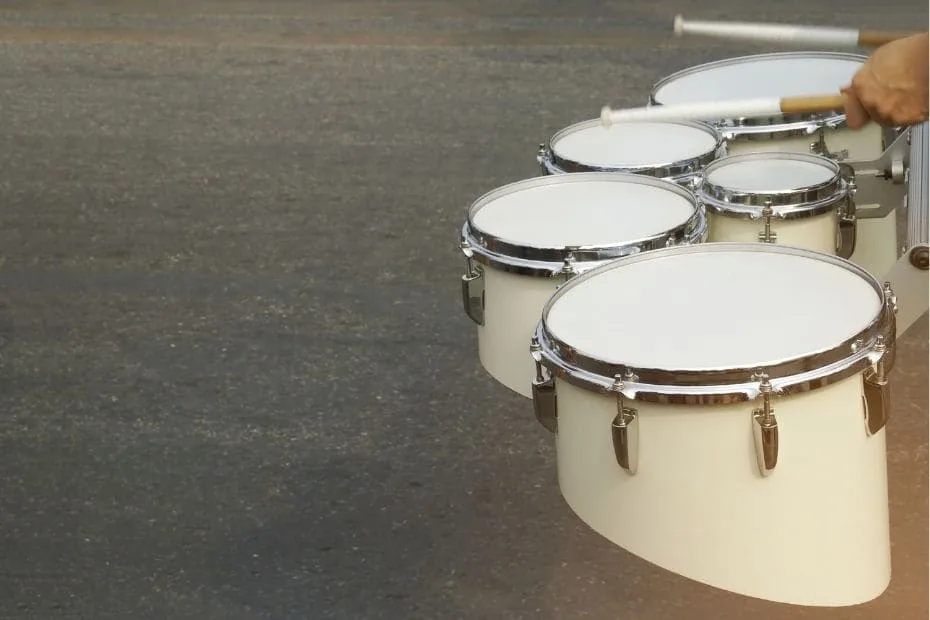
Whether you call them marching tenors, quads, quints, or a sextet, these multi-tom setups are the voice of motion and melody in the modern drumline. Their sweeping lines, articulate scrapes, and energetic runs stitch together the battery like nothing else. If you’re choosing your first set, upgrading for competition, or dialing in a new tuning strategy, this guide breaks down the essentials—so you get the right sound, weight, and feel for your program.
Key Specifications
| Feature | Typical Options | Why It Matters |
|---|---|---|
| Configuration | Quads (4), Quints (5), Sextets (6) | More drums = wider range and voicing options, but added weight. |
| Common Sizes | 6″, 8″, 10″, 12″, 13″, 14″ | Determines pitch range and projection; smaller drums pop, larger drums carry. |
| Shell Materials | Maple, Birch, Hybrid (Maple/Birch/Carbon) | Changes tone and weight; birch projects, maple is warm, hybrids balance both. |
| Typical Weight | 30–45 lb (13.6–20.4 kg) | Impacts endurance and posture; lighter sets help younger lines. |
| Head Types | 2-ply marching tenor heads (clear or smooth white) | Controls attack and durability; clear = brighter, smooth white = warmer. |
| Carrier/Harness | Aluminum or carbon frames with adjustable J-bars | Proper fit and balance help distribute weight evenly and reduce physical strain. |
What Is a Marching Tenor, Exactly?
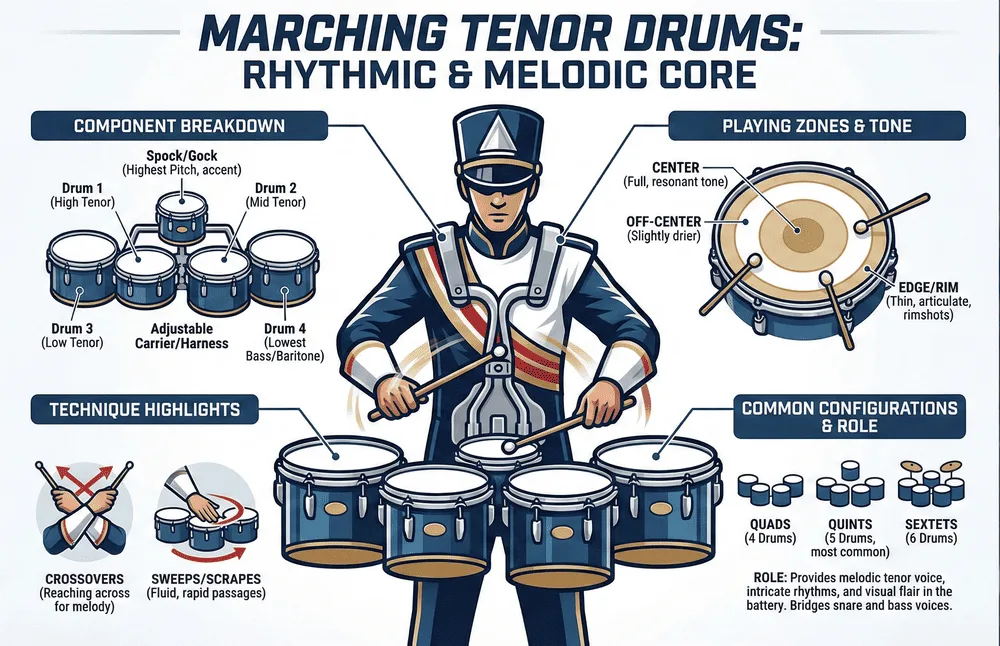
A marching tenor setup is a cluster of toms—typically four to six—mounted on a frame and worn using a carrier. In the drumline, tenors provide melodic contour, rhythmic drive, and visual flair through techniques like sweeps, crossovers, and scrapes. You’ll often hear the terms:
- Quads = four drums (commonly 8″, 10″, 12″, 13″)
- Quints = five drums (usually add a high 6″ “spock”)
- Sextets = six drums (often 6″ + 6″ spocks plus 10″, 12″, 13″, 14″)
Most marching tenors are single-headed to save weight and maximize projection. Bottoms are open, with the frame designed to keep the set rigid and aligned.
Configurations and Sizes: Finding the Sweet Spot
Choosing configuration is a balance between musical range and manageability:
- Quads: Great for younger lines or heavy-marching shows. They cover most literature while keeping weight around 30–36 lb.
- Quints: The most common competitive choice. The extra 6″ spock unlocks spicy melodic runs without a big weight penalty.
- Sextets: For advanced lines needing a massive range and intricate voicings, expect weights closer to 40–45 lb (or more with heavy hardware).
Size affects tone. Smaller diameters like 6″ and 8″ give cutting highs for scrapes; mid sizes 10″ and 12″ offer body; larger shells 13″ and 14″ deliver warmth and projection for field shows.
Materials and Build Quality
Shell and hardware choices shape your sound and reliability:
- Shell woods: Maple is warm and balanced; Birch is bright and projecting; hybrids (maple/birch or with carbon layers) balance cut and warmth while controlling weight.
- Plies and bearing edges: Thicker shells increase durability and projection. Modern 45° edges enhance attack and clarity for stadiums.
- Hoops and lugs: Die-cast or reinforced hoops maintain tension under rimshots. Look for isolated lug designs to reduce shell stress and maintain consistent tuning.
- Mounting frames: A rigid, lightweight frame keeps spacing consistent and reduces torque on the carrier. Test for flex and squeaks.
Sound and Tuning: From Stadium Pop to Indoor Warmth
Tenors thrive on articulate attack. Most lines use 2-ply marching tenor heads (e.g., smooth white for a warmer, indoor-ready sound; clear for a brighter field presence). Add small amounts of foam, moleskin, or gel to tame overtones without killing resonance.
Suggested Tuning Strategy
- Intervals: Aim for minor thirds or perfect fourths between adjacent drums. Spocks sit markedly higher for clean scrapes.
- Even tension: Finger-tight all lugs, then use quarter-turns in a crisscross pattern. Listen for matched pitch at each lug station.
- Head break-in: After initial tuning, play 15–20 minutes of full-stroke exercises, then re-seat and fine-tune.
Pro Tip
For indoor shows, slightly lower the largest drum (14″) and warm up the mids (10″/12″) to avoid too much top-end. Outdoors, push the highs (6″/8″) for articulation.
Technique Essentials for Clean Tenor Lines
- Stroke height uniformity: Even stick heights deliver consistent tone across drums. Record side-on to check.
- Sweeps and scrapes: Keep the wrists low and the fulcrum relaxed; move laterally through the center-to-center line of each head to avoid edge flams.
- Crossovers: Prioritize pathway planning. The non-playing stick hovers over its next destination to reduce late entries.
- Zones: Hit the head center for body; move slightly off-center on the largest drums to speed up articulation in fast passages.
- Rim management: Use rimshots sparingly for impact; protect rims with guards if charts demand frequent shots.
Ergonomics and Weight Management
The right carrier setup is non-negotiable for health and longevity.
- Carrier fit: Adjust shoulder width, chest plate height, and J-bar angle so the drums sit level and close to the body without pinching.
- Balance point: The center of mass should align near your midline. If the rig pulls forward, raise J-bars slightly and check frame tilt.
- Weight targets: For high school lines, aim for under 38 lb if possible. Collegiate corps can handle 40–45 lb with trained technique.
- Conditioning: Core and scapular stability training reduce fatigue and protect the lower back during long rehearsals and parades.
How to Choose the Right Marching Tenor Set
Match your choice to your ensemble’s goals, budget, and players.
- Skill level: Developing lines do well with quads and durable, mid-tier shells. Competitive programs may jump to quints or sextets with hybrid shells.
- Environment: For outdoor stadiums, prioritize projection (birch/hybrid shells, clear heads). For indoor circuits, favor warmth (maple, smooth white heads, slightly lower tuning).
- Serviceability: Choose brands with easy parts access (lugs, spacers, carriers) and strong dealer support.
- Budget: Consider lightly used frames from reputable programs; replace heads and hardware as needed to refresh feel and sound.
Essential Accessories and Care
- Sticks/Mallets: Tenor sticks or tenor mallets with medium heads and durable shafts provide balanced attack. Nylon tips add clarity for scrapes.
- Rim and shell protection: Rim guards and head tape extend lifespan under rimshot-heavy charts.
- Muffling: Small gel dots or moleskin on larger drums control ring; avoid over-damping the spocks.
- Maintenance: Check lug threads, frame bolts, and carrier fasteners weekly. Replace fatigued tension rods in matched sets.
- Transport: Use fitted tenor bags or rigid cases; support the frame to prevent bending during loading.
Quick Buyer Checklist
- Configuration chosen: Quads / Quints / Sextets
- Sizes locked: 6″, 8″, 10″, 12″, 13″, 14″ (as needed)
- Shell material: Maple / Birch / Hybrid
- Head choice: Clear 2‑ply (bright) or Smooth white 2‑ply (warm)
- Carrier fit: Adjustable J-bars, comfortable chest plate, minimal forward pull
- Weight goal: Keep under 38 lb for younger players
- Support: Local dealer, spare parts availability, warranty
FAQ
Quads vs. quints: which is better?
Quads are lighter and simpler for developing lines. Quints add the high 6″ spock for expanded voicing, ideal for advanced shows and indoor feature writing.
What tuning intervals work best?
Many lines like minor thirds between mids and lows for punch, with the spocks tuned significantly higher. Perfect fourths create a more open, orchestral spread; pick based on repertoire and venue.
How do I cut weight without sacrificing sound?
Choose birch or hybrid shells with streamlined hardware, keep to quints instead of sextets, and use a lightweight carrier. Heads and tuning can reclaim projection even on lighter shells.
Do marching tenors have bottom heads?
Most do not; they’re single-headed to save weight and boost attack. Some indoor-focused setups experiment with resonance control, but open bottoms remain standard.
Best heads for indoor vs. outdoor?
Outdoors: clear 2‑ply for brightness and cut. Indoors: smooth white 2‑ply for warmth and blend. Adjust muffling and tuning to the room.