A clay pot drum is one of those rare instruments that blends ancient craft with modern musical versatility. Whether you’ve heard the resonant bass “whoomph” of an Udu in ambient tracks or the bright percussive tones of a Ghatam in Indian classical music, clay drums offer a uniquely organic voice that fits beautifully in world, jazz, fusion, cinematic, and singer-songwriter settings. If you’re curious about the sound, history, sizes, buying tips, and how to play, this guide gives you a clear, musician-approved path.
At-a-Glance Features
| Feature | Details |
|---|---|
| Origins | Udu (Igbo people, Nigeria) • Ghatam (South India) |
| Primary Material | Terracotta/Ceramic, often hand-thrown and kiln-fired |
| Typical Sizes | Small: 8–10″ • Medium: 10–12″ • Large: 12–14″+ |
| Sound Profile | Warm, round bass; crisp slaps; melodic tone variations |
| Playing Style | Hand percussion on lap, stand, or cushion; port/neck manipulation for tone |
| Tuning | Subtle pitch changes via hand coverage of sound hole; water inside for Udu-style “wet” tuning |
| Best For | World, ambient, acoustic sets, meditation, fusion, film scoring, sound design |
| Mic’ing | Small-diaphragm condenser near the port + dynamic on body; contact mic for live |
| Price Range | Entry: $70–$150 • Mid: $150–$350 • Pro artisan: $350–$700+ |
| Care Tips | Avoid impacts and rapid temperature shifts; padded case; felt pad or stand |
What Is a Clay Pot Drum?
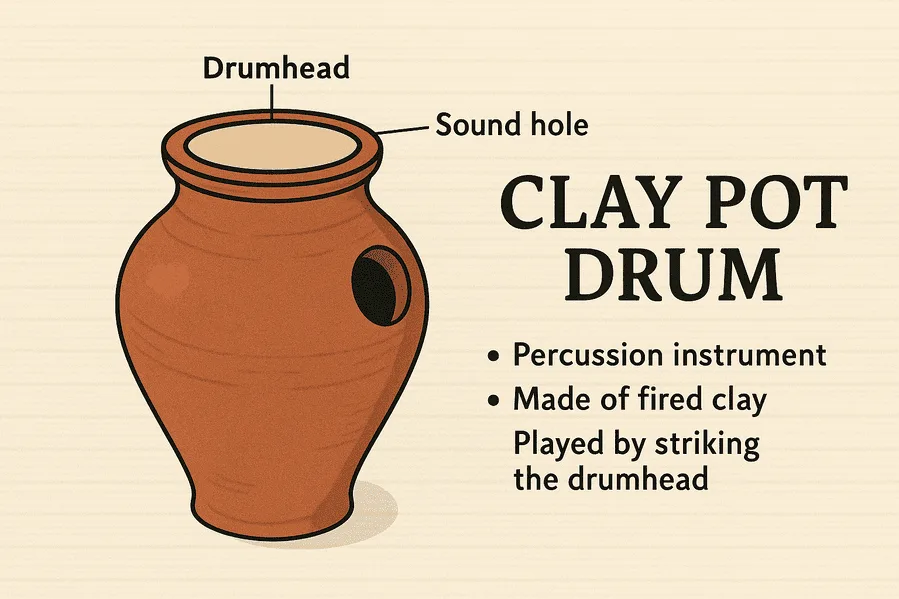
“Clay pot drum” is an umbrella term for ceramic percussion instruments shaped like pots or vessels. Two famous traditions are:
– Udu: Originating with the Igbo people of Nigeria, the Udu typically features one or more sound holes. It produces a deep, airy bass when you strike near the port and varied tones when you tap along the body.
– Ghatam: A mainstay in South Indian Carnatic music, the Ghatam is a thick-walled clay pot without a dedicated side port. It’s played with finger, palm, and wrist strokes across the body, neck, and mouth for bright, articulate pitches.
Udu vs. Ghatam: Key Differences
– Build: Udu often has a side port; Ghatam is a closed pot form with an open mouth.
– Tone: Udu leans toward low, airy bass and subtle “booms”; Ghatam is more percussive, pitch-focused, and cutting.
– Techniques: Udu emphasizes hand movement around the sound hole and gentle strokes; Ghatam uses strong finger and wrist strikes along with rapid patterns.
If you’re seeking lush ambience and cinematic lows, start with an Udu-style clay drum. If you want virtuosic, pitch-rich rhythms, explore the Ghatam.
How the Clay Pot Drum Sounds
These instruments radiate a uniquely organic voice:
– Low End: A rounded, breathy bass that feels more “air pulse” than thud.
– Midrange: Musical “bops” and “tocks” as you strike the body and neck.
– Highs: Articulate finger snaps and rim slaps for punctuation.
An Udu can create evolving drones by modulating the port with your hand, while a Ghatam can sing melodically when rotated and struck along different spots.
Choosing the Right Size and Shape
The size of a clay pot drum directly affects feel and pitch:
– Small (8–10″): Higher pitch, quick response, great for fast patterns and cut-through accents.
– Medium (10–12″): Balanced bass and articulation; excellent all-rounder for beginners.
– Large (12–14″+): Deeper lows and “room-filling” resonance; ideal for ambient, downtempo, and studio work.
Shape matters too. A wider body and larger port generally deliver more air movement and bass, while a tighter neck and smaller port focus the tone. For Ghatam, wall thickness influences projection and robustness.
Beginner-Friendly Picks
– Start with a medium Udu-style drum for versatility.
– Look for a smooth rim and even wall thickness to avoid weak spots.
– If exploring Ghatam, pick a model that feels comfortable in the lap and rings clearly when tapped around the body.
Playing Techniques: From First Touch to Flow
Core Udu-Style Moves
– Port Pulse: Lightly cover the sound hole with your palm or fingertips, then release as you strike near it to create that characteristic “whoomph.”
– Body Taps: Use fingers or knuckles along the body for melodic accents.
– Rim Slaps: Quick, bright strokes near the rim for contrast.
– Ghost Notes: Feather-light taps between main hits to keep a groove breathing.
Classic Ghatam Approaches
– Open vs. Closed: Strike with open fingers for resonance; quickly dampen for tight, dry articulations.
– Neck Accents: The neck offers bright, musical tones; rotate for pitch variation.
– Wrist Flicks: Fast, snapping strokes add speed and sparkle in Carnatic phrases.
“Water Tuning” for Udu
Some Udu players add a small amount of water inside to shift resonance:
– Start with a few tablespoons and test.
– Add incrementally to deepen the bass and soften highs.
– Empty and dry the drum after sessions to avoid mineral residue or mold.
Note: Avoid water in traditional Ghatam use; it can dull the instrument and risk damage.
Recording and Live Sound Tips
– Studio Mic’ing: Place a small-diaphragm condenser 4–8″ from the port for airy lows; add a dynamic (e.g., cardioid) near the body for mids and slaps. Blend to taste.
– Contact Mic: Great for stage—reduces bleed and feedback.
– Room Considerations: Clay resonates with the room; a lightly treated space supports a warm, natural bloom.
– Performance Position: Set the drum on a foam ring, folded towel, or Udu stand to stabilize and prevent rattles.
Buying Guide: What to Look For
– Craft Quality: Even wall thickness, clean seams, smooth rim. Tiny surface variations are normal in handmade instruments, but avoid visible cracks or “pingy” dead spots.
– Material: Terracotta is classic. Some modern makers use composite clays or glazes to adjust tone and durability.
– Finish: Unglazed often yields a more open, earthy sound; glazed can focus the tone and add projection.
– Port Design (Udu): Larger port = deeper, airy lows; smaller port = tighter, punchier response.
– Fit to Purpose: For meditation/ambient, choose a large body. For fast world grooves, go small to medium.
Caring for Your Clay Pot Drum
– Temperature: Avoid rapid changes (hot car to cold studio). Clay can crack with thermal shock.
– Transport: Use a padded bag or hard case; support the neck and protect the rim.
– Setup: Rest on a cushion, towel, or dedicated stand to prevent stress points.
– Cleaning: Dry cloth only; avoid harsh cleaners. If you used water for Udu tuning, drain and air-dry fully.
– Storage: Keep in a stable, low-humidity environment; add silica gel packets to cases in damp climates.
Musical Uses and Pairings
The clay pot drum layers beautifully with:
– Handpan, frame drum, cajón, and shakers in acoustic sets.
– Double bass, piano, and nylon-string guitar for intimate jazz/folk.
– Modular synth pads and swells for cinematic textures.
– Konnakol and mridangam (with Ghatam) in Carnatic ensembles.
Frequently Asked Questions
Is a clay pot drum fragile?
It’s durable in normal use but sensitive to impact and shock. Treat it like a ceramic instrument, not a road-tough conga. A padded case is essential for gigging.
Can I use a regular flower pot as a drum?
You can experiment, and some DIY builds sound surprisingly decent. However, purpose-built Udu and Ghatam drums have refined shapes, wall thickness, and ports designed for musical tone and responsiveness.
How do I get a deeper bass?
Choose a larger body, experiment with hand coverage of the port (Udu), try a small amount of water in an Udu-style drum, and mic close to the sound hole with a condenser.
What accessories are worth having?
A stable stand or foam ring, padded case, microfiber cloth, and optionally a contact mic for live settings. Soft mallets can add cinematic swells on the body without harsh transients.
Final Take
If you’re seeking an instrument that feels alive under your hands, the clay pot drum delivers—earthy, expressive, and endlessly inspiring. Pick a size that suits your sound, care for it like a fine ceramic, and let those resonant airwaves bring warmth and color to every groove.