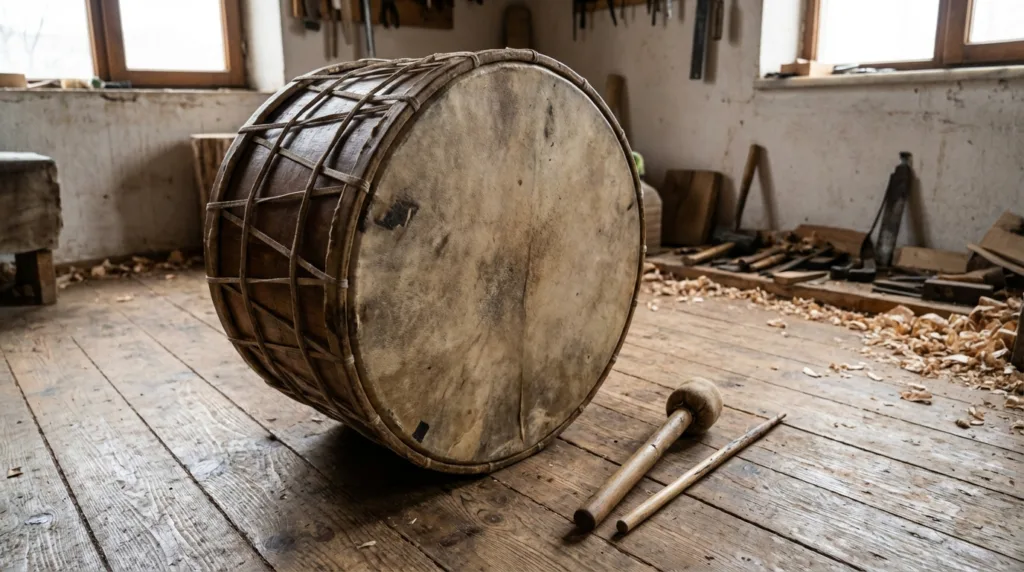
The Anatolian davul is a big, bold drum that’s built for open air. One deep hit can feel wide and roomy, then a sharp tap snaps right through the mix. If you love instruments with a strong identity, this one has it.
🥁 Outdoor Power
🪵 Wood And Skin Craft
🎶 Rhythm Language
· · ·
What The Anatolian Davul Is
- It’s a double-headed bass drum played with two beaters for two voices.
- It’s commonly heard with zurna and other loud instruments in lively settings.
- Its design favors projection and a clear pulse, even in crowded spaces.
| Part | What You Hear | What To Check In A Vintage Piece | Common Materials |
|---|---|---|---|
| Shell | Body and overall resonance | Look for clean joints, no spreading cracks, and a round profile | Wood (varies by maker) |
| Heads | Low boom on one side, snappy response on the other | Check for dryness, uneven stretch, and fragile edges near the hoop | Animal hide or synthetic |
| Hoops | Stability and sustain control | Make sure hoops sit flat and pull evenly under tension | Wood or metal |
| Tension System | Tuning range and feel | Inspect cords or hardware for safe, even pull and smooth adjustment | Rope/cord and leather braces, or metal lugs |
| Strap | Comfort and playing angle | Test balance, stitching, and attachment points | Leather or woven strap |
Think of the Anatolian davul as two drums in one frame. The heavier beater leans into low energy, while the lighter stick adds definition. That split personality is the whole charm.
· · ·
Where Its Sound Fits In Daily Culture
- 🎉 Community gatherings where a steady rhythm keeps people together
- 🎶 Ensembles that need loud timing without amplification
- 🚶 Outdoor spaces where long low waves travel farther than small drums
- First, the davul sets a walkable tempo that feels natural.
- Then, the higher stick strokes add signals for turns, breaks, and accents.
- Finally, the whole group locks in, because the pulse is impossible to miss.
In Anatolia, you’ll often hear the davul as the instrument that organizes the room. It can be festive, ceremonial, or just plain energetic, yet the core job stays the same: keep time in a way that people feel in their body.
· · ·
Sound Anatomy: Why It Carries So Well
- Head thickness shapes boom, rebound, and how long the note hangs
- Shell depth influences how “wide” the lows feel
- Tension balance decides whether the drum speaks quickly or slowly
- Beater choice controls attack: round and soft, or tight and bright
🧭 A simple mental model: one side is the floor, the other side is the edge.
- Floor side: big strokes that feel grounded
- Edge side: light taps that feel spoken
LOW VOICE (tokmak):  ██████████  ██████████  ██████████
HIGH VOICE (çubuk):  ███  ████   ███  ████   ███  ████

FEEL ON THE BODY:    heavy, round, wide
FEEL IN THE AIR:     crisp, quick, clear
The two-voice setup keeps the rhythm readable from far away. Big low strokes give weight, while the higher stick strokes add shape. It’s a practical design that still feels musical.
· · ·
How A Davul Is Built
- 🪵 The shell is the resonant chamber, usually a sturdy wood cylinder
- 🧵 Heads are stretched tight with cord systems or hardware
- 🪢 Hoops distribute tension so the head pulls evenly
- 🔧 Tuning is about balance, not extreme tightness
🧰 Craft details that matter on a vintage davul:
- Even spacing of tension points for stable tuning
- Smooth hoop edges that don’t chew into hide
- A shell that stays round under tension, which keeps tone consistent
Antique and older davuls often show a maker’s hand in small choices: how the hoop sits, how the cord angles, how the shell is finished. Those details affect comfort, tuning stability, and the way the drum speaks when you play softly.
· · ·
Playing Basics: Tokmak And Çubuk
- 🥁 Tokmak: the larger mallet for the low side
- 🪄 Çubuk: the thinner stick for the higher side
- 🪢 Strap position keeps the drum stable while you move
- 🎯 The goal is a clean low plus a clean click
- Set the strap so the drum sits around hip height and doesn’t swing.
- Angle the shell slightly forward so your hands fall naturally.
- Play the low stroke near the center for a round note.
- Add the higher taps closer to the edge for definition.
🎶 A beginner-friendly rhythm idea (read left to right). Keep it slow, keep it steady.
Low strokes: DUM — DUM —
High taps: tek tek — tek
Feel: walk, then spark
A nice davul groove is less about speed and more about clarity. When the low side stays consistent, the high stick can “talk” with small accents that feel alive, not random.
· · ·
Choosing Mallets and Sticks
- Tokmak weight shapes how deep the low note feels
- Çubuk flexibility shapes how bright the taps land
- Handle comfort matters because you’ll play longer than you think
🧪 Quick home test (safe and simple): listen for a clean start and a smooth decay.
- Tokmak: does the low note feel full without a dull thud?
- Çubuk: do taps stay consistent when you play softly?
If you’re buying extra beaters, chase control first. A heavier tokmak can sound amazing, yet it also asks more from your wrist. A lighter çubuk can feel fast and precise, especially when the room is loud.
· · ·
Tuning And Setup Without Stress
- Start by matching both heads to a comfortable rebound
- Then shape the voices: one lower, one higher
- Small adjustments beat big jumps, every time
| Goal | Low Side (Tokmak) | High Side (Çubuk) |
|---|---|---|
| Feel Under The Hand | Soft rebound, forgiving | Faster rebound, snappy |
| Sound In A Room | Wide low, not muddy | Clear click, not harsh |
| Common Fix | If it’s too dull, raise tension slightly | If it’s too sharp, ease tension slightly |
Tuning a double-headed drum is a balancing act. If one side is pulled much tighter than the other, the shell can feel less stable and the sound can lose focus. Go step by step, and trust your ears.
· · ·
Caring For Antique Or Vintage Davul Pieces
- 🧴 Keep cleaning gentle: dry cloth first, then minimal moisture if needed
- 🌤️ Avoid direct sun and heaters that can dry a natural head
- 💧 Steady indoor humidity helps hide stay stable
- 🧳 Transport with support so hoops don’t take side pressure
✅ What tends to work well for long-term care (simple and safe):
- Wipe the shell with a clean, soft cloth after handling
- Loosen tension slightly for long storage if the head feels over tight
- Store the drum on its side with gentle support so the rim stays true
🚫 What to avoid: soaking the head, using strong solvents, or forcing tight turns that feel resistant.
An older davul can last a long time when it’s treated like a living material. Wood and hide react to heat and dryness, so the goal is steady conditions. That keeps tone reliable and repairs less likely.
· · ·
A Buyer’s Checklist For Players And Collectors
- 🔍 Check structural health before chasing a rare look
- 🧾 Ask about known repairs in a clear and friendly way
- 🎧 Test both voices: low weight and high definition
- Shell: press lightly around the rim area for any soft spots or movement.
- Hoops: confirm they sit flat and pull tension evenly.
- Heads: look for edge wear and brittle dryness.
- Tension system: check cords, knots, or hardware for smooth, safe adjustment.
- Play test: soft strokes should still sound clear, not only loud hits.
🧠 A practical rule: buy the healthiest drum you can afford, then shape the sound with tuning and beaters.
Cosmetics are fun, yet stability is what makes a davul feel trustworthy day after day.
If you’re collecting, you’ll appreciate how each davul has its own personality. If you’re playing, you’ll appreciate something even more: a drum that stays consistent when you show up, strap it on, and start moving.
· · ·
Pairing The Davul With Other Instruments
- 🎺 With zurna, the davul becomes the engine and the road
- 🎻 With melodic strings, it offers grounding without crowding
- 🎷 With clarinet, it supports phrasing with clear accents
🗺️ A simple ensemble map you can picture:
MELODY:     zurna / clarinet / strings
ACCENTS:    hand percussion, claps, short hits
FOUNDATION: davul (low) + davul (high)
The Anatolian davul shines when it leaves space. Let the low strokes be steady, then place high taps where they guide the music. That mix feels confident and clean, even in a busy setting.
· · ·
FAQ
A typical bass drum is often played with one beater and one main voice. The Anatolian davul is designed for two voices at once: a low mallet side and a higher stick side, which makes the rhythm readable at distance.
The classic approach uses tokmak for the low voice and çubuk for the high voice. Some players adjust beater style for comfort or tone, yet the two-beater idea is central to the instrument’s character.
Check strap balance first. A comfortable davul sits stable at the hip and doesn’t twist when you strike. Then test rebound: both heads should feel predictable, so your hands can relax and timing stays steady.
Aim for stable indoor conditions: no direct sun, no heater blast, and no damp corners. Store it supported on its side so the rim stays true, and use gentle cleaning to protect wood and hide.
Yes, especially when you treat it as a foundation plus a built-in accent layer. Keep the low side steady and use the high side for phrasing, breaks, and tight patterns that feel intentional.
Natural hide benefits from consistency. Avoid extreme heat and dryness, keep cleaning gentle, and adjust tension slowly. That helps the head stay stable and keeps the sound reliable.