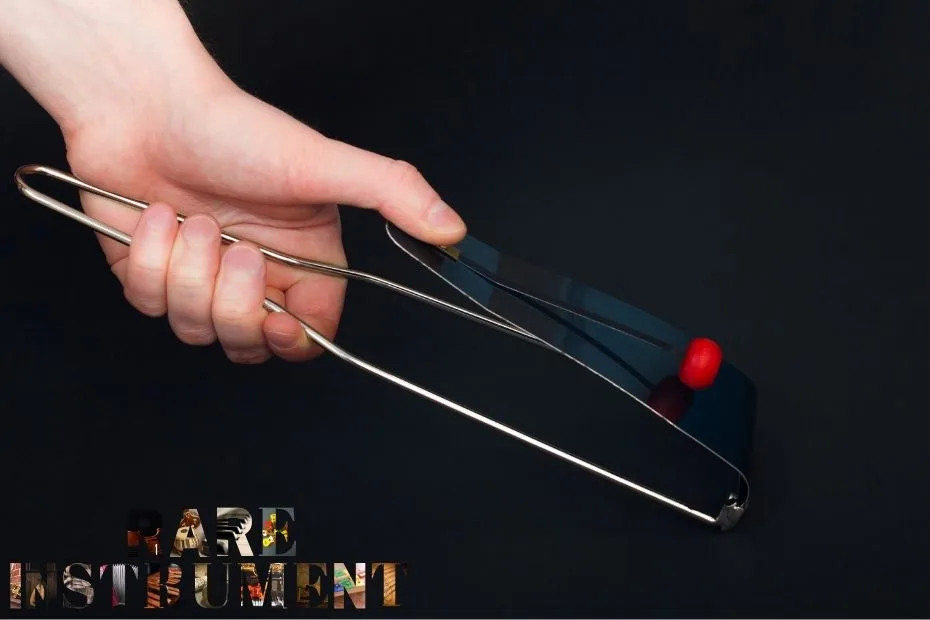
Flexatone is a hand-held percussion instrument built around a flexible metal blade that sings when two spring-mounted beaters strike it. The charm is its gliding pitch, that elastic glissando people recognize right away, plus a bright metallic shimmer that can sit above an orchestra or sneak into a small ensemble.
Fast Overview for players and collectors, with the core details up front.
- Family: an indirectly struck idiophone with a frame-rattle style action.
- Sound: a bright, singing glissando with a shimmering tail when the blade keeps vibrating.
- Pitch Control: thumb pressure on the blade raises pitch; releasing pressure lets it fall, creating vibrato and slides.
- Best Use: expressive color, quick gestures, and atmospheric lines more than strict melody.
- Collector Notes: check the spring steel, beater alignment, and frame stability before you buy.
What Makes The Sound Unique
- Two motions at once: shaking for attack and thumb-bending for pitch travel.
- One blade, many colors: tiny changes in curve reshape overtones and ring.
- Natural glide: it leans toward slides and vibrato rather than fixed notes.
The flexatone sits in that special zone between “note” and “effect.” You can aim for a pitch, sure, yet the real magic is the continuous motion of its glissando. When the beaters bounce and the blade keeps moving, you get a quick strike plus a singing tail, with a bright metallic halo that stays audible even in busy textures.
Thumb pressure is the steering wheel. Pressing the free end of the blade increases the curve and makes the relative pitch rise; easing off lets it fall again. That up-down control can create a tight vibrato, a slow “siren” sweep, or tiny expressive nudges that make the flexatone feel surprisingly vocal for an idiophone.
Parts And Build Details
- Blade: usually spring steel, chosen for elastic rebound.
- Frame: wire carrier that keeps the blade suspended, giving space for beater travel and free vibration.
- Beaters: often wooden balls on thin springs, set to strike each side of the blade with consistent bounce.
- Handle: where comfort matters; a secure grip improves control and reduces unwanted wobble.
Look closely at the flexatone blade: it’s thin enough to bend easily, yet stiff enough to snap back and keep ringing. That balance is why spring steel is common. A blade that feels “tired” or permanently kinked tends to lose clarity and may not hold stable pitch arcs as you bend it.
The beaters are a hidden tuning system. Their distance from the blade and the spring tension shape the attack, the rattle character, and the way the sound blooms. If the beaters sit too far, the flexatone can feel lazy; too close, and it can choke into constant contact. A good setup gives a clean strike and a smooth roll-like shimmer without harsh scraping.
A Short History With Useful Dates 🕰️
- Name Meaning: a plain blend of “flex” and “tone,” pointing to bendable pitch.
- Also Called: sometimes “fleximetal,” highlighting the metal blade.
- Why It Spread: it delivers a rare gliding tone without strings, keys, or electronics, just motion.
Early flexatones were promoted as a fresh effect that could make ensembles feel more playful and modern. That spirit still fits today. The flexatone is compact, instantly recognizable, and expressive with a little practice. Its historical footprint is also part of the appeal for collectors: it sits right at the point where “musical toy,” novelty, and orchestral color overlap.
Thumb Pressure And Pitch 🎚️
- More pressure on the blade: higher relative pitch and tighter vibrato.
- Less pressure: lower pitch and a more open ring with wider glide.
- Steady shake: keeps the beaters speaking; the thumb shapes the line and direction.
Simple Feel Map (not a measurement), showing the relationship between thumb pressure and perceived pitch height.
Light Pressure
Lower
Medium Pressure
Mid
Firm Pressure
Higher
Aiming for exact pitches on flexatone is possible in small bursts, yet it’s easiest to think in shapes: a rising scoop, a gentle fall, a fast wobble, a long glide. If you treat it like a voice that slides between notes, your control improves fast, and the instrument’s resonant character feels more predictable.
Playing Techniques That Work In Real Life 🥁
- Grip: hold the handle with a relaxed palm; place your thumb on the free end of the blade for bend control.
- Shake: use a small wrist motion, like a gentle tremor; keep the beaters striking evenly for clean tone.
- Shape The Line: press for a higher pitch, release for lower; add a small pulse for vibrato and life.
- Listen For Balance: adjust angle so you hear both attack and ring without harsh clatter.
Start slow. A controlled, even shake makes the flexatone speak clearly, then the thumb creates the story of the pitch. Once the sound is stable, experiment with tiny angle changes. The blade can project different overtones depending on how it faces the room, and that subtle shift helps you match an ensemble without pushing volume.
Alternate Approaches 🔧
- Controlled Striking: some setups allow removing beaters so you can strike the blade with a small beater while shaping pitch with thumb pressure and steady timing.
- Bowing: you can bow the blade edge with a string bow for a sustained whine and slow bends.
- Muted Color: lightly damp the frame (not the blade) to reduce rattle while keeping glide and focus.
The bow trick is a collector favorite because it reveals a different personality. Bowing can turn the flexatone into a sustained, almost singing line, especially when you add tiny thumb motions. It’s not a loud approach, yet it can be haunting in a gentle way and beautifully clear when the texture around it is light.
Notation And Ensemble Use 🎼
- Common Signs: tremolo-style markings to show shaking, plus lines or arrows that suggest glissando direction and duration.
- Pitch Labels: treat as approximate unless the passage is slow and exposed; the instrument prefers motion.
- Blend Tip: pair with soft mallet metals, harp, or light strings when you want shine without crowding.
In rehearsal, a quick conversation saves time: do you want a smooth glide, a fast wobble, or a series of short calls? The flexatone can do all three, yet the result changes with speed and pressure. If the part is meant to cut through, a brighter angle and firmer shake helps. If it should sit inside a chord, gentler motion and slower pitch travel keeps it musical.
Choosing One, Especially Vintage 🧰
- Blade Health: look for a clean, even curve with no sharp creases; a tired blade can lose ring and control.
- Beater Alignment: both beaters should strike without scraping; uneven contact creates noise instead of tone.
- Frame Stability: a rigid frame gives predictable response; loose joints can cause extra rattles and reduce clarity in fast shakes.
- Handle Comfort: a secure grip is practical; your thumb needs a consistent spot to shape pitch and vibrato.
For collectors, originality matters, yet playability matters too. A vintage flexatone with intact beaters and an elastic blade will usually outshine one that looks perfect but has a stiff, fatigued strip. If you can test it, listen for an even response across the bend: as you raise and lower pitch, the sound should stay stable, not sputter or suddenly collapse into clatter.
A Practical Buying Checklist for rare instruments, focused on real-world condition.
- Shake Test: does it speak instantly with a light motion, and does the ring stay clean at medium speed?
- Pitch Sweep: can you smoothly rise and fall without “sticking,” and does vibrato feel easy under small thumb pulses?
- Noise Check: is extra rattle musical, or is it loose hardware? A healthy flexatone has character, not random buzz.
Care And Storage ✨
- Keep It Dry: moisture can damage the frame and springs; store in a dry place with gentle padding.
- Avoid Over-Bending: repeated extreme bends can fatigue the blade; aim for smooth curves and controlled travel.
- Light Cleaning: wipe after playing; if needed, use a soft cloth and mild care suited to metal, never harsh abrasives on the working edge.
The flexatone is simple, yet it’s still a precision object: the spring tension, the beater spacing, and the blade elasticity all matter. Treat it like a small antique tool. Gentle handling keeps the mechanics consistent, and consistency is what gives you a reliable glissando and a pleasing ring every time you pick it up.
Flexatone Vs. Similar Sounds 🔍
If you collect rare sound-makers, the flexatone earns its shelf space because it does something distinct with very little hardware. It’s not just “a slide.” It’s the combination of shaking energy, beater bounce, and thumb-driven curvature that creates that instantly recognizable glide-and-shimmer character.
FAQ
Is A Flexatone The Same As A Musical Saw
Flexatone and musical saw can sound related because both create a smooth gliding pitch. The difference is in the mechanism: a flexatone uses spring beaters striking a blade, while a saw is typically bowed and can feel more purely sustained.
Can I Play Exact Notes On It
You can aim for notes, yet the flexatone naturally prefers gestures and relative pitch. For exposed passages, go slower, use steadier shaking, and treat targets as “close enough” unless the music specifically demands precision.
How Loud Is It In A Room
Most flexatones sit at a moderate volume. You control loudness mainly through shaking energy and angle, not through a huge dynamic range. In ensembles, its bright upper overtones help it carry without needing to overpower, which keeps the blend friendly.
What Should I Check When Buying Vintage
Check the blade for sharp creases, test beater bounce for even strikes, and make sure the frame is stable. A vintage flexatone in solid playing condition should produce an easy glissando and a clean ring, not just hardware noise or weak response. Comfort matters too, because thumb placement shapes pitch.
Can I Bow It Without Damaging It
Bowing can work well on a flexatone, especially for slow, sustained effects. Use a normal string bow with appropriate rosin, apply light pressure, and avoid forcing the blade into extreme bends while bowing. Done gently, it’s a safe way to discover a different voice and smoother pitch travel.