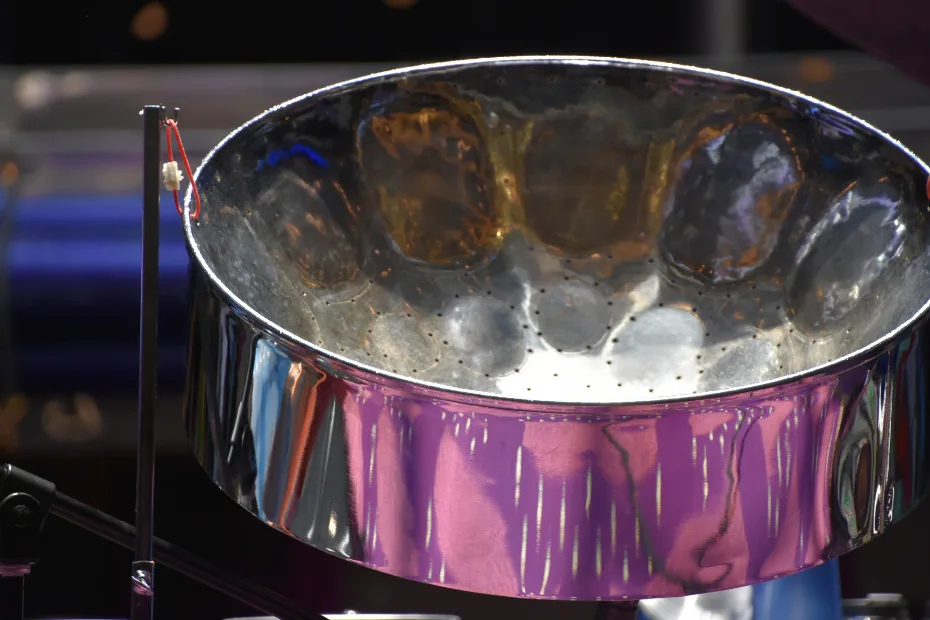
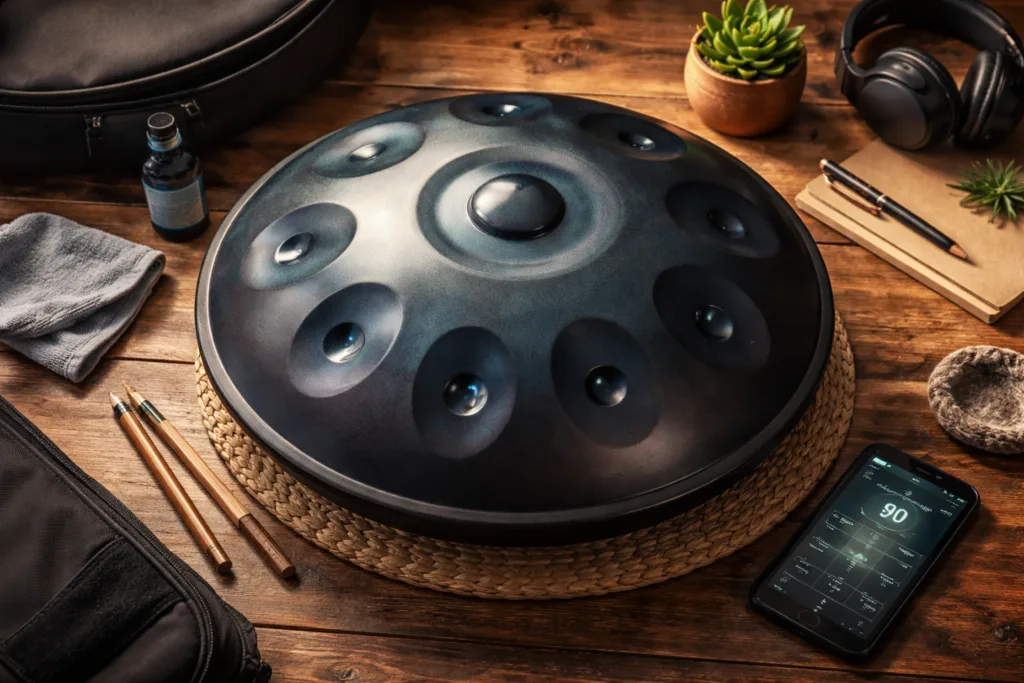
If you’ve ever heard a handpan sing, you know it’s hard to forget. The sound is soft, glassy, and oddly comforting—like a calm bell you can hold in your lap. People still say hang drum a lot, but today most players use the word handpan for the whole instrument family.
Quick Snapshot For Busy Readers
- What It Is: A tuned steel instrument with tone fields that you tap by hand for melody and rhythm.
- Why It’s Popular: Warm overtones, simple layouts, and a naturally relaxing feel.
- Beginner-Friendly: Yes—especially on an easy scale with fewer notes.
- Big Choice: Pick the scale first; the tuning shapes everything you’ll play.
Hang Drum or Handpan
| Term | What People Usually Mean | Helpful Tip |
|---|---|---|
| Hang | The original instrument name used by one maker; many fans use it as a general label. | When shopping, search handpan to see the widest range of builders. |
| Handpan | The common category name for modern instruments with tone fields and a central note. | Ask about tuning, note count, and material. |
| Pantam | A term some makers use for the same style of instrument. | Treat it like handpan; focus on the scale and feel. |
The naming gets messy because hang drum became a casual nickname. In practice, you’ll get clearer results by thinking in handpan terms: scale, note layout, and the kind of resonance you want.
How A Handpan Makes Sound
Sound Profile Meter Typical Handpan Feel
Attack (tap clarity):   ████████░░
Sustain (ring length):  █████████░
Warmth (soft tone):     ████████░░
Overtones (shimmer):    ████████░░
Volume (unamplified):   ██████░░░░
A handpan is built from two metal shells joined together. On the top shell, each tone field is carefully shaped so it speaks with a clear fundamental plus friendly harmonics. Tap near the center note (often called the ding) and you’ll hear that bell-like core. Tap a side note and the sound blooms, then hangs in the air.
Many instruments also have a bottom opening called the gu. It can add a gentle bass pulse when you strike or “whoosh” it with your hand. This is where the rhythm side of the handpan really wakes up, even if you’re playing slow, simple patterns.
Materials, Finish, and Feel
Most handpans are made from either nitrided steel or stainless steel. Each has a vibe. Nitrided instruments often feel crisp and controlled, with a clean attack. Stainless models can ring longer and feel “bigger,” which is lovely for slow melodies. Neither is “better”—it’s about the kind of sustain and touch you enjoy.
Finish matters more than people expect. A smooth surface can feel fast under your hands, while a slightly textured finish can help you control ghost notes and light taps. If you’re sensitive to stickiness, look for a matte feel or a finish that stays comfortable when your hands get warm.
Scales, Notes, and Layout
The scale is your musical “home.” A beginner scale usually avoids harsh clashes, so almost anything you play sounds pleasant. That’s why handpan players talk about scales so much—it’s not theory talk, it’s everyday fun. Choose a mood you like, and you’ll practice more without forcing it.
Common Scale Types
- Minor-leaning: Often feels deep and cinematic. Great for slow handpan pieces.
- Major-leaning: Bright, open, and uplifting. Nice for easy grooves.
- Exotic modes: Colorful and mysterious, but can be trickier if you want simple “any note works” play.
Note count changes your experience. An 8–9 note handpan is simple and friendly. More notes can be exciting, but you’ll need cleaner muting and better control to keep the sound tidy. If you like minimalism, fewer notes can feel like a gift.
Buying A Handpan With Confidence
Fast Checklist Before You Commit
- Pick a scale you’ll want to hear every day, not just once. Your ears decide.
- Confirm the note count and ask how stable the tuning stays with normal use.
- Ask about surface care and what the maker recommends for rust prevention.
- If possible, request a short sound sample that includes soft taps and stronger hits.
A good handpan should respond at low volume. Light taps should still speak with a clear pitch, not a dull “thud.” That sensitivity is what makes the instrument feel alive. Also listen for balance: the center ding shouldn’t overwhelm everything, and the side notes shouldn’t vanish when you play softly.
Pay attention to how the notes sit together. A well-made handpan feels like a small “sound room” where every note belongs. If you hear wobbling pitch or harsh buzzing on normal taps, that’s a sign to slow down and compare options. Trust your reaction—teh first minute of listening tells you a lot.
Playing Techniques That Sound Good Fast
Core Strokes
- Finger Tap: A quick, light touch for clean melody on your handpan.
- Thumb Drop: Comfortable for steady pulses and simple rhythms with flow.
- Heel-of-Hand Touch: Useful for gentle muting so notes don’t blur together.
Start with relaxed hands. A handpan rewards a soft touch; you don’t need force. Aim for “tap and lift,” like touching a hot cup for a split second. This keeps the tone open and prevents accidental damping. When the sound is clear, your timing improves without you trying so hard.
Muting is the secret sauce. Without it, your handpan can turn into a wash of ringing notes. With it, your playing sounds clean and confident. Practice a simple pattern, then gently stop notes with the side of your hand. You’ll hear instant structure—rhythm pops out, and melody feels more intentional.
Simple Practice Routines
- Two-Note Groove: Alternate two notes with a steady pulse, add a soft ding every 4 taps.
- 3-Minute Flow: Improvise using only 3 notes to build control and confidence.
- Mute Drill: Play one note, then mute it cleanly. Repeat across the whole handpan.
Care and Storage
A handpan is steel, so basic care keeps it happy. Wipe it with a dry, soft cloth after playing—skin oils are normal, and removing them helps the finish stay consistent. If your environment is humid, a light protective product recommended for metal care can be useful. Keep it simple and regular.
Storage is mostly about avoiding extremes. Don’t leave your handpan in hot cars or near cold drafts for long stretches. Quick temperature swings can make the instrument feel “tight” for a while. A padded case is great for daily life, and a stable room spot is perfect when you’re playing often. Treat it like a musical friend, not a fragile museum piece.
Recording and Amplification Basics
For recording, a quiet room beats fancy gear. Even a modest microphone can capture a beautiful handpan tone if the space is calm. Place the mic a short distance away to catch both overtones and the body resonance, then adjust until the ding isn’t too sharp. If you hear harsh clicks, lighten your touch and try again.
For live sound, keep feedback in mind. The handpan can ring a lot, so monitor placement and gentle EQ choices can help. Many players prefer a mic approach because it keeps the natural air and space of the instrument. The goal is simple: let the sound stay warm and clear.
Accessories That Actually Help
- Hard Case or Padded Bag: Protects your handpan from bumps and keeps the finish cleaner.
- Soft Cloth: The easiest tool for daily care and a consistent feel.
- Stable Stand: Great for longer sessions; improves posture and control.
- Metronome App: Helps your timing without changing the handpan vibe.
If you want the instrument to pull you in, set it up so it’s easy to reach. A handpan that lives in a case under the bed gets played less. Put it somewhere safe, comfortable, and visible. That tiny change makes practice feel casual, like picking up a mug of tea—then the progress sneaks up on you.