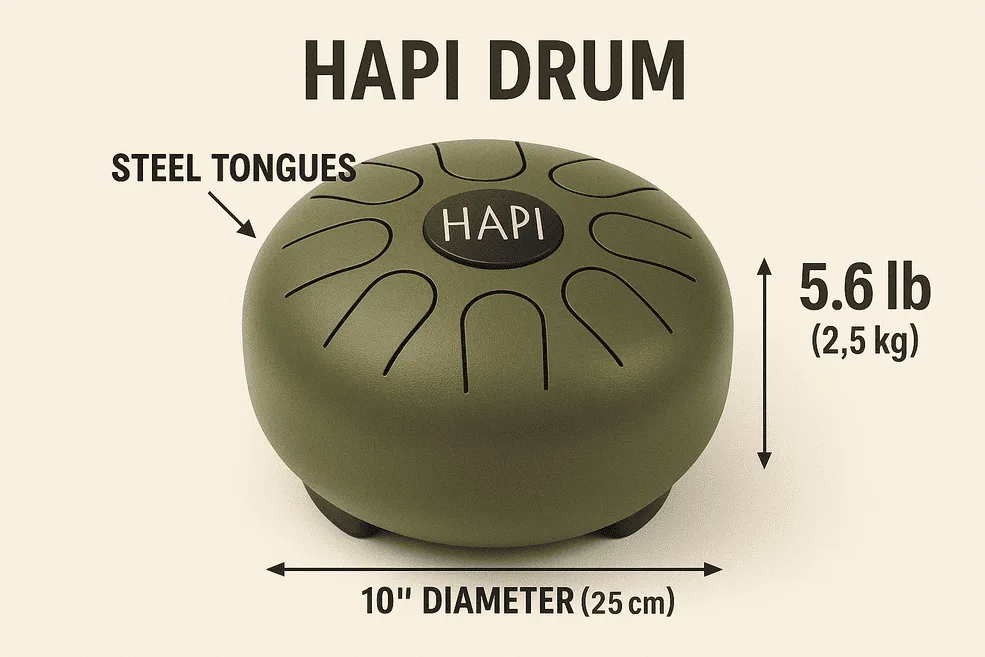
Whether referred to as a Hapi Drum, steel tongue drum, or meditation drum, this compact instrument produces warm, sustained tones commonly used in relaxation, ambient, and melodic percussion settings. This article outlines its construction, scale options, size variations, playing techniques (by hand or with mallets), maintenance considerations, and practical approaches for recording and live use.
Key Specifications
| Model/Type | Diameter | Typical Scale Options | Note Count | Weight | Best For | Price Range |
|---|---|---|---|---|---|---|
| Compact/Mini | ≈ 8″ | C Major, A Minor, Pentatonic | 6–8 | ~1–2 kg | Beginners, travel, kids, quick jams | $100–$250 |
| Standard/Origin | ≈ 10–12″ | D Minor, Akebono, Celtic | 8–10 | ~2–4 kg | Yoga, meditation, songwriting, education | $250–$450 |
| Plus/Large | ≈ 13–15″ | C Major Diatonic, E Minor, Custom | 9–12 | ~3–6 kg | Sound baths, layering, studio recording | $400–$700+ |
Note: Specs vary by specific model and seller; always check current listings for exact details.
What Is a Hapi Drum?
A Hapi Drum is a melodic percussion instrument made from steel with precisely cut tongues (or “tines”) arranged around a resonant shell. When struck with fingers or mallets, each tongue vibrates at a tuned pitch, producing a soothing, bell-like tone with a long decay. Unlike many melodic instruments, Hapi Drums are usually tuned to friendly, harmonically curated scales, so it’s hard to hit a “wrong” note—perfect for beginners and pros alike.
Hapi Drum vs. Handpan
- Construction: Hapi Drums are tongue drums (slots cut into steel), while handpans use hammered tone fields on dome-shaped shells.
- Playability: Hapi Drums welcome mallets or hands; handpans are typically played with hands only.
- Maintenance & cost: Hapi Drums are generally more affordable, durable, and lower maintenance than handpans.
- Sound: Hapi Drums lean toward warm, focused notes and gentle overtones; handpans have airy, shimmering harmonics.
Choosing Your Hapi Drum: Size, Scale, and Note Count
1) Size and Portability
- Mini: Around 8″. Super portable, great for travel, kids, and casual meditation.
- Standard: Around 10–12″. Balanced projection and range for most players.
- Large: Around 13–15″. Deeper bass, longer sustain—ideal for sound baths and studio work.
2) Scale Selection
Pick a scale that matches your mood and musical goals:
- D Minor (Dorian or Natural Minor): Emotional, cinematic; excellent for ambient and filmic vibes.
- C Major (Diatonic): Bright and accessible; great for learning melodies and harmonies.
- Akebono / Japanese-inspired: Meditative and exotic; perfect for mindfulness and yoga sessions.
- Pentatonic (Major/Minor): Very forgiving; almost any sequence sounds good—ideal for beginners.
- Celtic, Hijaz, Kurd, or Custom: For unique color palettes and cross-cultural textures.
3) Number of Notes
- 6–8 notes: Clean layout, minimal thinking; great for improvisation and meditation.
- 9–12 notes: Wider range for melodies, arpeggios, and layered compositions.
How to Play a Hapi Drum
Hands vs. Mallets
- Hands: Use relaxed fingertips and light, rebounding taps. Aim for the center-third of each tongue. Hands create warmer attack and expressive dynamics.
- Mallets: Soft rubber or silicone mallets yield clear, bell-like tones and consistent volume—great for beginners and group sessions. Avoid hard sticks to prevent harsh overtones.
Beginner-Friendly Patterns
- Call-and-response: Choose a low note “home base,” answer with a higher note, then return home.
- Arpeggios: Roll through 3–4 adjacent notes for instant meditative flows.
- Ostinato: Repeat a simple two-note figure in the bass; improvise lightly on top.
Pro Tip
Rotate the drum so your most-used notes sit conveniently under your hands. Many players place the tonic at the front and the fifth opposite for easy intervals.
Use Cases: Music, Wellness, and Education
- Meditation & Yoga: The soft attack and long sustain support breathwork and mindfulness without overpowering the room.
- Sound Baths & Therapy Practices: Layers beautifully with singing bowls, chimes, and shruti box. Note: For therapeutic contexts, follow professional guidelines and avoid medical claims.
- Songwriting & Production: Adds organic textures to ambient, lo-fi, neo-classical, and world music.
- Education: Intuitive layout encourages ear training, rhythm development, and creative exploration in classrooms.
- Community Circles: Easy to share among players of all levels; pentatonic scales help everyone sound good together.
Care, Tuning, and Maintenance
- Cleaning: Wipe with a dry microfiber cloth after use. For fingerprints or mild residue, a tiny amount of instrument-safe oil can help. Avoid harsh chemicals.
- Corrosion protection: Store in a dry place. If your climate is humid, occasional light oiling helps prevent rust.
- Tuning: Most Hapi Drums are factory-tuned and not meant for frequent retuning. If a note drifts, consult the maker; DIY retuning can be risky.
- Transport: Use a padded gig bag and avoid extreme temperatures.
Accessories That Make a Difference
- Mallets: Try different hardness levels to shape attack and volume.
- Stand or Ring: Lifts the drum off the surface for fuller resonance. A soft foam ring often improves sustain and projection.
- Gig Bag: Essential for safe transport; check padding and fit for your 8″, 12″, or 15″ drum.
- Microphones/Pickups: For live or studio use, a small condenser mic above the center or contact mics on the shell can capture rich tone.
Recording and Live Sound Tips
- Mic placement: Start with a small-diaphragm condenser 20–40 cm above the drum, slightly off-center to balance overtones.
- Room acoustics: A medium-damped room retains warmth without excessive ring.
- EQ: Subtle low cut (around 50–70 Hz) to remove rumble; gentle shelf boost around 6–8 kHz for presence; avoid over-EQ to keep the natural bloom.
- Reverb: Short plate or hall with modest pre-delay can enhance sustain without washing out articulation.
Buying Guide: What to Look For
- Intonation: Strike each tongue lightly and listen for clean pitch, no buzzes or metallic rattles.
- Sustain: Notes should bloom and decay smoothly without sudden “choke.”
- Scale relevance: Choose a scale that serves your main use (e.g., D Minor for cinematic or C Major for uplifting sessions).
- Build quality: Even welds, smooth edges, and well-finished tongues indicate good craftsmanship.
- Accessories included: Mallets, bag, and stand add value and convenience.
FAQ
Is a Hapi Drum good for beginners?
Yes. With curated scales and a forgiving layout, a Hapi Drum makes it easy to create music immediately. Start with a pentatonic scale for the most intuitive results.
How loud is it?
Moderate volume—enough for small rooms, yoga classes, or circles. For larger spaces, use a microphone or pickup.
Can I change the tuning?
Generally no; these are designed to hold tuning as built. If a note drifts significantly, consult the maker for service.
Hands or mallets—what’s better?
Both. Hands offer warmth and nuance; mallets provide clarity and consistency. Keep both options in your kit.
Final Thoughts
The Hapi Drum is a rare blend of simplicity and depth—beginner-friendly yet endlessly inspiring for seasoned musicians. Choose a size that fits your lifestyle (from 8″ travel-ready to 15″ stage-worthy), pick a scale that resonates with your mood, and let the instrument guide you. From mindfulness sessions to studio layers, this steel tongue drum brings calm, color, and character to any musical moment.