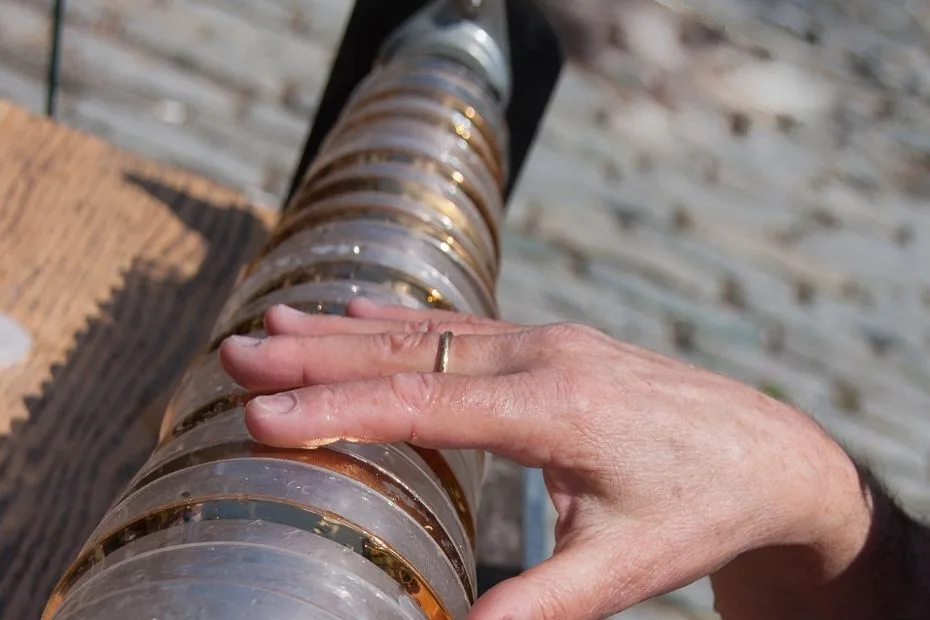
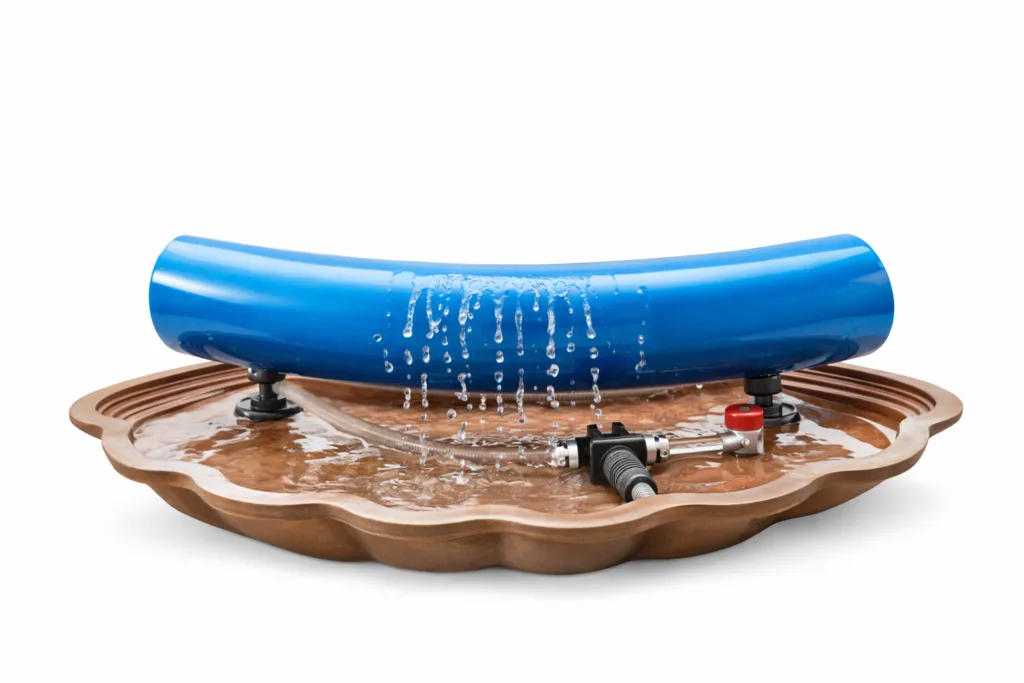
- 💧 A hydraulophone is a water-played instrument where your fingers shape sound by stopping or redirecting water jets.
- Its voice sits between flute-like airiness and organ-like steadiness, with a “wet” shimmer that recordings rarely capture.
- The playing feel is tactile: cool pressure, springy resistance, and a constant “push-back” that teaches control fast.
A hydraulophone is one of those instruments you don’t just hear—you touch. The first moment your fingertip seals a jet, the instrument answers with tone the way a good bow answers rosin: immediate, physical, and honest. There’s no breath to manage, yet phrasing still lives in your hands. The water becomes your airstream, and your fingers become embouchure, valves, and reeds all at once.
It feels playful at first. Then it starts to feel serious.
What A Hydraulophone Really Is
- 🎼 Sound source: pressurized water routed through jets and tone-producing elements (resonators, edge-tone mouths, or hydro-acoustic mechanisms).
- 🖐️ Control method: blocking, half-blocking, or sliding across jet openings to select pitch and shape tone.
- 🎛️ Instrument families: fountain-installed “public” hydraulophones and studio/gallery instruments designed for consistent tuning and recording.
Think of a hydraulophone as a keyboard made of water, but don’t reduce it to a novelty. Under the surface, it shares DNA with wind instruments and pipe organs: steady supply, controlled flow, and a resonant system that decides the final tone. What makes it unique is how the player’s skin becomes an active acoustic component—your finger doesn’t merely press a key; it becomes part of the fluid circuit that stabilizes and colors the sound.
Pro Tip: Treat each jet like a “mouthpiece.” A clean, confident seal gives you a clearer pitch. A shaky seal gives you a breathy, unstable tone—use that on purpose for expressive color.
How Sound Happens Under Your Fingertips
| What You Do | What The Water Does | What You Hear | Why It Matters |
|---|---|---|---|
| Fully cover a jet | Flow reroutes into the tone path | Stable pitch, clear onset | Defines reliable intonation and attack |
| Half-cover the jet | Creates turbulent mixing and variable pressure | Breathy, airy, sometimes chorus-like | Your main tool for timbre shading |
| Slide across neighboring jets | Cross-couples flow between pitch channels | Glissando, bends, “liquid portamento” | Signature hydraulophone phrasing |
| Tap rapidly (staccato) | Interrupts flow with micro-bursts | Soft-edged percussive attacks | Rhythm without harsh clicks |
Most hydraulophones you’ll encounter use a constant-pressure water supply feeding multiple jets, each mapped to a note. When you block a jet, the water must go somewhere. That rerouted flow energizes an internal sound-making element—often an edge-tone mouth (conceptually similar to how a flute’s air jet excites the air column) or a resonant cavity that “locks” to a pitch when driven by steady flow.
The beautiful part is the onset: instead of breath noise, you get a rounded, damped attack—like a flute tone with the corners sanded smooth. On a well-built instrument, the note “blooms” rather than snaps.
Collector’s Note: Hydraulophones are often discussed alongside historical water organs, but they are their own branch. If you’re cataloging one, document the water delivery system and the tone mechanism separately—those define the instrument more than its external shape.
Touch, Resistance, And The “Playable Pressure” Zone
- 🖐️ Finger feel: cool, slightly springy, with a pressure threshold where tone becomes stable.
- 🎚️ Control range: micro-movements (a millimeter matters) can shift brightness and stability.
- 💧 Fatigue pattern: more like hand percussion than flute—small muscles, sustained contact, steady posture.
A hydraulophone teaches you a new kind of intonation: not lip angle, not breath support, but seal quality. Too light and you leak flow, giving a hissy, unstable pitch. Too heavy and you flatten expression, choking the nuance that makes the instrument sing. The sweet spot is where the jet feels “quiet” under the finger—steady pressure, minimal splatter, and tone that centers.
On a refined build, you can feel the instrument “settle” into pitch. That settling is the resonator or edge-tone system finding its lock. It’s subtle, but once you notice it, you start playing to it.
Your hands learn to listen through the skin.
Materials And Their Specific Effect On Timbre
| Material Choice | What It Changes | Sonic Result | Practical Note |
|---|---|---|---|
| Stainless Steel nozzles/manifold | Geometry stability, smooth flow | Clearer center pitch, cleaner brightness | Resists corrosion; ideal for long-term installations |
| Brass fittings | Mass and damping, micro-vibration | Slightly warmer edge, less “glassy” highs | Needs water chemistry awareness to avoid buildup |
| PVC/ABS body (public fountain style) | Damping and internal resonance | Softer attack, mellower projection | Great durability; acoustic refinement varies by build |
| Hardwood housing (gallery builds) | Secondary resonance, tactile warmth | Perceived richness, less sterile “facility” tone | Requires careful sealing; water and wood must be isolated |
Hydraulophones are governed by fluid dynamics as much as by instrument design, so material behavior differs from that of instruments like violins or clarinets. Water flow generates the sound, and the instrument’s geometry regulates that flow. Material selection remains important because it maintains dimensional tolerances, resists mineral buildup, and influences how efficiently water is converted into sound.
A precisely machined metal jet plate tends to deliver a more consistent pitch center. Plastics often add damping that can feel forgiving, producing a rounder, less incisive tone. When builders add hardwood for the shell, it rarely changes pitch directly, but it can change how the instrument “speaks” to the room—what you perceive as body, bloom, and presence.
Pro Tip: If you’re evaluating a hydraulophone in person, listen for jet noise. Excess hiss often points to rough edges, worn nozzles, or inconsistent pressure—issues that also reduce expressive control.
Design Variants You’ll Actually Encounter
- 🎹 Diatonic layouts for simple, public playability.
- 🎛️ Chromatic layouts for full repertoire and modulation.
- 🌀 Circular or curved “arc” instruments for group access around fountains.
- 🏛️ Gallery instruments with controlled pumps, filtration, and quieter operation.
The most visible hydraulophones are installed in public fountains, where durability and accessibility take priority. These can be surprisingly musical, but their tuning and stability depend heavily on pressure regulation and maintenance. In curated or studio contexts, you’ll often see hydraulophones paired with dedicated pumps, filters, and manifolds designed for repeatable pressure—the difference between “fun sound sculpture” and “real instrument you can record.”
Chromatic hydraulophones are where the instrument starts behaving like a serious melodic voice. Not because chromaticism is inherently superior, but because the build usually assumes a player who will demand clean semitone relationships, stable tuning, and a more disciplined response.
Hydraulophone Vs. Flute And Recorder
- Air supply: flute/recorder use breath; hydraulophone uses water pressure.
- Attack: flute can “pop” a note; hydraulophone tends to round the onset.
- Expressive control: flute uses embouchure and vibrato; hydraulophone uses seal nuance, micro-leaks, and finger shading.
If you come from flute or recorder, the shock is how quickly you can produce a stable tone—and how quickly you realize stability is only the beginning. A flute’s timbre swings with embouchure; a hydraulophone’s timbre swings with contact geometry. You can “brighten” a note by changing how the jet shears around your fingertip, or soften it by letting a controlled leak create airy turbulence.
The recorder’s fingerings may feel conceptually close—holes mapped to notes—but the hydraulophone’s fingering is more like sculpting. You don’t simply open or close; you shape. And unlike breath instruments, you can sustain long tones without respiratory planning, which changes how you phrase: longer arcs, slower crescendos, and very controlled legato glides.
Collector’s Note: If you’re curating a hydraulophone next to flutes or recorders, highlight the embodied technique. Visitors understand “blow here.” They don’t expect “seal here.” A simple demonstration of partial sealing makes the instrument’s identity click instantly.
Hydraulophone Vs. Hydraulis And Pipe Organ
- Hydraulis (historical water organ): uses water to help regulate air or mechanical action in organ-like systems.
- Hydraulophone: uses water as the direct playing medium under the hands.
- Shared spirit: continuous supply, controlled flow, and resonant pitch systems.
It’s tempting to treat the hydraulophone as a modern reboot of the ancient water organ, but it’s better to frame them as cousins. The historical idea of water-assisted organs is about power and regulation in a sustained instrument. The hydraulophone is about direct tactile control: the player’s hands literally manage the medium.
Compared to a pipe organ, the hydraulophone can feel more intimate. Organs project; hydraulophones invite you in. The sound can be steady like an organ stop, but it often carries a gentle, liquid turbulence that reads as human and close—especially in small rooms.
Tuning, Stability, And Why Pressure Matters
- Pressure regulation is tuning’s foundation. If pressure drifts, pitch and response drift.
- Nozzle geometry affects how cleanly the tone mechanism locks to a pitch.
- Water temperature can influence viscosity and flow behavior, subtly changing feel and stability.
A hydraulophone’s “intonation” is often less about a fixed air column length and more about how consistently the system reaches its operating conditions. In a well-controlled setup, you get notes that center quickly and stay put. In a casual fountain setup, you may hear slight wandering—still musical, but less suited to ensemble precision.
When evaluating an instrument, test slow scales. Not fast. Slow scales reveal whether each note has a clean lock point or if some jets feel fussy, requiring too much finger pressure to stabilize.
Playing Techniques That Make It Feel Like A Real Instrument
- 💧 Seal vibrato: tiny rhythmic changes in seal pressure for a living tone.
- 🪈 Liquid portamento: sliding between adjacent jets for expressive bends.
- 🎼 Split-tone shading: controlled partial sealing to add airy “halo” around the note.
- 🖐️ Two-hand voicing: melody with one hand, drone or harmony with the other (depending on layout).
The hydraulophone rewards restraint. A heavy-handed approach can make everything sound the same. The magic lives in the small movements: how you roll a fingertip, how you let a controlled leak whisper at the edges, how you time a slide so the pitch bend feels intentional rather than accidental.
A good performance on hydraulophone has a signature: phrases that breathe without breath.
Pro Tip: Practice “silent sealing.” Cover a jet as quietly as possible, then release it with minimal splash. If you can do that, you can control tone at any dynamic level the instrument allows.
Choosing A Hydraulophone For Home, Studio, Or Display
- For home practice: prioritize a quiet pump, stable pressure, and easy access to filtration.
- For studio: look for repeatable tuning behavior and low mechanical noise in the water system.
- For public installation: durability, safe edges, and serviceable components matter more than perfect refinement.
The instrument is only half the story. The other half is the water system: pump, reservoir, filtration, and plumbing. In curated settings, a hydraulophone with a well-designed system feels “calm.” Notes speak consistently, and the background noise stays out of the music. In rough setups, you’ll hear pump hum, pressure flutter, and jet hiss that can mask the instrument’s subtler colors.
If you’re collecting, think like a conservator. Ask whether the instrument’s core parts—jet plate, manifold, tone elements—are serviceable. A rare object that can’t be maintained becomes a silent sculpture too quickly.
Care And Maintenance Without The Fuss
- Water quality: clean water reduces mineral buildup and keeps jet geometry stable.
- Filtration: even basic filtration helps protect nozzles and valves.
- Periodic inspection: check for uneven jets, partial clogs, or changes in pressure feel.
- Dry-down habits: when possible, avoid leaving stagnant water in small channels for long periods.
A hydraulophone is a living instrument in the most literal sense: it has flow paths that must stay clean. Small deposits can change the way a jet forms, and that changes tone. The goal isn’t obsessive maintenance—it’s consistency. If the jets behave the same day to day, your hands can build dependable technique.
Pro Tip: When a note feels “stubborn,” don’t assume it’s your technique. Compare the jet height and smoothness to neighboring jets. A tiny flow difference can feel like a huge musical problem.
Curator’s Angle: Why This Instrument Belongs In A Collection
- 🏛️ It represents a rare category: tactile fluid instruments that are playable, not just conceptual.
- 🎼 It bridges disciplines—instrument craft, acoustics, public art—without needing jargon to be appreciated.
- 💧 It turns a common element into a controlled musical medium, with repeatable technique.
In a collection, the hydraulophone is a conversation starter that doesn’t rely on shock value. It earns attention through material truth: water pressure, jet geometry, human skin, and audible consequence. For exhibitions, it offers something rare—interactive engagement that can still respect musicality and careful handling.
One of the best-known modern hydraulophone lines was developed by researcher and inventor Steve Mann, helping define the instrument’s identity in contemporary instrument culture. Today, hydraulophones appear both as playable instruments and as sound sculptures, and the best examples manage to be both at once.
Collector’s Note: Document provenance like you would for any rare instrument: maker/builder, installation history, water-system specifications, and any modifications. Hydraulophones often evolve over time as pumps, filters, and manifolds are upgraded.
Hydraulophone Vs. Modern Digital Water Instruments
- Digital water controllers: water triggers sensors; sound is generated electronically.
- Hydraulophone: water participates directly in the sound production path.
- Player feedback: hydraulophone gives real physical resistance that shapes technique.
There are modern installations where water is mainly an interface—touch a stream, trigger a sample. Those can be beautiful, but their musical behavior is mostly decided by software. A hydraulophone is different. The instrument fights back, gently: you feel pressure, turbulence, seal, and the moment the note locks. That closed feedback loop between body and sound is what makes it an instrument rather than a controller.
If you care about nuanced phrasing, that difference matters.
Mini FAQ
Is it hard to learn hydraulophone basics?
The first notes are easy because the instrument supplies the “breath.” The challenge is control: building a consistent seal, learning how partial sealing changes timbre, and developing smooth slides without losing pitch center.
How do I know if a hydraulophone is well built?
Test slow scales and long notes. A good instrument gives each pitch a clear “lock” feeling and similar resistance across jets. Excessive hiss, uneven jet height, or notes that only speak with heavy pressure can signal geometry or pressure issues.
What kind of maintenance does it need?
Keep water clean, use filtration when possible, and periodically check jets for buildup. Consistent pressure and clean nozzle edges protect tuning stability and keep the response predictable.
Can it play chromatic music?
Some hydraulophones are built with chromatic layouts and can handle full semitone work. Others are diatonic by design, intended for accessible public play. The layout and the builder’s tuning approach decide what’s practical.
Does water temperature change the sound?
It can change feel and stability. Temperature affects viscosity and flow behavior, which can subtly shift how easily notes lock in. In controlled setups, regulation minimizes the difference. In casual fountains, you may notice it in response more than in pitch.
What size should I look for if space is limited?
A smaller instrument with fewer jets can still be musically satisfying if the pressure control is stable and the jet plate is precise. For limited space, prioritize a quiet, compact water system and an instrument that is easy to service so it stays consistent.