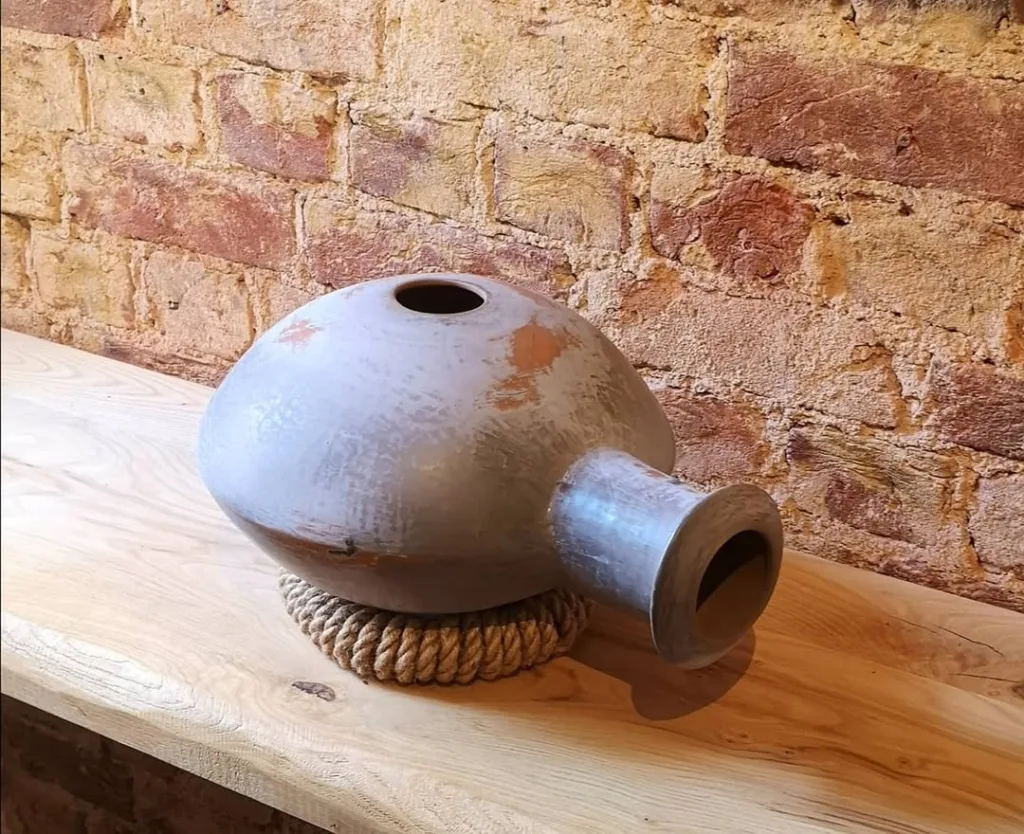

🪵🥁 A Log Drum is a wooden slit drum—a hollowed log with a carved opening that turns wood into a surprisingly powerful voice.
If you want a warm, earthy percussion sound with real character, this instrument has it.
- What it is in plain terms, plus the slit drum family it belongs to
- How the slit, tongues, and resonance chamber create pitch
- How to play, care for, and choose a Log Drum for music or collecting
| Type | How It’s Built | Sound Feel | Good For |
|---|---|---|---|
| Traditional Log Slit Drum | Hollowed log, long slit, two main “tongues” that flex when struck | Deep, woody, carries far; often two main pitches | Ensemble rhythm, ceremonial patterns, outdoor projection |
| Tuned Log Drum | More precise carving; tongue sizes refined for clearer pitch | More “note-like,” still organic | Melodic percussion lines, studio work, small groups |
| Modern “Tongue-Style” Wooden Drum | Multiple tongues cut on top; sometimes called a log tongue drum | Gentle, chiming, soft attack | Meditative playing, classroom use, casual home practice |
🕰️ Name note: “Log Drum” gets used in a few ways. On instrument sites, it most often means a slit drum carved from a log.
If you see “tongue drum,” it may refer to a related design where multiple tongues are cut into the top.
What a Log Drum Is 🪵
- Instrument family: An idiophone, meaning the body itself vibrates to make sound.
- Main idea: A hollow chamber plus a carved slit creates flexible “tongues” that ring when struck.
- Why it works: The wood flexes, the air inside resonates, and you get a full, carrying tone.
The Slit Drum Family 🧭
A Log Drum sits in the same big family as slit drums found across many regions of the world.
Builders discovered a clever trick: cut a long opening into a hollow log and the top becomes a pair (or set) of vibrating beams.
Strike one side and you hear one pitch; strike the other and you get a second pitch center.
Why It Sounds Loud for Its Size 📣
The hollow interior acts like a resonance chamber. The slit focuses vibration into the tongues, then the chamber reinforces it.
That’s why a well-made wooden slit drum can sound bold without needing metal parts or strings.
You feel the air move when you hit it just right.
Anatomy and Materials 🛠️
- Shell: The outer log body; thicker walls usually mean more focus and durability.
- Slit: The opening; its shape affects how freely the tongues vibrate and how the sound projects.
- Tongues: The two main “lips” around the slit; their length and thickness shape pitch.
- Chamber: The hollow interior; volume and wall shape influence resonance and sustain.
🔎 A simple way to picture it: think of two wooden springs (the tongues) sitting over a hollow box (the chamber).
The more freely those tongues flex, the clearer the note.
Top View (simplified)

   ┌───────────────────────────┐
   │        Tongue A            │
   │     ┌───────────┐         │
   │     │   SLIT     │         │
   │     └───────────┘         │
   │        Tongue B            │
   └───────────────────────────┘

Side View (simplified)

   ┌───────────────────────────┐
   │           TOP              │
   ├───────────────────────────┤
   │      Hollow Chamber        │
   │   (air reinforces sound)   │
   └───────────────────────────┘
Wood Choices and What You Hear 🌳
Makers typically choose local hardwoods or other sturdy woods that can hold a clean carve and resist cracking.
Dense wood often gives a stronger attack and a more defined core tone; lighter wood can feel more open and breathy.
The real key is seasoning: a stable, well-dried log helps the pitch stay consistent.
Finish and Surface Details 🧴
A smooth striking area helps your mallet land cleanly, which supports a clearer sound.
Some instruments are left more natural; others have protective finishes.
Whatever the look, the goal is the same: keep the wood healthy so the resonance stays lively.
Origins and Cultural Journeys 🕰️
- Many homes, many names: Slit drums appear in diverse traditions, so “log drum” is more of a design label than a single origin story.
- Shared purpose: Rhythm, ceremony, and community signals—often the same instrument does all three.
- Living craft: Carving styles and tuning choices reflect local taste, practical needs, and musical language.
Africa: Rhythm and Communication 🥁
In various African traditions, slit drums function as musical instruments and as sound carriers that travel across open space.
Patterns can be rhythmic, social, and ceremonial.
The sound is direct and wood-forward, with a pulse you can feel.
Oceania: Village Sound Signals 🌊
In parts of Oceania, large slit drums have long been carved for community use.
Their projection matters: a well-voiced drum can speak across a village setting.
Even when used for signals, the instrument still sits inside a world of music and craft.
The Americas: Relatives Like the Teponaztli 🪶
A famous relative is the teponaztli, a slit drum from Mesoamerica.
It shares the same core idea: carved tongues that yield distinct pitches when struck.
If you love the log drum concept, exploring these relatives helps you hear how one design can bloom into many voices.
Modern Workshops and Stage Use 🎶
Today, builders create log drums for performance, education, and personal practice.
Some aim for traditional power; others chase a cleaner pitch map for melodic playing.
Either way, the charm stays: wood, air, and a human hand shaping sound.
How to Play and Shape the Tone 🪵🥁
- Mallet choice matters: Softer heads warm the attack; harder heads brighten the click and bring out overtones.
- Where you strike matters: Near the tongue end often sounds higher and tighter; closer to the middle can sound rounder.
- Control the ring: Light damping with a hand can shorten sustain for crisp patterns.
Striking Zones You Can Test in One Minute ⏱️
- Play Tongue A near the slit edge. Listen for a focused pitch.
- Move your strike toward the outer edge. Notice how the tone gets fuller or more “thuddy.”
- Repeat on Tongue B. Compare the pitch centers and the sustain.
- Try a gentle palm touch on the shell while striking. You’ll hear the ring shorten.
Starter Grooves That Feel Natural 🧡
A log drum loves steady motion. Keep it simple, keep it musical, and let the wood do the talking.
Use two pitches like a conversation: one “home” tone, one “answer” tone.
That back-and-forth is a classic feel for a two-tone instrument.
- Pulse + reply: A A A B | A A B B (repeat, then vary accents)
- Walking pattern: A B A B | A A B (keep the hand relaxed)
- Call-and-response: Short phrase on A, answer phrase on B, then swap
🧠 Tiny skill that changes everything: aim for consistent height in your mallet stroke.
Same height, same angle, same landing spot.
The drum rewards that discipline with a clean voice.
Tuning and Pitch Layout 🎼
- Tongue length: Longer tongues usually mean lower pitch; shorter tongues trend higher.
- Tongue thickness: Thicker sections tend to raise stiffness and can shift the voice.
- Chamber volume: The hollow interior can strengthen certain ranges and change the perceived “body” of the note.
What “Tuned” Usually Means Here 🎯
Many log drums are tuned so the two main tongues produce a pair of stable pitches that sit nicely together.
The interval varies by tradition and by maker; you might hear anything from close, pulsing steps to wider, open gaps.
What you want is clarity and a repeatable pitch center.
A Safe Way to Check Pitch Without Tools 👂
- Strike Tongue A three times with the same mallet stroke. Listen for the same pitch each time.
- Do the same for Tongue B. Make sure the tone doesn’t “wander” or choke.
- Play A then B slowly. Ask a simple question: does the pair sound settled and pleasant?
🧰 If you’re dealing with a valuable or antique piece, avoid DIY re-carving.
Tuning work changes structure, and a small cut can become a big problem.
For heritage instruments, a conservator or experienced maker is the right move.
Buying Guide for Players and Collectors 🧾
- Decide your goal: bold rhythm, melodic clarity, or collectible character.
- Listen for stability: consistent pitch centers and an even response across the tongues.
- Inspect the wood: cracks, soft spots, or loose fibers around the slit matter more than surface scuffs.
Sound Checks You Can Do on the Spot 🔊
- Play soft, then medium, then firm strokes. A healthy Log Drum keeps its voice across dynamics.
- Strike near the tongue end, then slightly inward. You should hear a useful range of color, not a sudden dead zone.
- Tap the shell lightly. It should feel solid, not spongy.
Condition Checklist for Antique-Style Pieces 🕯️
- 🪵 Slit edges: look for clean lines without fresh splintering
- 🧯 Cracks: hairlines can be normal; spreading gaps need attention
- 🐛 Wood health: avoid active insect damage (powdery residue or new holes)
- 🧷 Repairs: stable, well-done reinforcement is better than hidden glue smears
- 🎶 Voice: both tongues should speak; a “mute” tongue often signals a structural issue
Respectful Collecting That Keeps Value High 🤝
A log drum can be a playable tool, a craft object, and a cultural artifact at the same time.
When provenance is available, keep it with the instrument.
Careful documentation supports trust and protects the story that comes with the sound.
Care, Storage, and Gentle Restoration 🧰
- Keep it stable: steady humidity and temperature help prevent cracks.
- Clean lightly: soft cloth, minimal moisture, no harsh chemicals.
- Support the shape: store so the slit area isn’t under pressure.
The Three Rules That Save Wood 🧡
- No extreme swings in heat or humidity. Wood hates sudden change.
- No soaking. Use a barely damp cloth only when needed.
- No heavy weight on the top near the slit. That’s the most sensitive zone.
🧼 A quick cleaning routine that stays safe:
- Dust with a soft, dry cloth to protect the finish.
- Use a soft brush for the slit interior if debris collects.
- If the surface looks dry, use only products meant for wooden instruments, and apply sparingly.
Common Issues and Easy Fixes 🧩
🥁 One Tongue Sounds Dull
Try a different striking spot and mallet hardness first. If the dullness stays, check for a tiny crack near the slit.
A small structural issue can steal ring.
🌬️ Buzzing or Rattling
Look for loose debris inside the chamber or a loose stand touching the shell.
Remove contact points so the resonance stays clean.
🪵 New Hairline Crack Appears
Stabilize the environment. Keep it away from heaters and direct sun.
If the crack grows, consult a wood-instrument specialist to protect the value.
🎵 Pitches Feel “Off” in a Group
Move your role toward rhythm and color instead of exact pitch matching.
A Log Drum often shines as a foundation voice, with a human edge.
FAQ ❓
Is a Log Drum the Same as a Tongue Drum?
Open Answer
They’re closely related ideas. A Log Drum usually means a slit drum carved from a hollowed log with two main tongues.
A “tongue drum” label can also mean designs with multiple tongues cut into the top.
Both are wooden idiophones; the tongue count and layout are the big difference.
How Many Notes Does a Traditional Log Drum Have?
Open Answer
Many traditional log slit drums emphasize two main pitches, one per tongue area.
Some instruments include additional tongues or playable zones that add extra colors.
What matters most is the stability of each pitch center.
What Mallets Work Best?
Open Answer
Start with medium-soft mallets if you want a warm, rounded tone.
Harder heads bring a brighter click and can highlight overtones.
If you own one log drum, having two mallet pairs—one soft, one firm—gives you a big palette.
How Do I Store a Log Drum Safely?
Open Answer
Keep it in a stable room, away from direct heat and sun.
Support it so the top near the slit is not bearing weight.
A breathable cover helps keep dust off while letting the wood stay happy and stable.
Can a Log Drum Be Repaired If It Cracks?
Open Answer
Often yes, especially if the crack is addressed early.
The safest approach is environment stabilization first, then professional evaluation if the crack grows or reaches the tongue area.
Good repair work aims to keep the voice intact while protecting structure.