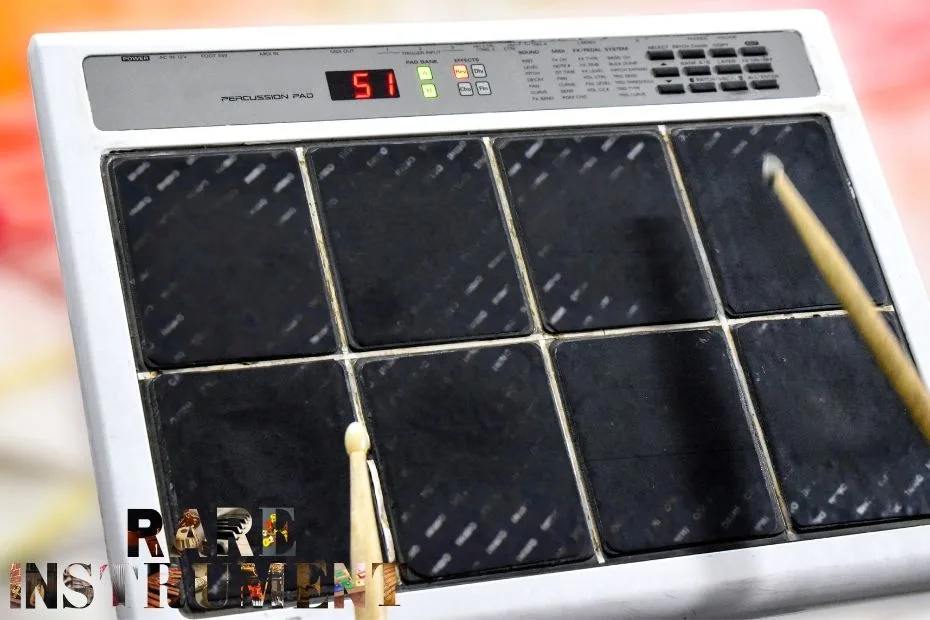
An Octapad is a hands-on electronic percussion pad that lets you trigger drum sounds, samples, and MIDI with the feel of a real performance.
- 🥁 Built for rhythmic accuracy with velocity-sensitive pads and dynamic control
- 🎛️ Bridges acoustic drums and electronic sounds in a hybrid setup
- 🔌 Works as a MIDI drum controller for software instruments and hardware modules
- 🧳 A modern classic that can become collectible gear when kept clean and well-maintained
• • •
What An Octapad Really Is 🥁
- Pad grid you play with sticks or hands, built for repeatable response and expressive dynamics
- Sound engine (in many units) that turns hits into drum tones or sample playback
- MIDI brain that can control virtual drums and external gear
The name Octapad points to the classic idea of eight playable pads, a layout that feels instantly familiar while still opening the door to electronic percussion. In practice, an Octapad is less “one instrument” and more a performance surface that can become a drum kit extension.
• • •
How It Became A Modern Classic 🧳
- Consistency: you can repeat the same rimshot-like idea with near-identical hits
- Freedom: you can bring many sounds without hauling a huge setup
- Flexibility: it can be the main voice or a supporting layer beside acoustic drums
Octapads showed up widely from the 1980s onward as drummers wanted electronic texture without losing the feel of sticks. Today, the appeal sticks because Octapad playing is still a human gesture, just routed into new sound worlds.
• • •
Pads, Triggers, and Feel 🎚️
Great playability comes from matching sensitivity, threshold, and crosstalk control to your touch. Small tweaks can make an Octapad feel alive instead of merely functional.
A simple “feel” flow you can follow 🔁 listen, adjust, then repeat
Stick/Hand
   ↓
Pad Sensor
   ↓
Trigger Settings (threshold, curve, scan)
   ↓
Sound Layer / MIDI Note
   ↓
Mixer / Headphones / PA
- 🥁 If soft notes vanish, raise sensitivity and refine velocity curves for ghost notes
- 🔇 If pads trigger each other, tighten crosstalk and set a smarter threshold for clean separation
- 🎯 If double hits happen, revisit scan time and retrigger cancel so the feel stays natural
Treat the surface like a real instrument: consistent stick height, relaxed wrists, and a balanced rebound matter. When the setup is right, Octapad dynamics can be surprisingly musical for electronic percusion.
• • •
Sound Choices That Actually Matter 🎛️
- 🎧 Internal sounds for fast setup and predictable playback
- 🧩 Samples for signature hits and custom texture
- 💻 Software drums via MIDI for deep libraries and easy editing
- 🔌 External modules for stage-ready rigs and stable routing
The smartest approach is picking a sound role before picking a sound itself. Let the Octapad do what it does best: quick access to distinct voices, tight attack, and playable dynamics.
• • •
Setup and Signal Flow 🔌
- Mounting: place it where your natural stroke lands, not where it merely fits
- Gain staging: keep levels clean from pad output to mixer
- Monitoring: use headphones or a clear wedge to hear detail
- MIDI mapping: name your kits and keep notes consistent for easy recall
A tidy rig makes you play better. Route cables so the Octapad stays stable, keep power and audio separated when possible, and label connections so changes feel stress-free.
• • •
Ways Players Use It On Real Gigs 🎶
- ✨ Layer a short clap under a snare for definition and lift
- 🌊 Add shakers and tambourine without extra players, keeping the groove steady
- 🎬 Trigger one-shot hits for transitions, stings, and texture that feels intentional
- 🥁 Build a hybrid kit where toms stay acoustic while special sounds live on pads
Think in “jobs,” not “sounds.” Give each pad a clear purpose—accent, texture, cue, or loop control—so your hands always know what comes next, and the performance stays confident.
• • •
Care Tips For Long-Term Reliability 🧰
Keep it simple: wipe the pads with a lightly damp microfiber, avoid harsh chemicals, and store the unit away from heat and humidity. A cared-for Octapad keeps its feel, its response, and its value.
• • •
Troubleshooting Without The Drama 🔧
- 🔁 Missed hits: raise sensitivity, refine velocity curve, check sticks and technique
- ⚡ Double triggering: adjust retrigger settings and review threshold
- 🔊 Uneven volume: match pad levels, confirm gain staging, balance layers
- 🔌 MIDI confusion: confirm note numbers, channels, and mapping for each pad
When something feels off, change one setting at a time. The goal is a predictable response that still feels human. Once you find the sweet spot, save it as a baseline kit and build variations from there.
• • •
Mini FAQ 🧩
Is An Octapad Only For Electronic Music?
Not at all. A Octapad can support acoustic playing by adding subtle percussion layers, clean accents, and practical cues while your main kit stays traditional.
Do I Need A Computer To Use An Octapad?
Many players run an Octapad as a standalone instrument, then use MIDI only when they want deeper libraries or detailed editing. The best rig is the one that feels stable and easy.
What Makes Pads Feel “Real” Under Sticks?
It comes down to response and settings: sensitivity, threshold, and velocity curves. Pair that with relaxed technique and a consistent stroke, and the Octapad becomes expressive.
Can I Add Extra Pads Or Foot Controls?
Many setups expand an Octapad with additional triggers and foot controls so your hands stay focused. It’s a clean way to manage fills, kit changes, and one-shot hits.
What Should I Check Before Buying Used?
Prioritize consistent pad triggering, reliable buttons, and solid jacks. A unit that feels even across the surface will be more enjoyable, more dependable, and more collectible.