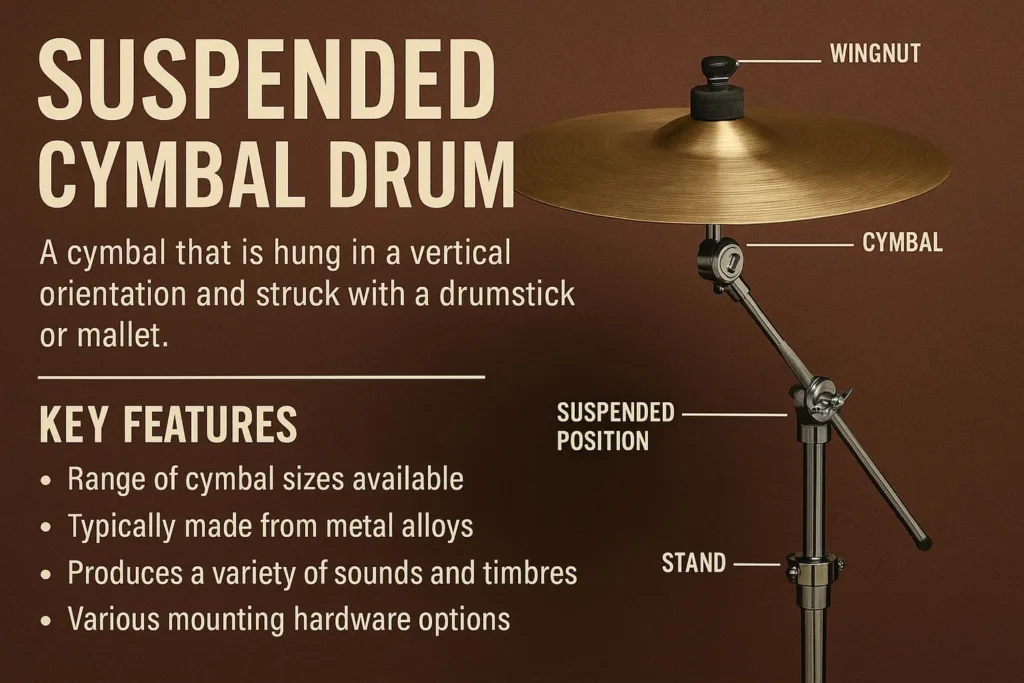
If you’ve ever felt a soundtrack bloom into a shimmering swell or heard a wind band piece breathe between phrases, you’ve experienced the magic of the Suspended Cymbal. Often called a “suspended cymbal drum” in some catalogs and educational settings, this instrument isn’t a drum at all—it’s a single cymbal mounted to resonate freely. In the orchestra pit, on a film scoring stage, and in contemporary worship or theater, the suspended cymbal is the go-to voice for smooth crescendos, ethereal textures, and silky accents.
Specifications
| Feature | Typical Options | Best For | Why It Matters |
|---|---|---|---|
| Size | 16″, 18″, 20″, 22″ | Ensembles, studio, theater | Bigger cymbals = deeper pitch, longer sustain, wider dynamic range |
| Alloy | B20 bronze, B8, B10–B12 | Professional (B20), student/budget (B8) | Alloy shapes complexity of overtones and projection |
| Weight/Thickness | Thin, Medium, Medium-Thin | Rolls, swells, soft-to-loud transitions | Thin cymbals speak quickly at low dynamics and bloom smoothly |
| Finish | Traditional, Brilliant, Partially lathed/raw bell | Recording (traditional), bright stages (brilliant) | Finish slightly affects attack, brightness, and sustain |
| Mounting | Stand with felt/sleeve, strap (concert) | Orchestral, band, studio | Proper isolation prevents choking and protects the keyhole |
| Mallets/Sticks | Soft yarn/felt mallets, brushes, light sticks | Texture control | Mallet choice defines the attack and bloom of the swell |
| Price Range | $120–$600+ | Student to pro | Hand-hammered B20 costs more but offers nuanced tone |
What Is a Suspended Cymbal (and Why It’s Not Just a “Crash”)?
A suspended cymbal is a single cymbal mounted to resonate freely—either on a stand with felt and a protective sleeve or hung from a strap in orchestral settings. Functionally, it’s often the same type of cymbal as a crash, but the playing techniques and compositional roles are different. Instead of quick accents alone, suspended cymbals excel at:
- Crescendo rolls that build from very soft to strong, sustained peaks
- Textural swells under dialogue or lyrical passages
- Soft, dark accents with mallets, brushes, or light sticks
- Special effects such as bowing the edge or bell for sustained, glass-like tones
In short, the “suspended” part describes the mounting and resonance-forward approach. That’s why a “suspended cymbal drum” is a common search term in school inventories even though the instrument is, technically, a cymbal—not a drum.
Sizes, Alloys, and Weights: How to Shape Your Sound
Choosing the Right Size
- 16″: Tight, quick, focused. Great for small rooms and intimate miking.
- 18″: The all-rounder. Versatile for wind band, pit, and studio.
- 20″: Deeper, longer sustain; ideal for orchestral swells and cinematic effects.
- 22″: Massive, spacious bloom. Needs room to resonate and careful control.
For most ensembles, an 18″ or 20″ thin suspended cymbal balances articulation and power.
Alloy and Craft
- B20 bronze (80% copper, 20% tin): Complex overtones, dark shimmer, prized in orchestral and studio work.
- B8 bronze (92% copper, 8% tin): Brighter, more direct, budget-friendly and durable for education.
- B10/B12: Sits between B8 and B20—cleaner than B20, richer than B8.
Hand-hammered cymbals tend to have more complex wash and a silkier swell, while machine-hammered options offer consistency and often better value.
Weight and Thickness
- Thin: Fast response at pianissimo, lush swells, lower pitch.
- Medium-Thin: Balanced articulation and sustain—excellent general-purpose choice.
- Medium: More projection and stick definition, but needs more energy to bloom.
For the classic orchestral roll, a thin to medium-thin cymbal is the sweet spot.
Mounting and Setup for Maximum Resonance
- Use a stand with a plastic/nylon sleeve and top/bottom felts to prevent metal-on-metal contact and keyholing.
- Angle the cymbal slightly—around 10–20 degrees—so mallet strokes glide across the surface without digging in.
- Leave the wingnut just snug, not tight. The cymbal should swing freely but not wobble wildly.
- For orchestral straps, tie a secure knot through the bell and hold with two hands for controlled rolls and chokes.
- Need less over-ring? A tiny gaffer-tape tab near the edge or a light sizzler chain can tame highs without killing the bloom.
Playing Techniques: From Whisper to Thunder
Crescendo Rolls
Use a matched pair of soft yarn or felt mallets. Start near the edge, about 3–4 inches in, alternating strokes on opposite sides. Increase stroke density, not just velocity, as you grow. For super-even swells, rotate around the cymbal’s edge and avoid camping over the bell.
Accents and Articulation
- Mallet taps: Gentle, rounded accents that bloom without a harsh attack.
- Light sticks: Add definition, especially medium-thin cymbals that can handle stick articulation.
- Brushes: Satin swishes for theater pits and underscoring.
- Chokes: For a punctuated stop, grab the cymbal with the free hand or mallet immediately after the strike.
Texture & Special FX
- Bowing the edge or bell (with rosin) yields haunting, glassy harmonics—great for film and contemporary works.
- Superball mallet scrapes produce ghostly, rising tones.
- Finger rubs and stick scrapes add whispery transitions.
How to Choose the Right Suspended Cymbal
- Orchestra and Film: 20″ thin B20, traditional finish. Extremely smooth rolls and deep bloom.
- Wind Band and School Programs: 18″ medium-thin B8/B20 hybrid lines: durable, versatile, budget-friendly.
- Studio: 16″–18″ thin, lower noise floor, controlled decay; traditional finish records naturally.
- Theater/Worship: 18″ thin; responds at low volume and sits under vocals.
Pro Tip
Bring your mallets when auditioning cymbals. The same cymbal can feel drastically different with soft yarn vs. medium felt.
Recording and Miking Tips
- Overheads capture the natural bloom. Start 3–5 feet above, angled slightly off-axis to reduce harshness.
- Add a spot mic (small-diaphragm condenser) 18–24 inches away for detail. Blend subtly.
- Use a high-pass filter around 120–180 Hz to remove rumble without thinning the shimmer.
- Automate the crescendo rather than compress heavily; let the cymbal breathe.
- In live pits, try a ribbon or darker condenser to smooth top-end, especially with brilliant finishes.
Care and Maintenance
- Always use a plastic/nylon sleeve and felts; never metal-on-metal.
- Wipe fingerprints with a soft microfiber cloth; oils can etch finishes over time.
- Clean sparingly with cymbal-safe products. Patina can be part of the sound—don’t over-polish.
- Store in a padded bag or hard case; avoid extreme heat or cold.
- Rotate the cymbal occasionally on the stand to distribute wear.
Example Setups and Pairings
- All-Purpose Rig: 18″ thin B20 + soft yarn mallets + brushes: covers band, theater, and most studio needs.
- Orchestral Power: 20″ thin hand-hammered + medium-soft felt mallets for long, dramatic swells.
- Compact Studio: 16″ medium-thin + small-diaphragm condenser spot mic for precise, controllable tracks.
Frequently Asked Questions
Is a suspended cymbal the same as a crash?
They can be the same physical cymbal type, but the application differs. Suspended cymbals emphasize resonance and swells, while crashes are typically accent strikes. Thinner cymbals excel as suspended; heavier crashes may not bloom as smoothly.
What size is best for schools?
An 18″ suspended cymbal offers maximum versatility—easy to handle, strong projection, and responsive to soft mallet rolls.
Can I use a ride as a suspended cymbal?
Yes, but rides are often heavier with defined stick ping and a stronger bell. They require more energy to swell and may sound brighter. A medium-thin crash or dedicated suspended model is typically smoother for rolls.
Which mallets work best?
Soft yarn or soft felt mallets create the most even crescendos. Mediums add clarity for articulate passages. Always test with the cymbal you plan to use.
How do I avoid damage?
Use a sleeve and felts, don’t overtighten the wingnut, avoid edge-on strikes with hard sticks, and store the cymbal properly. Rotate positions on the stand to reduce stress.
Final Thoughts
Whether you call it a Suspended Cymbal or a suspended cymbal drum, this instrument is a master of subtlety—capable of transforming a moment with a breath-like swell or underlining a climax with a velvet roar. Choose an 18″–20″ thin cymbal for maximum versatility, mount it correctly, and cultivate mallet technique. Do that, and you’ll unlock one of percussion’s most expressive voices—refined, cinematic, and endlessly musical.