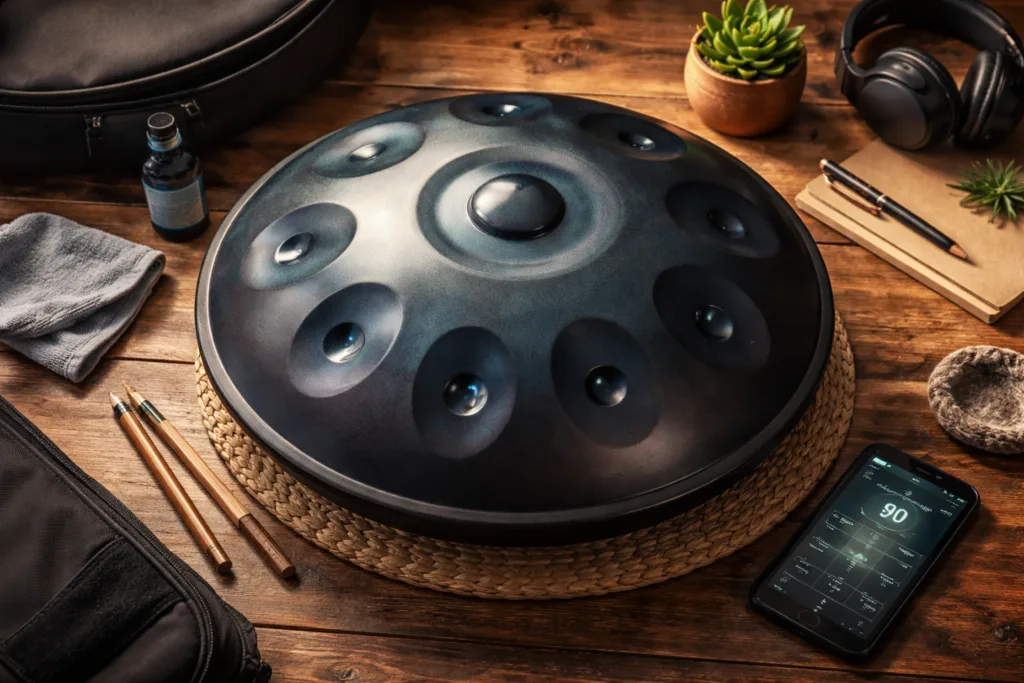
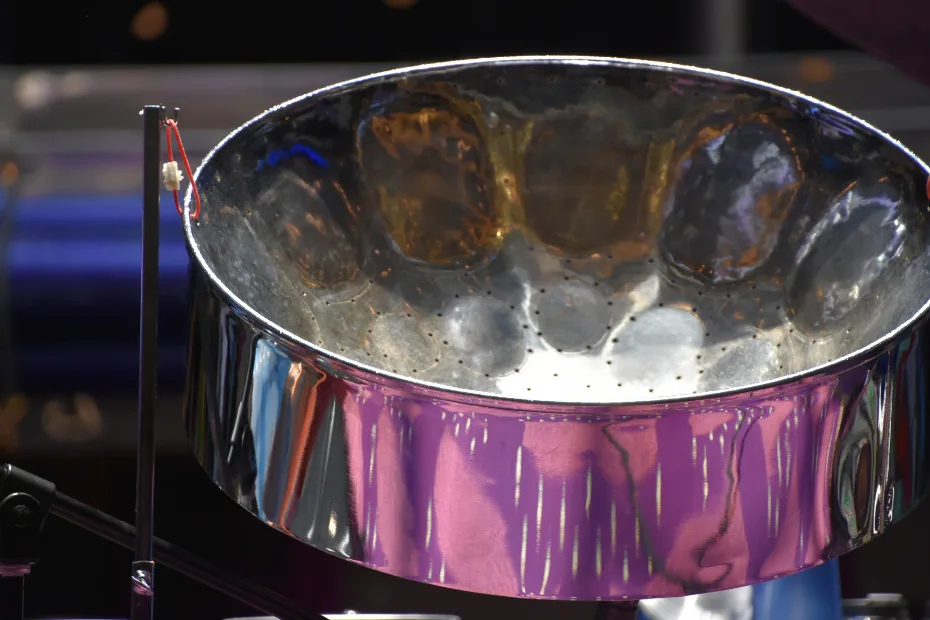
- Steelpan is a pitched percussion instrument made from shaped steel with carefully tuned note areas.
- Many people say steel drum, yet steelpan is the name you’ll see most in players’ circles.
- It’s chromatic (all 12 notes), so you can play melody, chords, and full songs.
- Most instruments you meet are part of a pan family: Tenor, Double Seconds, Guitar, Cello, and Bass.
Common Steelpan Voices In One View
| Steelpan Type | Typical Role | What It Feels Like To Play | What To Listen For |
|---|---|---|---|
| Tenor (Lead) | Melody and fast lines | Direct, nimble, very responsive | Clear attack, singing top notes |
| Double Seconds | Harmony, fills, inner motion | Two drums, comfy chord shapes, warm blend | Sweet midrange, smooth voice leading |
| Guitar / Quad | Rhythmic chords and patterns | More surface to cover, big strums, punchy grooves | Bright comping, tight rhythm |
| Cello | Low harmony and counter-lines | Grounded, satisfying weight, rich ring | Full body, supportive movement |
| Bass | Foundation and pulse | Big drums, slower travel, huge impact in ensemble | Deep thump, steady time |
What Makes A Steelpan Sound Different
A steelpan is basically a tuned field of metal, and that’s the magic. Each note area is shaped so it rings at a main pitch plus a set of harmonics. When those partials line up nicely, the sound feels alive and almost vocal. Not “metallic” in a harsh way, more like a bell that learned to dance.
The stick matters too. A soft-tipped pan stick gives a rounder attack, while a firmer tip adds more snap and helps articulation. Small change, big difference. If your notes feel blurry, your stick choice is a quick win.

Steelpan grew into its modern form in Trinidad and Tobago during the early-to-mid 20th century. Makers refined techniques year by year, turning everyday steel into a fully featured instrument family. Today you’ll hear steelpan music in festivals, classrooms, studios, and concert halls, and it fits in way more styles than people expect.
How A Steelpan Is Made
Good pans start with good shaping. The surface is sunk into a smooth bowl, then divided into note sections with grooves that help separate vibration. After that comes heat work and tuning. The goal is a stable pitch with a resonent ring that stays musical across dynamics.
A Simple Build Process You Can Picture
- Sinking: The drum top is shaped into a bowl for better projection and control.
- Marking: The maker maps each note so the layout supports speed and memory.
- Grooving: Lines are pressed in to define note borders and reduce crosstalk.
- Tempering: Heat treatment improves stability and helps notes hold tuning.
- Tuning: Each note is adjusted for the fundamental plus key partials so chords sound clean.
Quick Listening Test: Tap one note gently, then a little harder. A well-set steelpan keeps the pitch centered, and the ring stays pleasant instead of wobbling wildly.
Understanding The Note Layout
A steelpan layout is not random. Notes are placed to reduce awkward jumps and to keep common patterns under your hands. Many lead pans group pitches so you can play scales and arpeggios with a steady flow. Once your brain locks in the map, you’ll stop “hunting” and start phrasing.
If you’re coming from piano or guitar, give yourself a week of patience. Your first sessions can feel like learning a new keyboard with curved keys. Then one day it clicks. Your hands begin to anticipate the next note, and the instrument suddenly feels friendly.
Choosing Your First Steelpan
Buying a steelpan is a little like buying a violin: the maker and setup matter a lot. Price alone won’t guarantee a great pan, and a cheap pan can still be fun if the tuning is solid. Focus on pitch stability, even tone across notes, and a comfortable layout.
A Practical Checklist
- Note Balance: Soft notes and loud notes shouldn’t feel like different instruments. You want consistent response and volume.
- Ring Control: A good steelpan has sustain, yet it doesn’t turn into a wash of sound when you play chords.
- Stands And Height: Your shoulders should stay relaxed. A stable stand makes practice easier and keeps technique clean.
- Stick Pairing: Ask for the right stick hardness for that pan. Matching sticks can change the whole feel.
Quick Setup Table
| Goal | Best Starting Choice | Why It Helps |
|---|---|---|
| Play Melodies | Tenor (Lead) steelpan | Clear note targets, fast learning, strong feedback |
| Play Chords | Double Seconds | Friendly voicings, rich midrange, easy blend |
| Jam With Friends | Any well-tuned steelpan + solid stand | Comfort boosts time and confidence fast |
Sticks, Stance, And Basic Technique
A clean steelpan technique starts with comfort. Stand close enough that your elbows hang naturally. Keep the wrists loose. Let the stick rebound. When you grip too hard, the sound gets choked and your time drifts. Loose hands, steady pulse, better tone.
- Center Hits: Aim for the center of each note area. It’s the sweet spot for pitch and clarity.
- Two Heights: Practice soft taps and firm taps on the same note so dynamics feel controlled.
- Alternating Sticking: Right-left-right-left builds flow and keeps your phrases even.
- Rolls: Light, quick alternation creates a smooth sustain without forcing volume.
A Practice Routine That Sticks
If you want real progress on steelpan, keep sessions short and specific. Here’s a simple 30-minute plan that works for beginners and still helps experienced players keep sharp timing and tone in shape.
- 5 Minutes: Single-note warmup on a slow scale, focusing on even sound and relaxed wrists.
- 10 Minutes: One pattern (scale, arpeggio, or short riff) with a steady pulse. Keep it clean before fast.
- 10 Minutes: A small piece of music. Two bars at a time. Repeat until it feels easy, not just possible.
- 5 Minutes: Free play. Explore phrasing, dynamics, and tiny variations. This keeps steelpan fun.
Practice Split Graphic
Care, Storage, And Maintenance
A steelpan is tough, yet it likes consistent care. Keep it dry, wipe it after playing, and store it where temperature swings are mild. Sudden changes can affect tuning stability. Treat it like a real instrument, not just a shiny object, and it will stay reliable.
Do This
- Wipe Down: Use a soft cloth to remove sweat and fingerprints. It helps protect the surface and keeps tone consistent.
- Use A Cover: A simple cover protects the note areas from dust and accidental taps.
- Check The Stand: A wobble can ruin your accuracy. A stable setup improves control and comfort.
Avoid This
- Hard Mallets: Wrong sticks can dent note fields and mess with tuning.
- Leaving It In Damp Places: Moisture encourages corrosion and can dull the ring.
- Random DIY Retuning: Tuning needs skilled control of harmonics. If pitch is off, find a pan tuner.
Recording And Amplifying Steelpan
In a room, a steelpan can feel huge. On a recording, it can turn thin if the setup is wrong. You want the strike plus the bloom. Place a mic where you hear definition without losing body. Move it a little, listen, adjust. Tiny shifts change the balance a lot.
- Room Matters: Hard rooms make the ring jump out. Softer rooms give a smoother blend.
- Control Sustain: If chords smear, play shorter strokes and let the groove carry the rhythm.
- Clean Performance: Great steelpan takes come from steady timing and consistent velocity, not fancy gear.
Common Questions
Is Steelpan Hard To Learn
The first week can feel odd because the layout is new. After that, progress can be fast. If you keep your hands relaxed and practice short patterns daily, the steelpan starts to feel natural. It’s a friendly instrument when you stay consistent, and the sound reward is instant.
Why Do Some Pans Sound More “In Tune”
It’s about more than the main pitch. A well-made steelpan has harmonics that support the note, so chords feel smooth and the tone stays centered. A weaker pan may hit the right pitch yet the overtones fight each other, and your ear notices. That’s why buying from a trusted maker (or a reputable seller) is such a big deal for long-term enjoyment.
Can Steelpan Play Any Genre
Yes. A steelpan handles melody and harmony, so it can sit in pop, jazz, classical-style arrangements, worship music, film cues, and more. The trick is choosing the right pan voice and sticks for the vibe. Bright lead tones cut through. Deeper pans bring warmth and a calm foundation.