
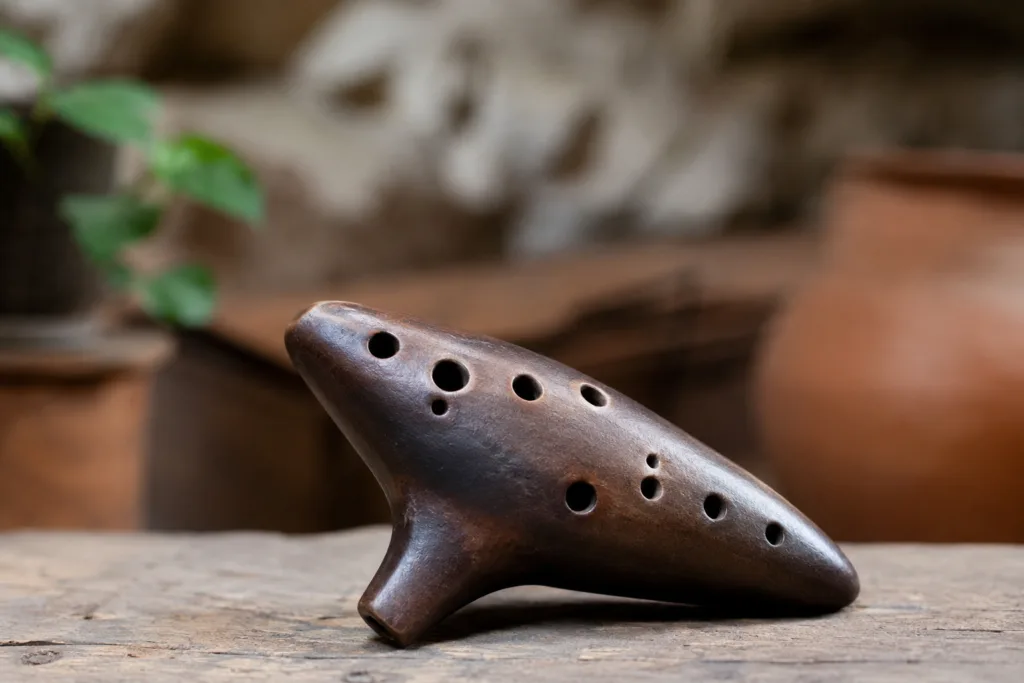
Instrument Snapshot
The ocarina is a vessel flute: a wind instrument with an enclosed resonating body rather than a long open tube. It is best known for its rounded, breathy tone, compact shape, and close link to both folk traditions and modern beginner-friendly music making.
What an Ocarina Is
An ocarina is a small wind instrument that produces sound when the player blows through a mouthpiece or windway. Inside the body, air vibrates in an enclosed chamber. This makes it different from a recorder, tin whistle, or concert flute, where the air column runs through a longer tube.
The ocarina belongs to the vessel flute family. Its body may look like a small pod, bird, pendant, egg, shell, or rounded chamber. The player covers and uncovers finger holes to change pitch. Most modern ocarinas are tuned to a specific scale or pitch range rather than built for wide chromatic range like a concert flute.
For buyers, the main things to check are tuning accuracy, breath response, hole layout, material, size, and whether the model is designed for beginners, performance, travel, or collection.
Main Ocarina Types
Ocarinas are grouped by body shape, tuning system, chamber count, and playing purpose. The same name can describe very different instruments, so shape alone is not enough when choosing one.
| Type | Description | Best Use |
|---|---|---|
| Transverse Ocarina | Held sideways, often with 10 or 12 holes. This is the familiar “sweet potato” style. | General learning, melody playing, folk tunes, game music, and performance practice. |
| Pendant Ocarina | Small vertical ocarina, often worn on a cord. Usually has fewer holes and compact fingering. | Travel, simple melodies, casual playing, and gift instruments. |
| Inline Ocarina | Held forward like a small whistle, with finger holes arranged along the body. | Players who prefer a straight playing position and easy hand placement. |
| Multi-Chamber Ocarina | Uses two or more chambers to extend the playable range. | Advanced melody playing, wider range pieces, and players who outgrow a single chamber. |
| Soprano, Alto, Tenor, Bass | Pitch names describe general range. Smaller models speak higher; larger models speak lower. | Choosing tone color, hand comfort, volume, and register. |
How the Ocarina Produces Sound
The ocarina works by directing a thin stream of air against an edge inside or near the mouthpiece. This creates vibration in the enclosed air chamber. The shape and size of that chamber control much of the instrument’s tone.
Unlike a long flute, where pitch is strongly tied to tube length, the ocarina’s pitch depends on the chamber volume and the total open hole area. When more holes are opened, the pitch rises. When holes are covered, the pitch lowers.
Channels the player’s breath toward the voicing edge. A clean, even windway helps the note speak clearly.
The point where air splits and begins to vibrate. Small changes here can affect attack, clarity, and breath sensitivity.
The hollow body that gives the ocarina its rounded, enclosed sound. Larger chambers usually produce lower pitches.
Control pitch by changing the effective open area. Hole size and placement affect tuning and fingering comfort.
Materials and Sound Character
Material changes how an ocarina feels, ages, and responds under the fingers. The chamber design, voicing, and tuning work still matter more than material alone. A well-made plastic ocarina can play more accurately than a poorly made ceramic one.
| Material | Tone and Feel | Buying Note |
|---|---|---|
| Ceramic / Clay | Often warm, rounded, and resonant with a traditional hand-crafted feel. | Good for tone and collecting, but breakable if dropped. |
| Plastic | Usually clear, light, stable, and weather-resistant. | Good for beginners, children, travel, and outdoor use. |
| Wood | Can feel warm and organic, with a softer tactile surface. | Needs better humidity awareness and careful storage. |
| Metal | Durable and compact, though tone depends heavily on design. | Often chosen for novelty, pocket use, or collection rather than classic ceramic tone. |
| Composite | Varies by maker; may aim for durability, stable tuning, or lighter weight. | Judge by tuning, breath curve, and finish rather than material name. |
Care Warning: Ceramic ocarinas can crack from impact. Do not clean the windway with hard metal tools, and do not soak wooden models unless the maker specifically says it is safe.
Sound Profile and Playing Feel
The ocarina has a focused but gentle sound. Its attack is usually quick, but the tone does not carry the metallic edge of a tin whistle or the strong projection of a concert flute. Lower ocarinas tend to feel softer and fuller; smaller soprano models can sound bright and piercing if played with too much breath.
The bars describe common listening impressions, not lab measurements. Actual tone varies by maker, chamber size, tuning, material, and player control.
History and Cultural Background
Vessel flutes have a long history in several parts of the world. Archaeological and folk traditions include clay, bone, gourd, and ceramic forms that use enclosed chambers to create flute-like tones. Some were made as musical tools, some as ritual or symbolic objects, and some as animal-shaped sound makers.
The modern transverse ocarina is often associated with 19th-century Italy, where Giuseppe Donati helped shape the familiar tuned “sweet potato” form. Later makers developed ocarinas in different sizes and keys, allowing ensemble playing and more formal musical use.
Enclosed flute forms appear in several ancient and regional traditions. Shapes and tuning systems vary widely.
The modern tuned transverse ocarina became strongly linked to Italian making and ensemble use.
Ocarinas spread as accessible melody instruments, school instruments, souvenirs, and folk music tools.
Game music, film music, online lessons, and handmade maker communities brought the instrument to new players.
How Ocarina Fingering Works
Most ocarinas use covered holes for low notes and open holes for higher notes. A beginner may learn simple melodies quickly, but clean tuning depends on steady breath pressure. Blowing harder does not simply make the sound louder; it can push notes sharp or make the tone unstable.
Cover the Holes Fully
Leaks around the fingertips are one of the most common causes of weak or wrong notes.
Use Steady Breath
The ocarina needs controlled air. Many models require slightly more breath as the notes rise.
Learn the Scale Slowly
Move one note at a time before playing fast melodies. This helps the ear notice tuning drift.
Match the Fingering Chart
Different hole systems are not always interchangeable. Use the chart made for that exact model.
Player Tip: Alto C is often a comfortable first choice because it is not as shrill as many soprano models and not as large as lower bass ocarinas.
Buying Guide: What to Check Before Choosing One
The best ocarina is not always the most decorative one. A useful instrument should play in tune, feel comfortable in the hands, respond cleanly, and match the player’s purpose.
A 12-hole alto C transverse ocarina from a maker known for stable tuning and clear fingering charts.
A plastic or pendant ocarina that can handle small knocks, outdoor use, and bag storage.
A ceramic, handmade, regional, or historically styled model with documented maker details.
A double or triple ocarina, but only after single-chamber fingering and breath control feel natural.
| Check | Why It Matters | What to Avoid |
|---|---|---|
| Tuning | A playable ocarina should produce notes close to its intended scale with controlled breath. | Very cheap decorative models sold without tuning details. |
| Breath Curve | Some ocarinas need rising breath pressure for higher notes; others feel more even. | Models that squeak or choke easily across normal playing pressure. |
| Hole Comfort | Hands should cover holes naturally without strain. | Large hole spread for small hands, or tiny holes that feel cramped. |
| Material | Material affects durability, weight, care, and tactile feel. | Fragile ceramic models for rough travel or young children. |
| Range | Single-chamber models are simpler; multi-chamber models offer more notes. | Starting with a complex multi-chamber model before learning basic breath control. |
Ocarina vs Recorder, Tin Whistle, and Pan Flute
The ocarina is often compared with other small wind instruments, but its enclosed chamber gives it a different response. It is compact and friendly for melodies, yet its range is usually more limited than a recorder or flute.
Rounded vessel-flute sound, compact body, simple visual appeal, limited range on many single-chamber models.
Longer tube, wider educational repertoire, more familiar fingering in school music, brighter direct tone.
Strong folk association, bright and cutting sound, simple diatonic layout, lively ornamentation style.
Multiple pipes instead of finger holes, breath moved across pipe openings, visually and technically different.
Collector and Care Notes
Collectors often look at maker identity, regional style, clay body, glaze quality, tuning condition, and whether the instrument is playable or mainly decorative. A beautiful ocarina is not automatically a strong musical instrument.
Collector’s Note: Check the mouthpiece, voicing edge, cracks, chips around finger holes, tuning reputation, and any maker mark. For older or handmade examples, playability and collectible value may not move together.
- Store ceramic ocarinas in a padded case or stable shelf space.
- Let moisture dry naturally after playing before sealing the instrument in a case.
- Keep wooden ocarinas away from extreme humidity and direct heat.
- Use a soft cloth for the outside surface; avoid harsh cleaners on decorated finishes.
- Do not scrape the windway with sharp objects.
Common Myths
Any ocarina-shaped object will play in tune.
Many souvenir ocarinas are decorative. Accurate tuning requires careful hole sizing, voicing, chamber design, and testing.
Ceramic is always better than plastic.
Material matters, but tuning and voicing matter more. A well-made plastic model can be a better learner instrument than a poorly tuned ceramic one.
A larger ocarina is automatically easier to play.
Larger models sound lower and fuller, but they may need more air and wider finger stretch.
Mini FAQ
Is the ocarina easy for beginners?
Yes, a well-tuned beginner model can be easy to start. The main challenge is learning steady breath control so notes do not drift sharp or flat.
What type of ocarina should a beginner buy?
A 12-hole alto C transverse ocarina is a common beginner choice because it offers a practical range, comfortable size, and many available fingering charts.
Is a ceramic ocarina better than a plastic one?
Not always. Ceramic often feels more traditional and can sound warm, but plastic is durable and useful for travel or children. Tuning quality matters more than material name.
Can an ocarina play any song?
Single-chamber ocarinas have a limited range, so some songs need transposition or simplified melodies. Multi-chamber models offer more notes but require more skill.
Why does my ocarina sound out of tune?
Common causes include uneven breath pressure, leaking finger holes, using the wrong fingering chart, or playing a decorative model that was not accurately tuned.