
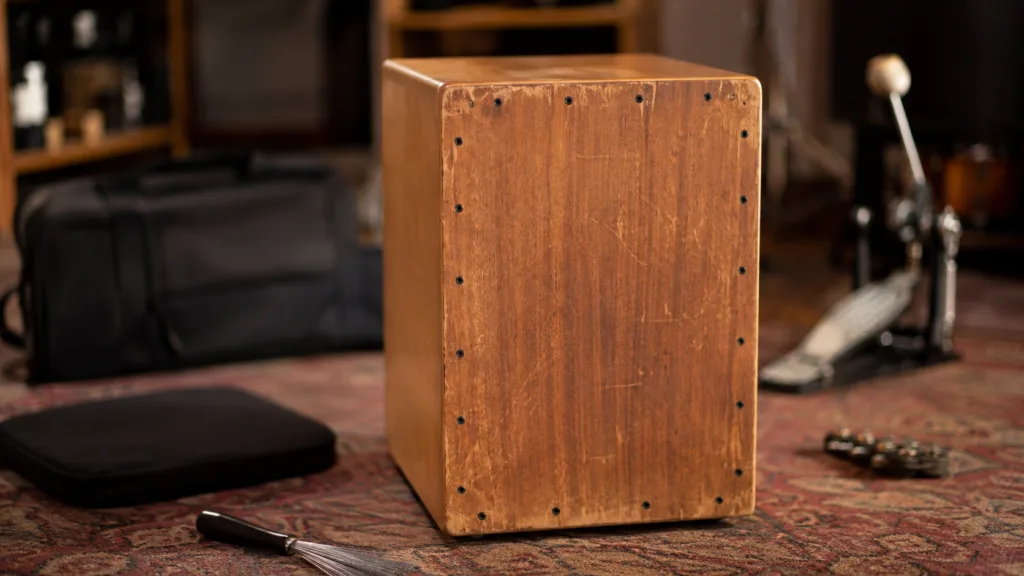
A cajon can look almost finished when it leaves the maker’s bench: a wooden box, a thin tapa, a sound port, and enough snap in the corners to carry a small room. Then the accessories arrive, and the instrument starts changing character. A brush can soften the attack. A microphone can reveal the wood. A pedal can turn the cajon into a compact kick drum. Small parts, big shift.
Collector’s Note: The best cajon accessory is not always the loudest or newest one. The right choice should respect the front plate tension, the shell material, and the player’s touch. On a lively birch cajon, a stiff brush may sound crisp and fast. On a warmer walnut or mahogany-style body, the same brush can feel rounder and darker.
| Accessory | Main Use | Sound Effect | Best For |
|---|---|---|---|
| Cajon Brushes | Softer playing, texture, sweep patterns | Less hand slap, more surface detail | Acoustic sets, recording, quieter practice |
| Microphones | Stage or studio amplification | Adds size, clarity, and low-end control | Live shows, home recording, band settings |
| Pickup Systems | Direct signal without a visible mic | Tight attack, controlled feedback | Outdoor gigs, loud stages, fast setup |
| Pedals | Foot-operated bass hits | Kick-drum feel from the cajon body | Singer-songwriters, compact drum setups |
| Jingles and Snare Add-Ons | Extra shimmer or backbeat accent | Brighter top-end and layered rhythm | Pop, worship, busking, folk grooves |
| Seat Pads and Bags | Comfort and protection | Usually no direct tone change | Long sessions, travel, teaching |
Why Cajon Accessories Matter More Than They Seem
The cajon is a resonant wooden chamber, not just a striking surface. Every accessory changes how energy enters or leaves that chamber. A hand spreads force through skin, palm, and finger. A nylon brush spreads it through many small rods. A pedal concentrates it through a beater. A microphone decides which part of the voice gets heard.
That is why two players can use the same cajon and sound different before the first note is even mixed.
The word cajón means box or drawer in Spanish, and the instrument is strongly linked with Afro-Peruvian musical culture. Its modern versions often include internal snare wires, adjustable screws on the tapa, rubber feet, and sometimes pickups or ports shaped for stronger projection. Accessories sit on top of that history. They do not replace the old hand-played voice; they extend it.
Pro Tip: Before buying accessories, play the cajon bare for a few days. Listen for three things: how deep the bass is near the center, how crisp the upper corners are, and whether the snare response feels dry, loose, or too buzzy. Accessories should solve a real need, not bury the instrument’s natural voice.
Cajon Brushes: Texture, Sweep, and Softer Attack
- Nylon brushes give a wide, soft attack and usually feel safer on delicate front plates.
- Rubber-tipped brushes add a little more punch to bass strokes.
- Wire brushes can sound crisp, but they need a lighter hand on finished tapas.
- Rod-style cajon sticks offer more projection, though they can feel less subtle than brushes.
Brushes turn the cajon into a more detailed instrument. They let the player draw across the grain of the tapa, pull out whispers from the corners, and make small ghost notes speak without hitting harder. In a quiet room, this is where the cajon starts to feel less like a compact drum box and more like a hand-built percussion surface.
A stiff brush gives clean articulation. A loose brush gives spread. The difference is not only volume; it is edge definition. Tight rods make the slap clearer. Open rods make the sweep wider.
Nylon Brushes Vs. Wire Brushes
| Brush Type | Feel | Tone | Caution |
|---|---|---|---|
| Nylon | Flexible and forgiving | Warm sweep, rounded slap, soft bass | Can sound dull if the cajon already lacks brightness |
| Wire | Sharper and more responsive | Crisp brush noise, bright attack | Use gently on polished or thin front plates |
| Rod Brush | More stick-like | Clear backbeat, stronger projection | Too much force may overpower small cajons |
For a birch cajon with a lively snare, nylon brushes often keep the top end tidy. For a darker cajon, a controlled wire brush may bring back some sparkle. Simple as that.
Pro Tip: When testing brushes, do not only play bass and slap notes. Try slow circles, side-to-side sweeps, finger-style taps with the brush handle, and very light corner strokes. A good brush should speak at low volume before it sounds impressive at high volume.
How Brushes Interact With the Tapa
The tapa is usually thinner than the rest of the cajon body, so it reacts quickly. This is where material matters. A stiffer tapa gives a fast, dry response. A more flexible tapa gives a deeper bend and often a warmer bass. Add brushes, and the surface behavior becomes even more obvious.
Brushes do not strike like a palm. They comb the wood.
On a smooth lacquered front plate, brush strokes glide and produce clean swish. On a more matte or open-pore surface, the brush may grip slightly, giving a grainier texture. That tiny friction is useful in recording because it gives the microphone something to catch besides the main hit.
Soft Brushes Vs. Bare Hands
- Bare hands give the most direct connection to bass, slap, and finger rolls.
- Soft brushes reduce hand fatigue and bring out surface noise.
- Hands plus one brush can create a useful split: one side speaks with skin, the other with sweep.
A one-brush setup is underrated. The player can keep the dominant hand free for bass and corner slaps while the other hand adds brush texture. It sounds controlled, not busy.
Cajon Microphones: Hearing the Box Without Choking It
A cajon microphone has a tricky job. It must catch bass from the sound port, slap from the front plate, and sometimes snare buzz from inside the box. Put the mic too close to the port, and the bass can boom. Move it too far away, and the tapa detail may disappear.
This is where many setups go wrong: they treat the cajon like a small kick drum only. It is more than that.
| Mic Choice | Placement Idea | Best Sound | Watch For |
|---|---|---|---|
| Dynamic Mic | Near rear sound port, slightly off-center | Punchy bass and stage control | Too much low-mid boxiness |
| Small Condenser | Front side, aimed toward upper tapa | Finger detail and brush texture | Bleed from guitar or vocals |
| Boundary Mic | Inside the cajon on foam or a stable surface | Tight, compact, low stage clutter | May miss natural room air |
| Two-Mic Setup | One rear mic, one front mic | Bass plus slap control | Phase issues if not checked |
Rear Mic Vs. Front Mic
A rear mic usually catches the low-end thump. It hears the air leaving the sound hole and gives the cajon weight in a mix. A front mic hears the hand, brush, and corner slap. It tells the listener what the player is actually doing.
For live shows, one rear dynamic mic is often enough. For studio work, a two-mic setup can feel more honest: rear for body, front for language.
Pro Tip: If a two-mic cajon sounds thin, flip the phase on one channel or move one mic a little. Thinness often comes from timing conflict between the front slap and rear air movement, not from a bad cajon.
Pickup Cajons and Contact Mics
A pickup cajon uses a built-in or attached transducer to send signal directly to a mixer, amplifier, or audio interface. This can be useful on loud stages where a standard mic catches too much spill. A pickup also helps when the player needs fast setup in a small venue.
The sound is different, though. A pickup often emphasizes attack and vibration more than room air. It can feel tight and practical, but less woody than a well-placed microphone.
Pickup Vs. External Microphone
- Choose a pickup for outdoor gigs, loud bands, quick setup, and feedback control.
- Choose an external mic for natural tone, brush detail, and a more open acoustic sound.
- Use both when the pickup gives reliable bass and the mic adds front-plate texture.
For players who use brushes, the external mic still matters. A pickup may catch the hit, but not always the soft sweep that makes brushes worth using.
Cajon Pedals: Turning the Box Into a Compact Kick
A cajon pedal lets the player strike the front plate with a foot-operated beater. It can make a cajon behave more like a small bass drum, especially in acoustic pop, folk, and coffeehouse sets. The idea is simple. The feel takes some adjustment.
Pedals work best when the cajon has a firm bass zone and enough shell depth to push air. A very small cajon may respond, but it may not give the satisfying low thump a drummer expects.
Pedal Beater Vs. Hand Bass Stroke
| Method | Strength | Tone | Best Use |
|---|---|---|---|
| Hand Bass | Very expressive and dynamic | Natural wood-and-skin warmth | Traditional grooves, solo playing, hand technique |
| Pedal Bass | Steady pulse with free hands | More focused, kick-like thump | Acoustic drum-kit setups, guitar accompaniment |
A soft beater usually suits the cajon better than a hard plastic beater. The tapa is not a drumhead. It is wood, and wood remembers heavy-handed choices over time.
Collector’s Note: On older or finely finished cajons, test any pedal gently. Look for marks, denting, or sudden buzzing around the contact area. A beautiful vintage-style front plate deserves slower testing than a rugged gigging cajon.
Snare Wires, Jingles, and Shaker Add-Ons
Many modern cajons already include internal snare wires or guitar-string style mechanisms. Add-ons take that idea further. External snares, jingles, shaker clips, tambourine-style attachments, and small side percussion pieces can make the cajon feel like a mini rhythm station.
Useful? Yes. Easy to overdo? Also yes.
- Snare add-ons sharpen the backbeat and help the cajon cut through guitars.
- Jingle add-ons add bright movement, close to a soft tambourine color.
- Shaker attachments fill space in sparse acoustic grooves.
- Side taps give extra surfaces for tom-like or rim-like accents.
The luthier’s view is simple: add-ons should not smother the box. If the cajon already has a lively snare, an extra jingle may push the high end too far forward. If the cajon is dry and woody, a small jingle or snare tap can wake it up.
Internal Snare Vs. External Snare Add-On
An internal snare is part of the cajon’s voice. It reacts with the front plate and vibrates inside the chamber. An external snare add-on is more direct and more removable. It can be useful when the player needs a stronger backbeat for one set, then a cleaner wooden sound for the next.
That removable nature is the charm.
Cajon Stands, Add-On Arms, and Small Hardware
Hardware is rarely glamorous, but it decides whether an accessory feels musical or annoying. A small cajon stand, mic stand, cymbal arm, or add-on mount should keep everything close enough to play without twisting the body. When the setup forces the player to lean, the groove usually suffers.
A well-placed add-on sits inside the natural reach of the hands. A poorly placed one turns every accent into a little chore.
Low Hardware Vs. Full Drum Hardware
- Low cajon hardware saves space and suits seated playing.
- Full drum hardware gives strength but can crowd the setup.
- Mic-style stands often work well for small cymbals, taps, or compact percussion.
For travel, lighter hardware usually wins. For a fixed studio corner, heavier hardware may feel better because it stays put. The right choice depends on how often the cajon leaves the room.
Seat Pads, Bags, and Care Accessories
Not every accessory changes sound. Some protect the player. Some protect the instrument. A seat pad helps during long sessions, especially when the cajon has a hard top edge. A padded bag keeps the corners and tapa safer during transport. A simple cloth removes dust before it settles into the front plate’s finish.
Care accessories matter because the cajon is mostly wood. Heat, humidity changes, and rough transport can affect the shell, screws, glue joints, and tapa tension. A dry room can make the instrument feel tighter. A humid room can make it feel heavier and less crisp.
Pro Tip: Do not store brushes, pedals, or metal add-ons loose inside a cajon bag against the front plate. Put them in a separate pouch. Small dents often come from travel, not playing.
Accessories by Playing Situation
| Situation | Good Accessory Set | Why It Works |
|---|---|---|
| Apartment Practice | Soft nylon brushes, seat pad | Lower volume, less hand impact, more control |
| Acoustic Duo | Brushes, small shaker, rear dynamic mic | Adds movement without overpowering guitar or voice |
| Live Band | Pickup or rear mic, pedal, compact stand | Keeps bass steady and stage setup clean |
| Home Recording | Two mics, brushes, quiet add-ons | Captures both body and tapa detail |
| Busking | Bag, jingle add-on, durable brushes | Portable, clear, and easy to reset between songs |
How to Build a Balanced Cajon Setup
- Start with the cajon’s natural voice. Decide whether it is bright, dark, dry, buzzy, deep, or tight.
- Add brushes before louder hardware. They teach the player how the front plate responds.
- Choose a mic based on the room. A living room, studio booth, and outdoor stage all hear the cajon differently.
- Use pedals only when the groove needs them. A pedal is helpful, but it can reduce hand-style nuance if used everywhere.
- Keep add-ons close and limited. One tasteful jingle often works better than three bright accessories fighting each other.
A balanced cajon setup feels like one instrument, not a pile of parts. The brushes, mic, pedal, and add-ons should serve the groove. When they do, the cajon keeps its wooden center.
Buying Details Players Often Miss
- Brush diameter: thicker bundles usually give more body, while thinner brushes give quicker detail.
- Control rings: adjustable rings change how open or tight the brush feels.
- Beater softness: softer pedal beaters are kinder to the tapa and often sound more natural.
- Mic height: a low cajon mic stand can make placement easier than a tall stand forced into an awkward angle.
- Bag pocket layout: a bag with separate pockets keeps metal hardware away from the front plate.
The small details are not fussy. They save the instrument from bad habits and save the player from buying twice.
Questions Players Usually Ask
Do Cajon Brushes Damage the Front Plate?
Answer
Soft nylon cajon brushes are usually gentle when used with normal playing force. Wire brushes need more care, especially on polished, thin, or older front plates. The safest approach is to test lightly first and avoid scraping hard across the tapa.
What Microphone Should I Use for Cajon?
Answer
A dynamic mic near the rear sound port works well for live bass and punch. A small condenser near the front plate captures slap, finger detail, and brush texture. For recording, many players use one rear mic and one front mic, then balance them carefully.
Is a Cajon Pedal Worth It?
Answer
A cajon pedal is worth using when the player needs a steady kick-style pulse while keeping both hands free for slaps, brushes, or add-ons. It is less useful for traditional hand-focused playing, where palm tone and finger control matter more.
Can I Use Drum Brushes on a Cajon?
Answer
Some drum brushes can be used on a cajon, but cajon-specific brushes often feel better on wooden front plates. Nylon or soft rod-style cajon brushes usually give more control and reduce the risk of harsh scraping on the tapa.
Which Cajon Accessory Should I Buy First?
Answer
For most players, brushes are the best first accessory because they add new textures without changing the cajon permanently. If the cajon is used live, a suitable microphone or pickup may be the better first purchase.