
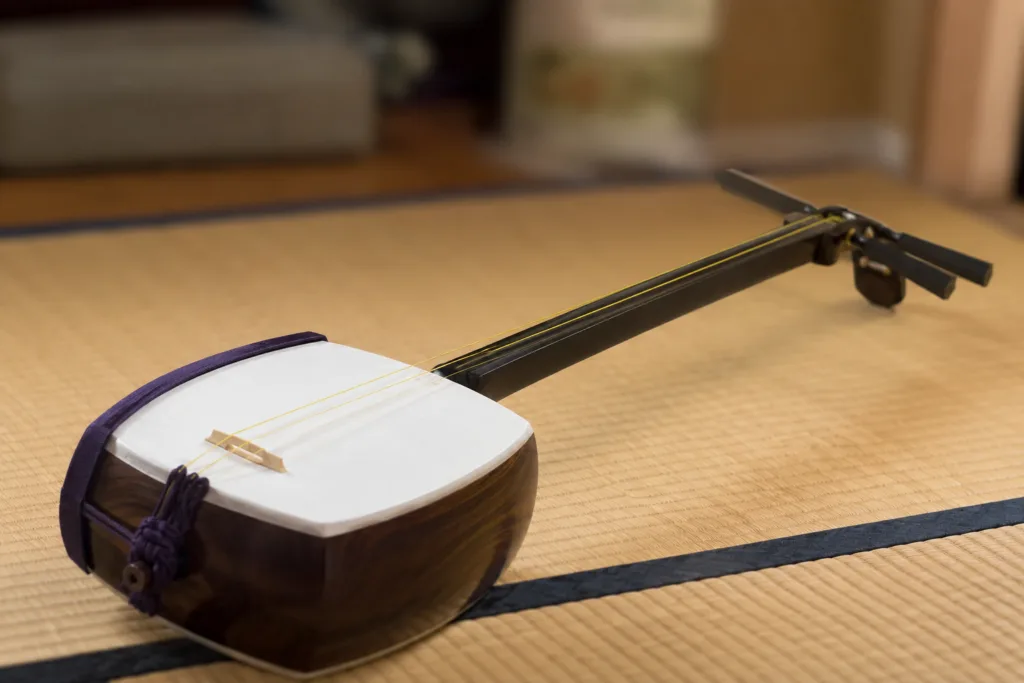
Instrument Snapshot
The shamisen is a three-stringed Japanese lute with a long fretless neck, a skin-covered square body, and a striking, percussive voice shaped by the large bachi plectrum. It sits between song accompaniment, theater music, regional folk performance, and modern concert playing, with styles ranging from refined nagauta lines to the driving attack of Tsugaru-jamisen.
What It Is
The shamisen is often described as Japan’s three-stringed lute, but that short definition misses its strongest musical trait: it is both melodic and percussive. The player does not only pluck the strings. The bachi, a broad plectrum, can strike across the string and touch the skin-covered body, creating a sharp attack that gives the instrument its recognizable snap.
Unlike a guitar, the shamisen has no frets. Pitch depends on the player’s left-hand placement, slides, ornaments, and pressure. This fretless design allows flexible intonation, vocal-like bends, and quick shifts between clean notes and rougher expressive colors.
The instrument appears in several musical settings. In nagauta, it supports kabuki dance and song with a light, agile tone. In gidayu-bushi, it helps drive dramatic narration in bunraku puppet theater. In jiuta and kouta, it often carries chamber or intimate vocal music. In Tsugaru-jamisen, it becomes a bold solo instrument with fast passages, hard attacks, and improvisatory energy.
Anatomy and Build
The shamisen’s form is simple at first sight: a long neck, a square body, three strings, and a bridge. Its tone, however, depends on small construction choices. Neck thickness, skin tension, bridge material, string gauge, and plectrum shape all change how quickly the sound speaks and how much buzz, bite, or warmth remains after the attack.
| Part | Japanese Term | Role in Sound and Playing |
|---|---|---|
| Body | Do | The square resonating chamber. Its skin covering gives the shamisen its dry, direct attack. |
| Neck | Sao | A long fretless neck used for slides, ornaments, pitch shading, and position shifts. |
| Strings | Ito | Traditionally silk; many modern players also use synthetic materials for stability and durability. |
| Bridge | Koma | Transfers vibration to the skin. Material and height affect brightness, response, and volume. |
| Plectrum | Bachi | Creates the shamisen’s cutting attack. Shape and weight vary by style. |
| Pegs | Itomaki | Large tuning pegs used to adjust string tension; stable tuning depends on fit and handling. |
| Buzzing device or setup effect | Sawari | Adds a controlled buzzing edge, especially on the lowest string, giving the tone extra grain. |
Materials and Sound Character
Traditional shamisen construction often uses a hardwood neck and body, a skin-covered soundboard, and silk strings. Modern instruments may use synthetic heads or synthetic strings, especially when durability, weather resistance, or travel use matters more than old-style response.
The skin head is central to the shamisen’s identity. It does not behave like a wooden guitar top. It responds quickly and gives the note a firm front edge. A tighter head can sound brighter and more projecting, while a more relaxed setup may feel warmer but less cutting.
These tone bars describe common listening impressions, not laboratory measurements. Individual instruments vary by maker, setup, string choice, and playing style.
Historical Development
The shamisen developed in Japan after related three-stringed lutes moved through maritime routes connected with the Ryukyu Islands. By the early modern period, it had become deeply tied to urban performance culture, theater, narrative music, and entertainment districts.
Its history is not a single straight line. Different shamisen traditions grew around different musical needs: dance accompaniment, dramatic narration, refined chamber song, regional folk performance, and later concert-oriented solo display.
Related skin-covered, three-stringed lutes circulated in East Asian and Ryukyuan musical culture before the shamisen became established in mainland Japan.
The instrument became suited to vocal music because of its clear attack, flexible pitch, and ability to follow speech-like rhythm.
Shamisen traditions became linked with kabuki, bunraku, geisha performance, narrative song, and chamber repertoire.
Northern Japanese performance practice helped shape the forceful Tsugaru style, known for thick-necked instruments, hard bachi work, and fast ornamented lines.
The shamisen remains active in traditional arts, conservatory study, stage performance, fusion projects, and solo concert settings.
Main Playing Styles
Shamisen style is not only about repertoire. It also affects instrument size, plectrum weight, touch, posture, tone color, and the player’s relationship to voice or stage action. A shamisen used for delicate song accompaniment may feel very different from one built for Tsugaru-style projection.
| Style | Typical Context | Common Instrument Feel | Sound Character |
|---|---|---|---|
| Nagauta | Kabuki dance, theater music, song accompaniment | Often associated with a thinner neck and agile response | Bright, refined, flexible, rhythmically alert |
| Gidayu-bushi | Bunraku puppet theater and dramatic narration | Often uses a larger, weightier shamisen | Forceful, dramatic, speech-driven, weighty |
| Jiuta | Chamber music, vocal music, regional classical practice | Balanced response suited to lyrical phrasing | Measured, elegant, vocal, less aggressively percussive |
| Kouta | Short songs and intimate performance settings | Light touch and close vocal support | Subtle, compact, speech-like, restrained |
| Minyo | Folk songs and regional repertory | Varies by region and singer | Direct, supportive, danceable, often earthy |
| Tsugaru-jamisen | Solo display, folk-rooted concert music, modern stage performance | Often linked with thick-necked futozao instruments | Loud, sharp, fast, percussive, improvisatory |
How the Shamisen Produces Its Voice
The Bachi Starts the Sound
The player uses the bachi to pluck, brush, or strike the string. In many styles, the attack is part note and part percussion.
The Skin Head Responds Fast
String vibration passes through the bridge into the skin-covered body. This gives the tone its quick response and dry decay.
The Fretless Neck Shapes Pitch
The left hand stops the string directly on the neck. Slides, pressure changes, and ornaments shape the note after it begins.
Sawari Adds Grain
A controlled buzzing effect can enrich the lowest string. This is one reason the shamisen can sound sharp, vocal, and slightly rough rather than smooth and guitar-like.
Neck Types and Style Fit
Shamisen neck thickness is often described with three broad terms: hosozao, chuzao, and futozao. These terms are useful, but they should not be treated as rigid boxes. Makers and schools vary, and some players choose an instrument outside the most common pairing for body size, tone preference, or repertoire needs.
A thinner-necked shamisen often associated with nagauta. It favors nimble movement, clear articulation, and a lighter stage texture.
A middle-neck form used across several repertoires. It can suit players who need balance between lyric support and stronger projection.
A thicker-necked form often linked with Tsugaru-jamisen and heavier narrative settings. It supports powerful attack and larger string response.
Common Confusion: A larger shamisen is not automatically better. It may project more and tolerate heavier playing, but a lighter style can lose clarity if the instrument is too heavy, too loud, or too resistant for the repertoire.
Shamisen in Theater, Song, and Folk Music
In kabuki-related music, the shamisen helps shape dance rhythm, gesture, entrance, atmosphere, and song. The instrument can move with the body of the actor or dancer, making it more than background accompaniment.
In bunraku, the shamisen works closely with narration. The player supports dramatic pacing, character tension, and emotional shifts. The music must breathe with the chanter rather than sit in a fixed, mechanical pulse.
In folk and Tsugaru settings, the instrument often becomes more assertive. Strong downstrokes, repeated patterns, and fast ornamental figures can make the shamisen sound closer to a lead rhythm instrument than a quiet lute.
Shamisen Compared with Similar Instruments
Three strings, fretless neck, square skin-covered body, and bachi technique. Its sound is dry, percussive, buzzing, and tightly linked to Japanese vocal and theatrical forms.
A related Okinawan lute with three strings and a skin-covered body. It is usually smaller, has a different regional identity, and is closely tied to Okinawan song traditions.
A Japanese lute with a different body shape, fretted neck forms, and older narrative associations. Its attack is bold, but its construction and repertoire differ strongly from the shamisen.
Usually six strings, frets, a wooden soundboard, and longer sustain. It is easier for many beginners to map visually, while shamisen pitch depends more on ear and hand memory.
Learning Feel and Beginner Notes
The shamisen can feel unfamiliar to players coming from guitar, mandolin, or ukulele. The missing frets remove visual pitch markers. The right hand also feels different because the bachi is not a small pick; it is a large playing tool that shapes both rhythm and tone.
Early learners usually need to focus on posture, clean open-string sound, left-hand placement, and relaxed bachi motion before speed. A harsh attack can sound exciting at first, but uncontrolled force can choke tone, throw tuning out, and wear the skin or bridge area faster.
Player Tip: Listen for the start of each note. A good shamisen sound has a clear front edge, but it should not feel like random scraping. The best attack is firm, timed, and shaped by the style being played.
- Choose the shamisen type around the repertoire, not only the visual size.
- Learn basic tuning and peg handling before long practice sessions.
- Keep the bachi hand relaxed enough to avoid a stiff, clumsy attack.
- Practice slow left-hand placement because there are no frets to rescue intonation.
- Ask whether the instrument uses natural skin or synthetic head material before planning storage and care.
Buying and Collector Notes
A shamisen can be bought as a playable study instrument, a stage instrument, a restored older instrument, or a decorative object. These categories should not be mixed casually. A beautiful old shamisen may need new skin, bridge work, peg fitting, or neck inspection before it can be played reliably.
For players, setup matters more than ornament. The neck should feel stable, the pegs should hold, the bridge should sit correctly, and the skin should respond without rattles or dead patches. For collectors, provenance, lacquer condition, fittings, case, maker information, and repair history may matter more.
Collector’s Note: Decorative shamisen, tourist pieces, and stage-ready instruments can look similar in photos. Before valuing one, check whether it is playable, restored, altered, or built mainly for display.
Care and Storage
The shamisen is sensitive to humidity, heat, and impact, especially when it has a natural skin head. Sudden dryness can stress the skin, while damp conditions can affect glue, wood, strings, and tuning stability.
Basic care is simple: loosen tension when appropriate for storage, keep the instrument in a case, avoid direct sun, and do not clean the skin with household chemicals. The bridge and bachi should also be stored safely because small changes at the contact point can change the tone.
Care Warning: Do not treat a shamisen head like a plastic drumhead unless the maker confirms it is synthetic. Natural skin can be damaged by moisture, heat, pressure, and cleaning products.
Common Myths
The shamisen is just a Japanese banjo.
Both can sound bright and percussive, but the shamisen has its own construction, fretless technique, bachi attack, sawari buzz, and Japanese repertoire system.
All shamisen music sounds fast and aggressive.
Tsugaru-style playing can be forceful, but many shamisen traditions are lyrical, restrained, theatrical, or closely tied to vocal phrasing.
An old shamisen is always a better instrument.
Age can add collector interest, but playability depends on skin condition, neck stability, peg fit, bridge setup, and repair quality.
Mini FAQ
How many strings does a shamisen have?
A shamisen has three strings. They are played with a large plectrum called a bachi, and the fretless neck allows slides, ornaments, and flexible pitch shaping.
Is the shamisen hard to learn?
It is approachable at a basic level, but clean tone and accurate pitch take time. The main beginner challenges are bachi control, fretless intonation, posture, and style-specific rhythm.
What is the difference between shamisen and Tsugaru shamisen?
Tsugaru shamisen is a forceful regional playing style often linked with thicker-necked instruments, fast passages, strong attack, and solo display. Shamisen is the broader instrument family used across many styles.
Does every shamisen use animal skin?
Many traditional instruments use natural skin, but modern instruments may use synthetic heads for durability, climate stability, or ethical preference. The material changes response and tone.
Why does the shamisen sound buzzy?
The buzzing quality is often related to sawari, a controlled tonal feature that adds grain and vibration to the sound, especially around the lowest string.
Which shamisen style is best for beginners?
The best choice depends on the music the learner wants to play. Nagauta, minyo, and Tsugaru paths use different techniques, instruments, and tone goals, so repertoire should guide the first purchase.